
There are places where the landscape seems to have been frozen in time. In O Courel, mountains, chestnut groves and small rivers also preserve the story of the people who learned to live in this environment and build their villages using the materials available to them.
Froxán, Seceda and Vilamor are some of the finest examples.
When the mountains shape the way people build
In O Courel, building meant adapting to the terrain, the climate and the resources of the surrounding area.
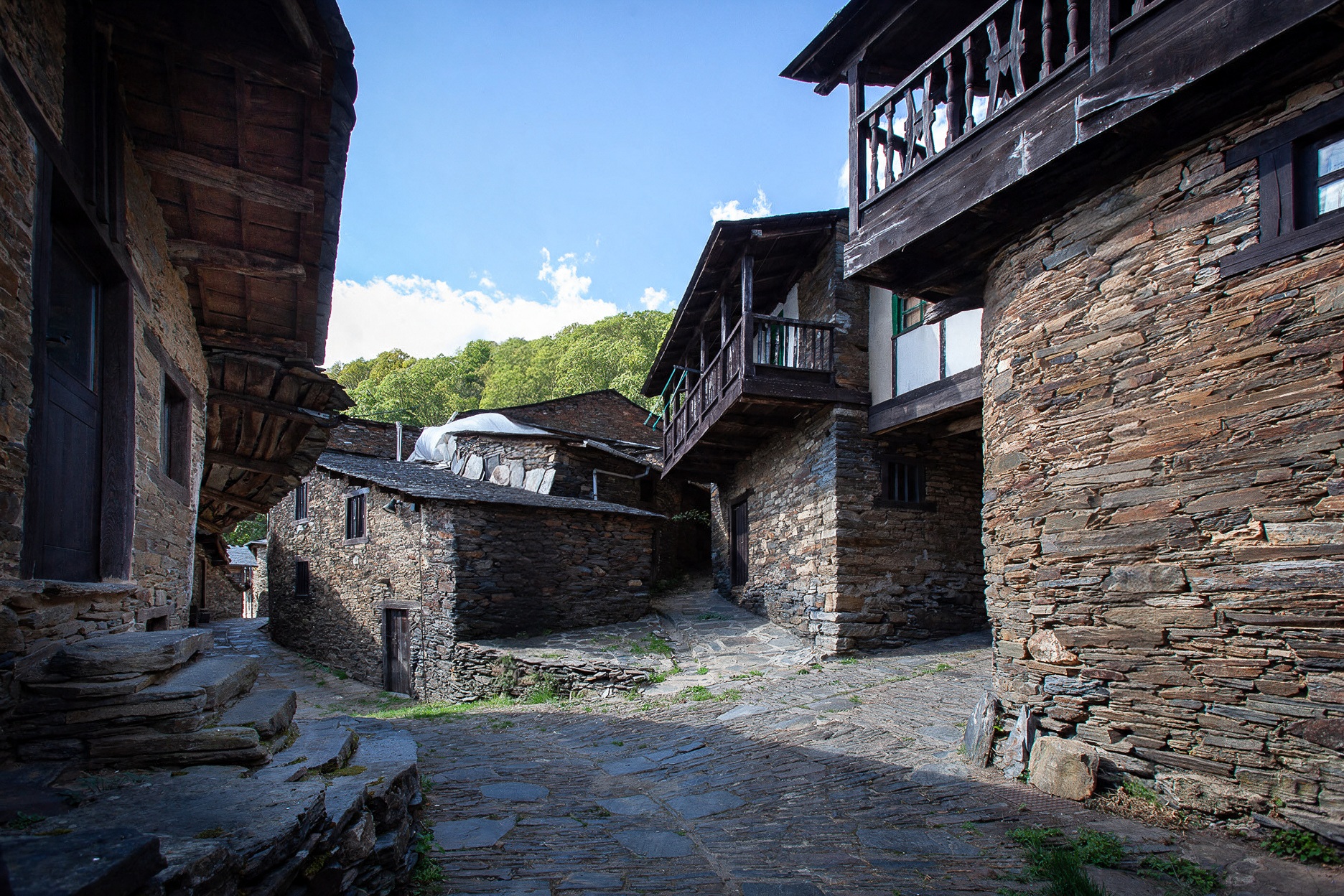
The villages follow the contours of the land, with houses clustered together and narrow streets winding up and down the mountainsides. Slate, which is abundant in the area, became one of the key elements of traditional architecture, used for walls and, above all, roofs.
Froxán: a village that preserves its essence
If there is one village that helps us understand the relationship between architecture and landscape, it is Froxán.
Located in the municipality of Folgoso do Courel, it preserves traditional houses and buildings clustered around narrow cobbled streets that follow the contours of the land. The village has been declared an Asset of Cultural Interest for its ethnographic significance.
Surrounding it are centuries-old chestnut groves, cultivated plots and meadows. Here, nature is not separate from the village: it is part of its history.
Seceda and Vilamor: two ways to discover O Courel
Seceda also preserves the essence of O Courel’s traditional architecture, based on stone, wood and slate. Surrounded by vegetation and chestnut groves, walking through its streets reveals how the houses were integrated into the landscape and how every element responded to the needs of the community.
In Vilamor, slate masonry houses, slate roofs and wooden balconies once again show how architecture adapted to the mountains. The surrounding paths also lead to Vilamor Waterfall, the River Lor and the landscapes around the village.
A heritage made up of small details
The traditional architecture of O Courel is not limited to houses. Scattered throughout the landscape are drying houses, alvarizas, ovens, raised granaries and other structures linked to farming and livestock.
They are small traces of a way of life in which the mountains shaped the rhythm of everyday life and much of what people needed came from the surrounding land.
A Galicia you can still experience
Perhaps the most special thing about O Courel is that its architecture remains part of the landscape. Houses are still woven into the villages, chestnut groves surround the paths, and the mountains remain the defining backdrop of this region.
Walking through Froxán, Seceda and Vilamor offers a glimpse into a way of life that adapted over generations to one of Galicia’s most distinctive landscapes.
If you are looking for a quieter Galicia, with narrow paths, forests, stone and slate, O Courel is waiting to be discovered.
Fancy discovering this Galicia that seems to belong to another time?