

There are places where history can still be explored on foot. In Ourense, cobbled streets, ancient fortresses, Romanesque churches and towers overlooking the valleys take us back centuries and offer a glimpse of what life was like in medieval Galicia.
The province is home to some of Galicia’s most distinctive historic towns. Allariz, Ribadavia, Vilanova dos Infantes, Castro Caldelas and Monterrei each offer a different way to discover an age when kings, nobles, merchants, pilgrims and peasants left their mark on the landscape.
Allariz: a town with royal connections
On the banks of the River Arnoia, Allariz is one of the province’s outstanding historic centres. Its medieval importance is linked, among other things, to its role as a seat of the court of the Kingdom of Galicia.
Arriving in the town via the 13th-century Ponte de Vilanova is a fitting way to step into its history. Beyond the bridge, the old town’s streets, ancient Romanesque churches and houses preserve the layout of the medieval settlement.
The walk can continue alongside the Arnoia, where historic buildings stand alongside old mills, tanneries and other structures that recall the importance of river-based crafts over the centuries.
Allariz offers a glimpse of the Middle Ages that can be found not only in castles, but also in streets, churches and the town’s relationship with water.
Ribadavia: castles, wine and Jewish heritage
In the heart of the Ribeiro wine region lies Ribadavia, a town whose medieval history is closely linked to trade and the presence of an important Jewish community.
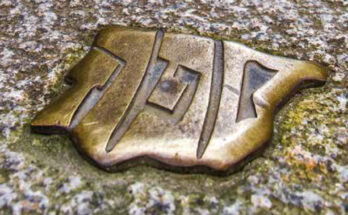
Its historic centre retains a network of narrow streets, squares and houses that invite visitors to wander at their own pace. The former Jewish quarter, known as A Alxama, is one of the most fascinating places to discover this part of the town’s past.
The Castle of the Sarmiento family, located within the historic centre, also recalls the power of the lords who ruled these lands. Although only parts of the original complex survive, traces of its walls, towers and old gateways can still be identified.
To round off a visit to Ribadavia, there is no better way than to explore the Ribeiro, a region where wine, landscape and history have been intertwined for centuries.
Vilanova dos Infantes: a small town frozen in time
In the municipality of Celanova lies one of those places whose charm comes from its modest scale. Vilanova dos Infantes preserves one of Galicia’s most distinctive medieval ensembles, with narrow cobbled streets and granite houses that follow the contours of the land.
Its most recognisable landmark is the Tower of Vilanova, the only surviving remnant of the former castle that once dominated the town. The fortress was destroyed during the Irmandiño revolts, but the tower remains as a reminder of that past.
Wandering through its squares, discovering old fountains or finding the cellars carved into the rock offers a glimpse of everyday life in a small medieval community.
Perhaps this is one of those places where there is no need to seek out grand monuments to feel part of history.
Castro Caldelas: a town built around a castle
In the Ourense section of the Ribeira Sacra, Castro Caldelas stands on a rise overlooking the valley of the River Edo. Its historic centre retains a distinctly medieval character, with narrow cobbled streets leading towards its main landmark: the castle.
The fortress was built in the 14th century and still features towers, defensive walls, a parade ground and other elements that help visitors understand how these strongholds were designed. The castle’s history is also linked to the 15th-century Irmandiño revolts, during which it suffered significant damage before being rebuilt.
But Castro Caldelas is much more than its fortress. Its heraldic houses, glazed galleries and streets climbing towards the castle form an ensemble in which the layout of a medieval town is still easy to recognise.
From the heights, the landscape of the Ribeira Sacra also helps explain why this place held such strategic importance for centuries.
Monterrei: a fortress overlooking the Támega Valley
The journey ends in southern Ourense, at one of Galicia’s most impressive fortified complexes. Monterrei occupies an elevated position overlooking the Támega Valley and the lands near the Portuguese border.
The fortress dates back to the Middle Ages and expanded over the centuries to become a substantial defensive and residential complex. Towers, walls, a church, a pilgrims’ hospital and other buildings form a remarkable hilltop stronghold that reveals the strategic importance of this territory.
Monterrei was also a centre of culture. A printing press operated within its walls, and in 1494 the Missale Auriense was printed here, regarded as the first book printed in Galicia.
Today, exploring the complex and looking out over the Támega Valley from its walls offers a chance to connect with a key chapter in Galicia’s history.
Five towns for discovering medieval Galicia
Allariz, Ribadavia, Vilanova dos Infantes, Castro Caldelas and Monterrei reveal five different sides of medieval Galicia.
Towns shaped by kings and merchants, former Jewish quarters, small fortified settlements, noble castles and great border fortresses. Each preserves part of that history, while reflecting a different relationship with the surrounding landscape.
Best of all, this heritage is not confined to museums. It can be discovered by walking along a cobbled street, crossing a bridge, stepping inside a church, climbing a tower or simply looking out over a valley that has been watched by its inhabitants for centuries.
Because in Ourense, the Middle Ages are not just something to study: they are something to explore.
Fancy setting off on this journey through medieval Galicia?