
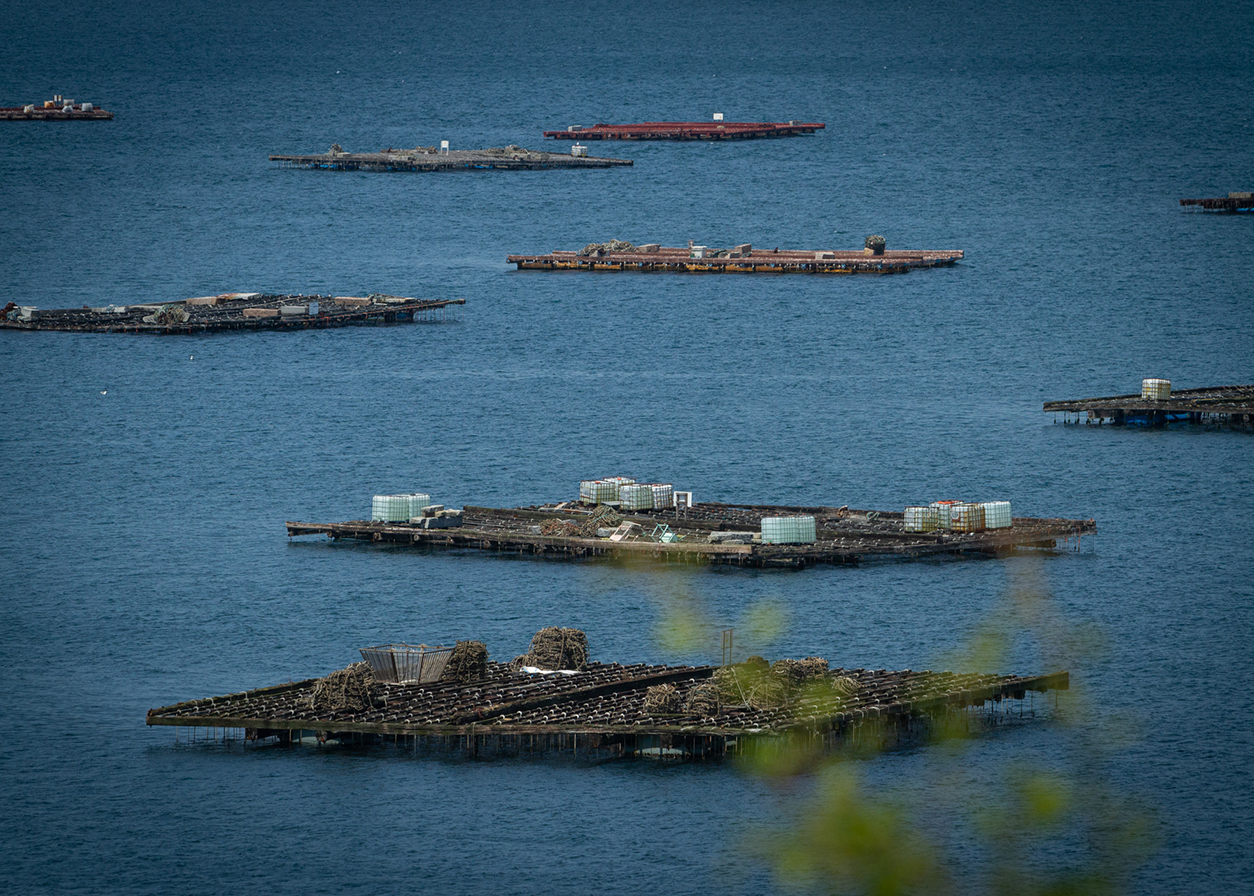
Exploring Galician Rias is much more than admiring beautiful scenery. It means joining local fishermen at sea, learning about the work of shellfish gatherers, visiting a fish market during the daily auction, discovering how mussels are cultivated on floating rafts, or sailing among islands and charming fishing villages where the sea still sets the pace of everyday life.
From the dramatic Northern Estuaries (Rías Altas) to the peaceful Southern Estuaries (Rías Baixas), we invite you to discover these unique coastal landscapes, learn what makes each estuary special, and enjoy unforgettable maritime tourism experiences along the Galician coast.
The Rías Altas stretch from the mouth of the River Eo to the estuary of A Coruña. Towering cliffs, unspoilt beaches, traditional fishing villages and bustling harbours define a dramatic coastline where the Cantabrian Sea meets the Atlantic Ocean in all its power.
Rías Altas
- Ribadeo Estuary: the gateway to Galicia, renowned for As Catedrais Beach (Cathedrals Beach) and its long fishing tradition.
- Foz Estuary: home to wide sandy beaches and the Basilica of San Martiño de Mondoñedo.
- Viveiro Estuary: featuring a charming medieval old town, Area Beach and the Souto da Retorta forest.
- O Barqueiro Estuary: a picturesque fishing harbour close to Estaca de Bares, the northernmost point of the Iberian Peninsula.
- Ortigueira Estuary: known for its wetlands, the Serra da Capelada mountain range and Cape Ortegal.
- Cedeira Estuary: gateway to the Sanctuary of Santo André de Teixido and the impressive Vixía Herbeira cliffs.
- Ferrol Estuary: famous for its naval heritage, defensive fortresses and one of Europe’s most important historic naval arsenals.
- Ares and Betanzos Estuaries: home to Pontedeume, Redes, Sada and the Fragas do Eume Natural Park.
- A Coruña Estuary: dominated by the Tower of Hercules, a UNESCO World Heritage Site, it combines the city’s vibrant atmosphere with long seaside promenades, beaches such as Riazor and Orzán, and a rich maritime tradition centred around its port.
Costa da Morte
Beyond the Muros and Noia Estuary lies the spectacular Costa da Morte, a coastline of extraordinary beauty where long sandy beaches alternate with rugged cliffs and small fishing ports. Steeped in maritime legends, this region has a deep-rooted connection with the sea.
- Corme and Laxe Estuary: beaches, shellfish beds and the iconic Punta Roncudo Lighthouse.
- Camariñas Estuary: home of goose barnacle harvesters, traditional bobbin lace and Cape Vilán.
- Corcubión Estuary: the gateway to Cape Fisterra, with charming fishing towns and a rich historical heritage.
- Muxía and Fisterra area: featuring the Sanctuary of Virxe da Barca, the Fisterra Lighthouse and some of the Atlantic coast’s most iconic landscapes.
Rías Baixas
The Rías Baixas are renowned for their calm waters, white sandy beaches, mussel rafts and thriving maritime culture. Here, maritime tourism offers visitors the opportunity to discover traditional fishing, shellfish harvesting and aquaculture.
- Muros and Noia Estuary: the transition to the Rías Baixas, home to two historic fishing towns with a strong shellfishing tradition.
- Arousa Estuary: the largest estuary in Galicia, famous for its mussel rafts and destinations such as Illa de Arousa, Vilanova de Arousa, Cambados, O Grove, Ribeira and Vilagarcía de Arousa.
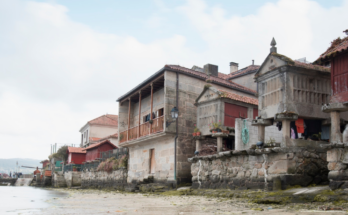
- Pontevedra Estuary: where Pontevedra, Combarro, Bueu and Marín combine rich heritage with centuries-old maritime traditions.
- Vigo Estuary: sheltered by the Cíes Islands, it is home to Galicia’s largest fishing port as well as charming coastal towns including Cangas, Moaña and Baiona.
Set sail on a journey through Galicia’s estuaries, fishing ports, maritime traditions and outstanding seafood cuisine. Galicia is waiting for you. Are you ready to discover it?