
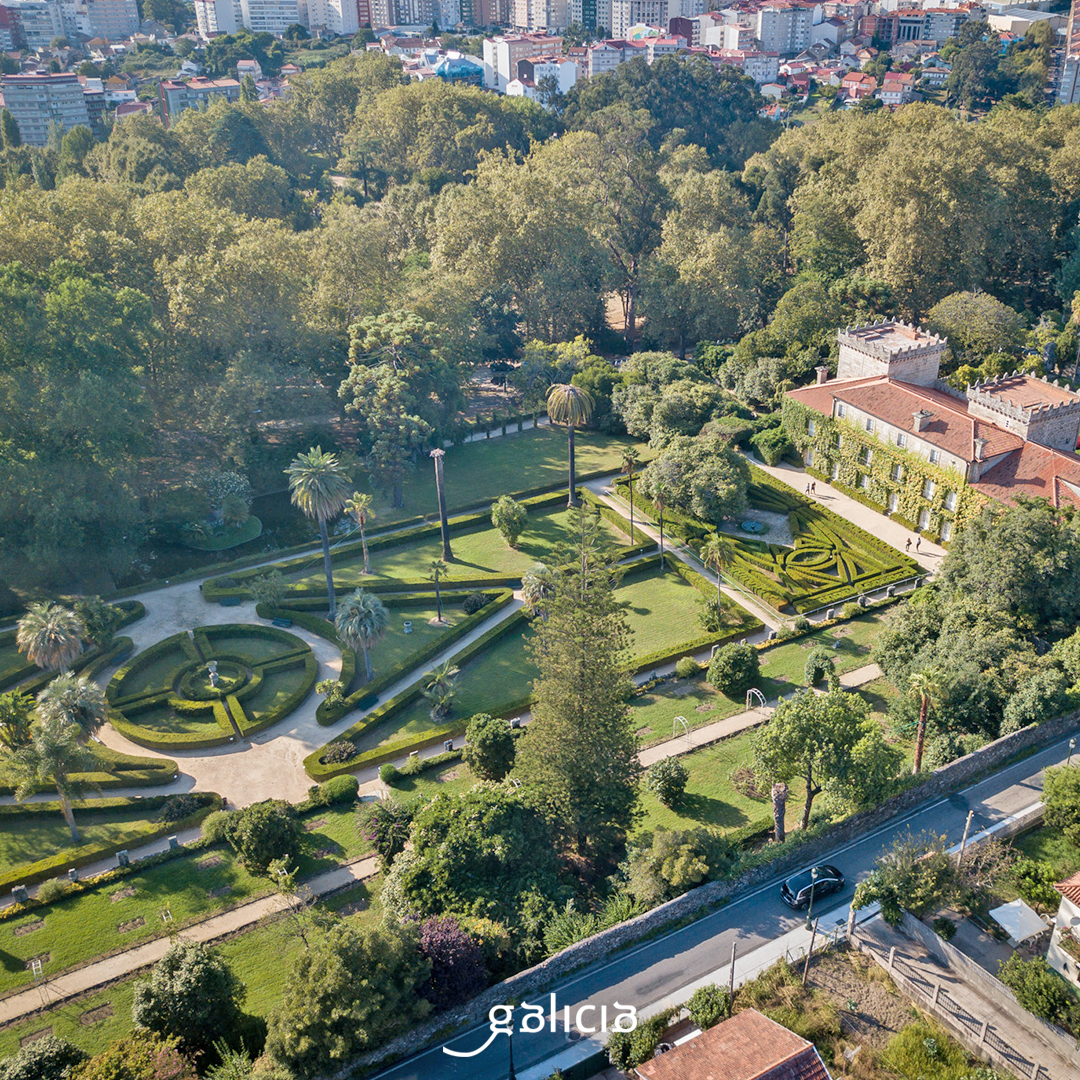
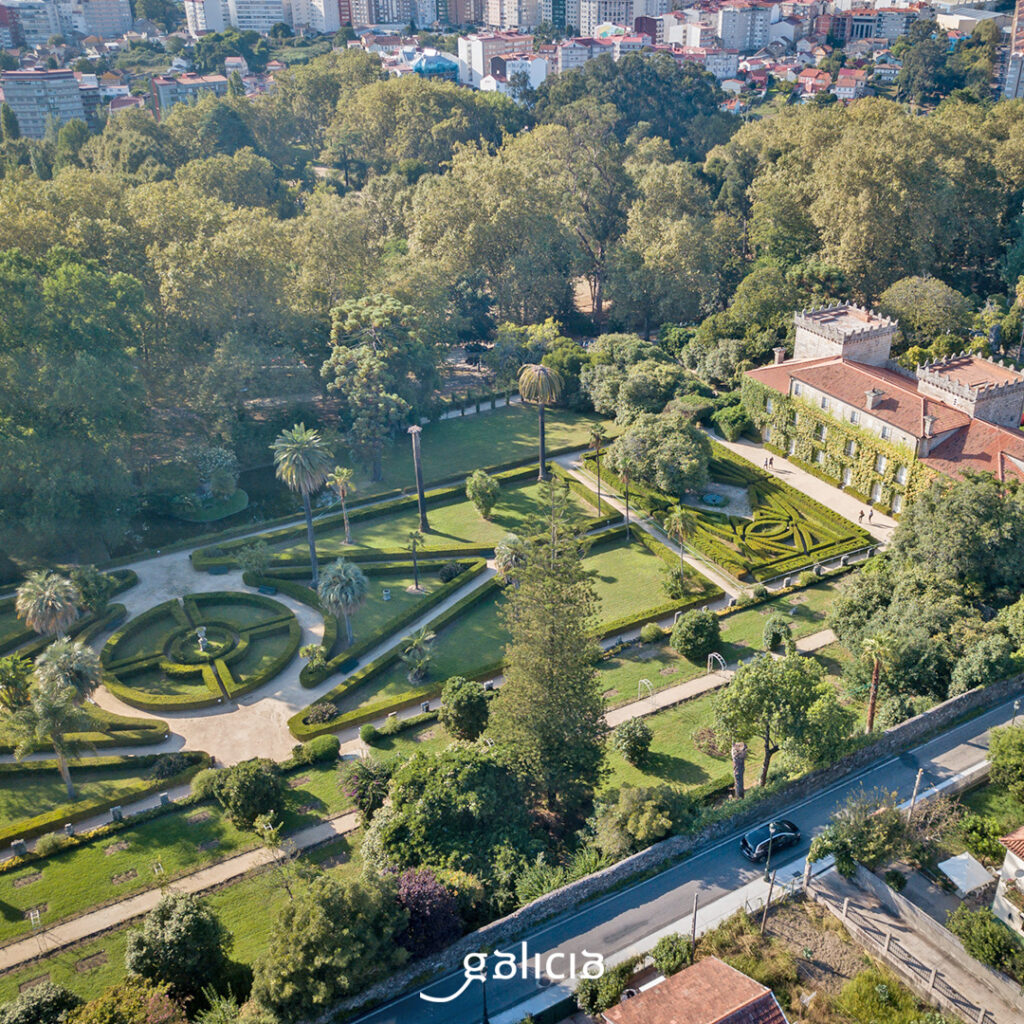
Quiñones de León Park (Vigo). One of the must-sees when visiting the city of Vigo is this large urban park of 220,000 m2, which surrounds the pazo-museum Quiñones de León. The pazo, built on older remains in the second half of the 17th century, was donated to the city council of Vigo by the Marquis of Alcedo in 1924. Today it functions as a museum, where we discover an important art gallery, a collection of decorative pieces from the eighteenth and twentieth centuries, a temporary exhibition hall and, in an annex, the collection of archeology. Incidentally, civil weddings are also held here.
At the back of the building the garden is distributed in three levels: the rose gardens, in a walk between pergolas; the French rationalist garden, in which the boxwood labyrinth and the oldest camellia in Galicia, the Methuselah, stand out; and the English romantic garden, with the typical green and a pond frequented by ducks with the miniature of the pazo on an island. Following the walk, we find a nineteenth-century tennis court and a dovecote. Down the slope, the park extends like a forest, with paths and many trees. In the lower part is the open-air auditorium, the playground, fountains and ponds and the Lagares River, which we can follow for about 8 km to Samil.
The museum is open from Tuesday to Friday from 10 am to 2 pm; Saturdays from 5 pm to 8 pm and Sundays and holidays from 11 am to 2 pm. The gardens, between October and April, from 9 am to 8.30 pm and between May and September, from 9 am to 10.30 pm.
Gardens of Méndez Núñez (A Coruña). In A Coruña, just by saying gardens, it is already known which ones we are talking about. They are the oldest and most famous in the city, close to everything and with entertainment for all ages: playground, benches to rest, fountains, cafes …. Here are held book fairs, craft fairs, the Viñetas…. There are always people doing things.
Originally, in the middle of the 19th century, they were known as the Jardines del Ensanche or Jardines del Relleno, because they were on land reclaimed from the sea. In 1871 they took the name of the famous sailor Casto Méndez Núñez, who had died two years before. Shortly afterwards, construction of the surrounding buildings would begin.
There are three distinct parts: the Paseo de las Palmeras, where is the music box, the Copacabana, the Colón theater and the modernist buildings of Kiosko Alfonso and La Terraza; a large area of more vegetation, where we find the rationalist building of La Atalaya, the pond and the clock and plant calendar, and the Rose Garden, a walk between pergolas with roses of many varieties.
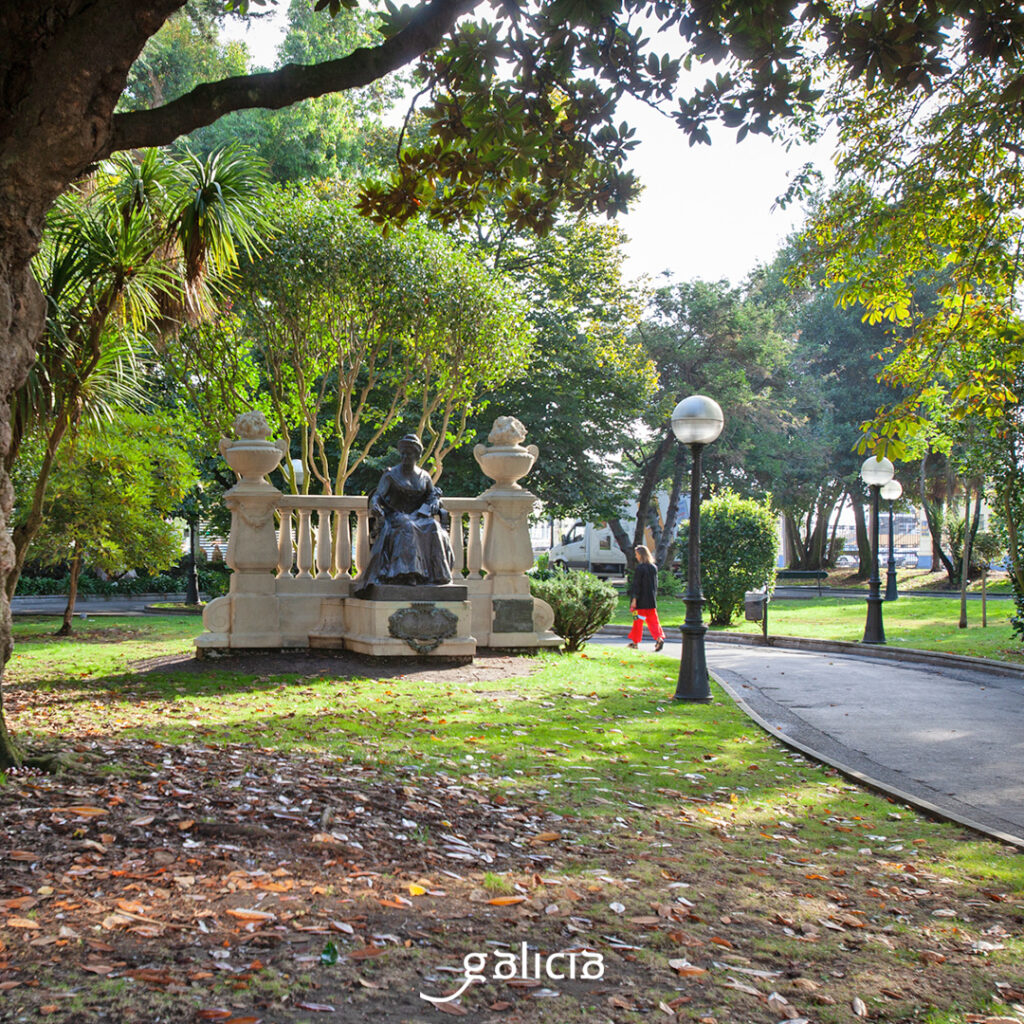
In the walk through the gardens we are accompanied by monuments, almost all dedicated to some Galician character. The one of Curros Enríquez (Asorey, 1934), the one of Pardo Bazán (Lorenzo Coullant Varela, 1916) or the one of Concepción Arenal (Rafael González do Villar, 1916), presiding over the pond, stand out.
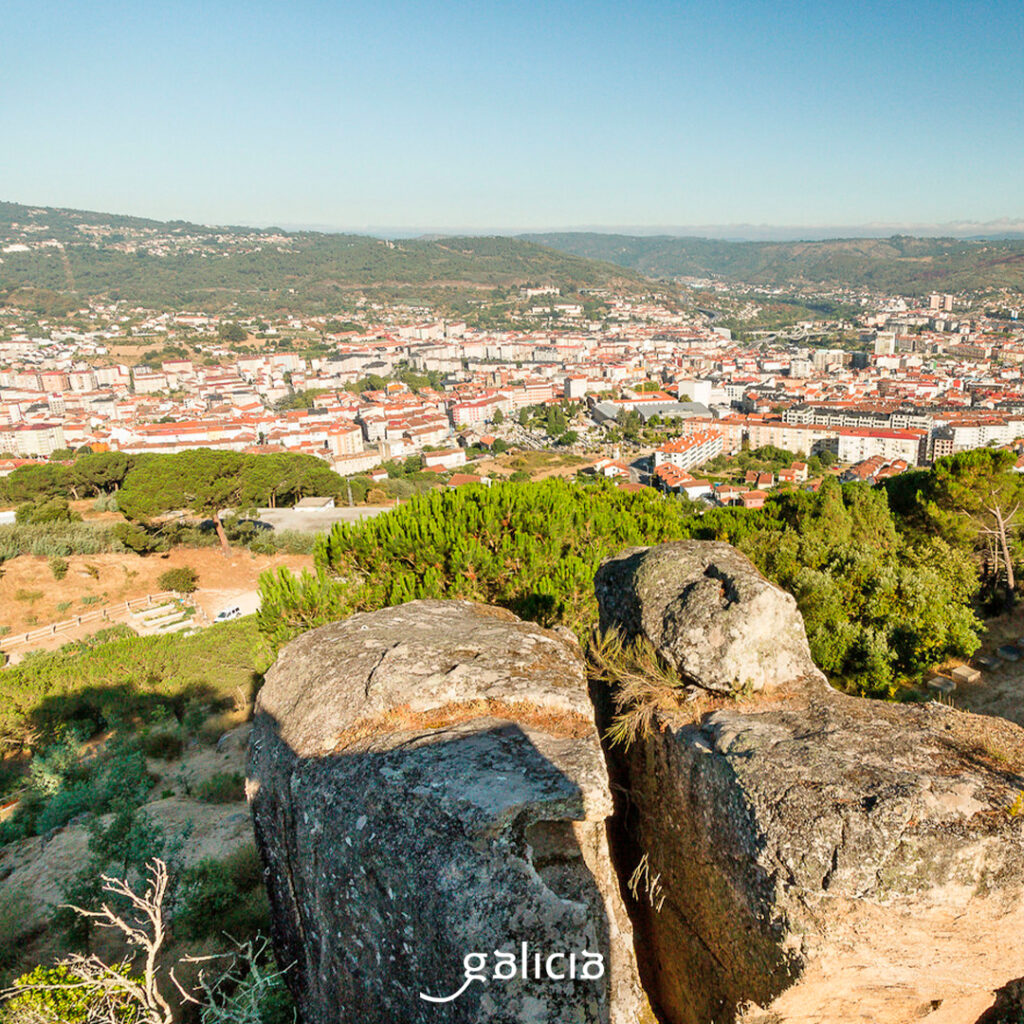
Botanical park of Montealegre (Ourense). From this mountain, 471 m high, we have one of the best views of Ourense, especially from the viewpoint of the Cross, where we have a bench to contemplate the views quietly. This is just one of the attractions of this forest and botanical park that extends over more than 15 ha of the mountain, and in which we find more than 240 species of flora and up to 132 species of fauna. It has a reception and research center and an open-air auditorium, built in the rock over an old quarry. The park has a didactic vocation, as we can see by visiting the children’s vegetable garden and the workshops held throughout the year.
Between November 1 and March 31 it is open from 10 am to 6 pm; in April and October from 10 am to 8 pm and, from May 1 to September 30, from 10 am to 9 pm.
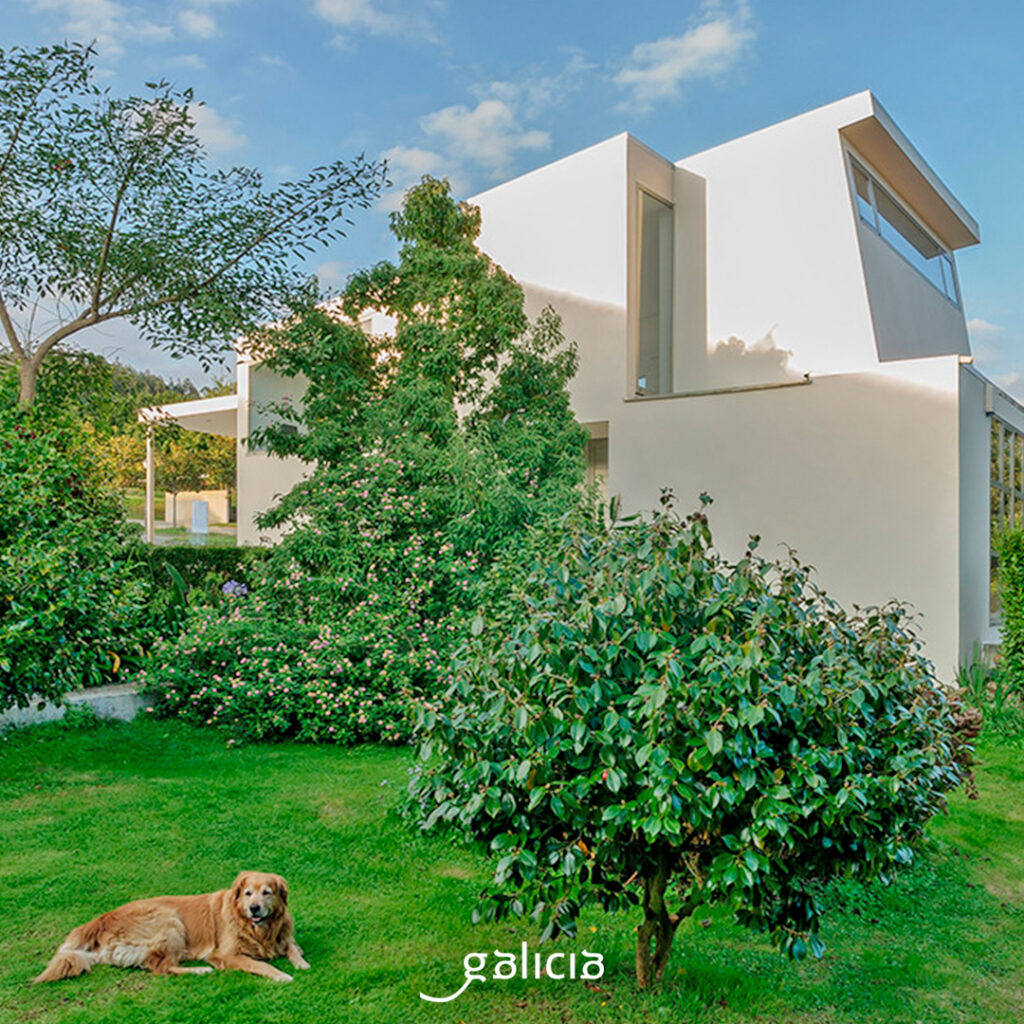
Espazo Caritel (Foz, Lugo). In the Mariña Lucense, very close to the Basilica of San Martiño de Mondoñedo, in O Caritel, we find this curious space in which art and gardening harmonize, inaugurated by Caxigueiro and Flor Núñez in 2010. Espazo Caritel has a botanical garden of 3,500 m2, which highlights the collection of camellias, with more than a hundred varieties, and hydrangeas, surrounded by more than 70 trees from all over the world. What makes it special is that it houses the workshop and exhibition room of the sculptor and ceramist Daniel Río Rubal, Caxigueiro. The artist is also passionate about his garden, which he conveys very well to visitors.
From Tuesday to Saturday it is open from 11.45 am to 1.15 pm and from 5.30 pm to 10 am; on Sundays, from 11.45 am to 1.45 pm. Individual admission for adults is 5 euros. For groups and school groups an appointment must be made, and the price is reduced.
Fern Garden (Bergondo, A Coruña). Almost by chance, Lorenzo Díaz, on his farm in A Lavandeira, began to develop a love for ferns that grew more and more and turned the family land, in a Bergondo where the gardens usually have camellias, hydrangeas and, if anything, an Indian palm tree, into a real jungle. His passion for tree ferns led him to cultivate more than 30 different species, from millions of years ago, some autochthonous and others coming from many parts of the world: Amazon, Mexico, New Zealand, Papua New Guinea… The very rapid maturation of these specimens meant that, in eleven years, the empty lawn was populated with prehistoric trees. Of course, there are also slower varieties that grow one inch per decade.
On the farm, where we find a more classical space and another pure jungle and hatching of vegetation, there is also a greenhouse for cultivation and research. To visit the garden, an appointment is required.