
Walking in the shade of the trees, with the background music of birds, leaves, maybe a fountain or a river, breathing flowers… Isn’t it a great summer plan? In these marvelous gardens the walk will surely be short:
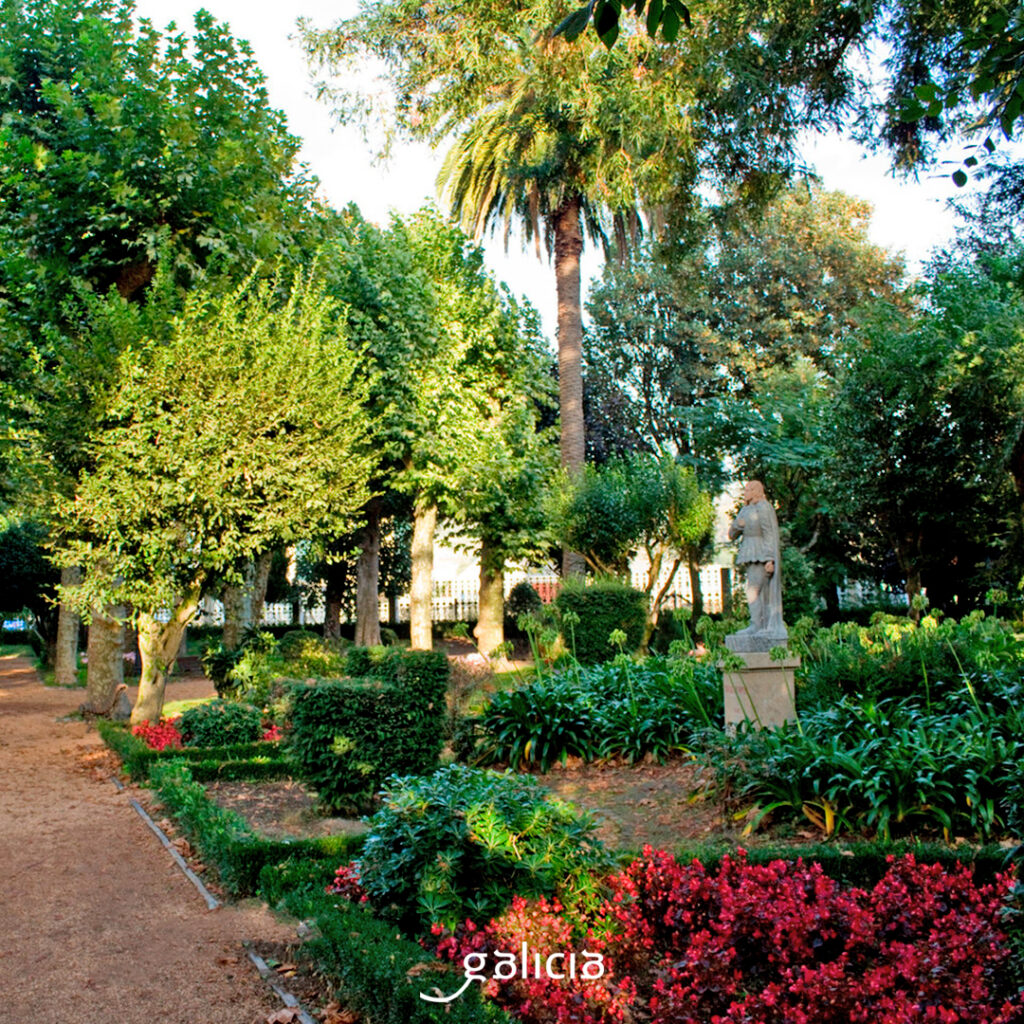
Alameda de Padrón (Padrón, A Coruña). This is the popular name by which the Espolón de Padrón promenade is known, a romantic garden from the 19th century. It is a long riverside promenade of plane trees, located between the old town, in front of the church of Santiago, and the river Sar. It is flanked by statues of Padrón’s most universal writers: to the north, that of Rosalía de Castro (José María Mateos, 1957), financed by Galician emigrants in Uruguay; to the south, that of Camilo José Cela (Ferreiro Bahía, 2003). Here the vegetation is also a monument, since the rows of robust shade plane trees are listed as a singular formation in the catalog of Singular Trees of Galicia.
If we come for a walk on Sunday, we will find the weekly market, which has been held since the Middle Ages. Formerly it was mainly livestock, but today we can find everything, and even taste an octopus á feira (typical food) or some peppers in the area.
Pazo de Oca (A Estrada, Pontevedra). Who hasn’t heard of the Galician Versailles? Well, here it is, practically in the center of the municipality of A Estrada. What began as a medieval fortress with a small orchard and gardens, after several renovations, would become in the eighteenth century in a large landscaped manor. In the baroque extension of the garden, the two ponds stand out: the pond of the virtues, which has a stone fishing boat in the center, and the pond of the vanities of the world, in which there is the boat of war. Around the ponds, a border of thick boxwoods of more than 300 years old, classified as singular. Completing the set, a reticulated garden in which to lose oneself. In the 19th century, romantic and landscaping reforms continued.
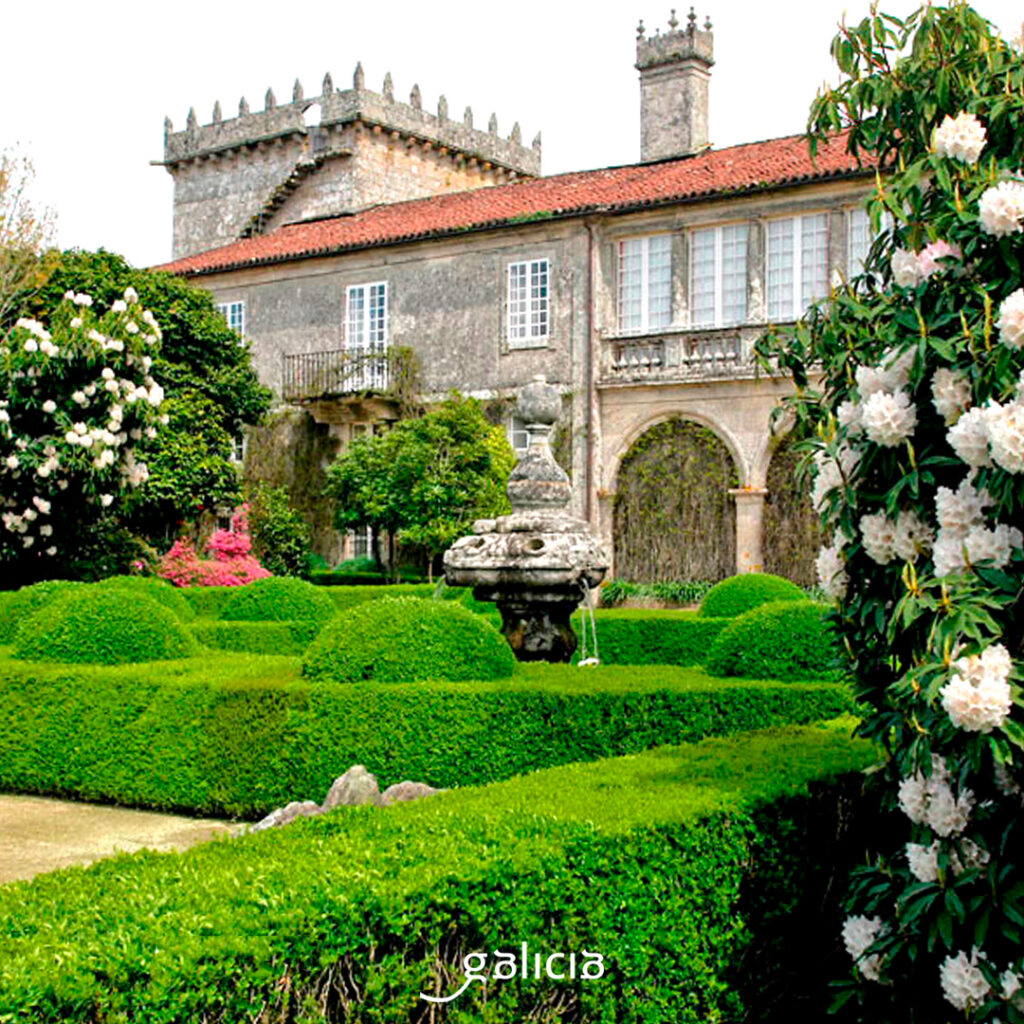
The pazo is owned by the Ducal House of Medinaceli. From March to April it is open from 10 am to 2 pm and from 4 pm to 8 pm, and from November to March, from 10 am to 2 pm and from 3 pm to 5 pm. It is closed on Sundays. Tickets range from 10 to 20 euros, with discounted prices for children under 10 years. Remember that the Pazo de Oca is one of the most important stops on the Camellia Route and, to see them in bloom, it is best to go between January and April.
Labyrinth of Breoghán (Vilarmaior, A Coruña). In this municipality in the Betanzos region, the largest labyrinth in the peninsula was erected in 2022. 6,120 m2 in which there are planted up to 4,000 trees making a Celtic cross pattern inspired by the petroglyphs, very abundant in the area. This labyrinth is no small feat: we have to spend at least 40 minutes to complete the tour. But it is so entertaining, with games along the way to decipher riddles, that maybe we get lost and we get the hours. In the center there is a lookout tower to appreciate the drawing of the trees.
At the entrance there is a kiosk with a terrace, parking and toilets. The labyrinth is open from Saturday eve of Palm Sunday until November 1. In August, the opening hours are from 11 am to 9 pm, with 8 pm being the last time to enter. As for the rates, they are 0 euros up to 7 years, 3 euros from 7 to 12 and 5 euros from 12 onwards.
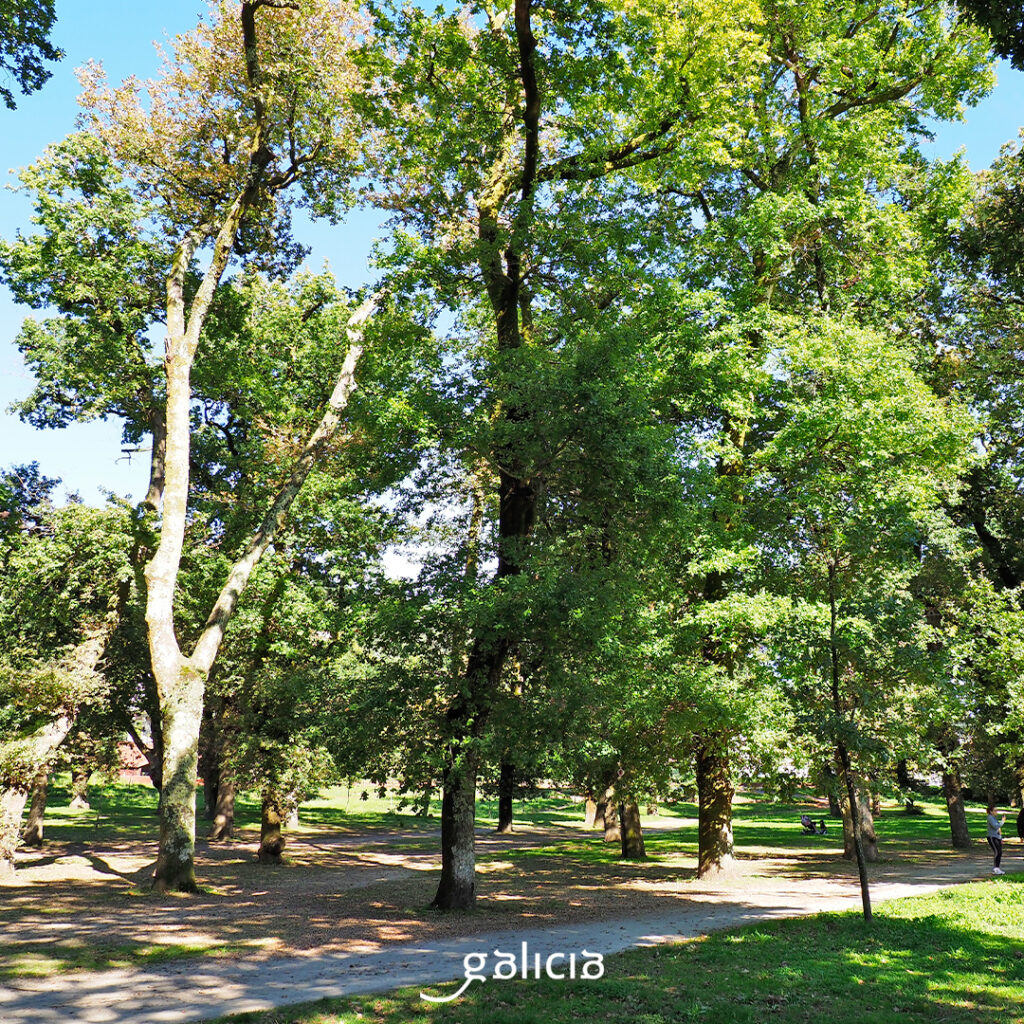
Botanical garden and Carballeira (oak grove) of Caldas de Reis (Caldas de Reis, Pontevedra). What a good idea the city council of Caldas had in 1883 to make this park in the center of town, on the banks of the river Umia. It was the time of splendor of the spas, and was very well received by visitors to the thermal village. It coincides with the Portuguese way, so it is a quite international walk. It is a garden of category, which has the botanical destination certification of the Observer Sciencie Tourism and the Q of tourist quality as a unique public space. In the arboretum, composed of native and foreign species, we find 200 specimens, including the araucaria angustifolia and cunninghamia lanceolata, unique trees. The Carballeira has about 200 oak trees, and is catalogued as a singular tree formation. The collection of camellias is also of great value. The promenade has other attractions in addition to the plants: boardwalk, fountain, sculptures, benches, playground…
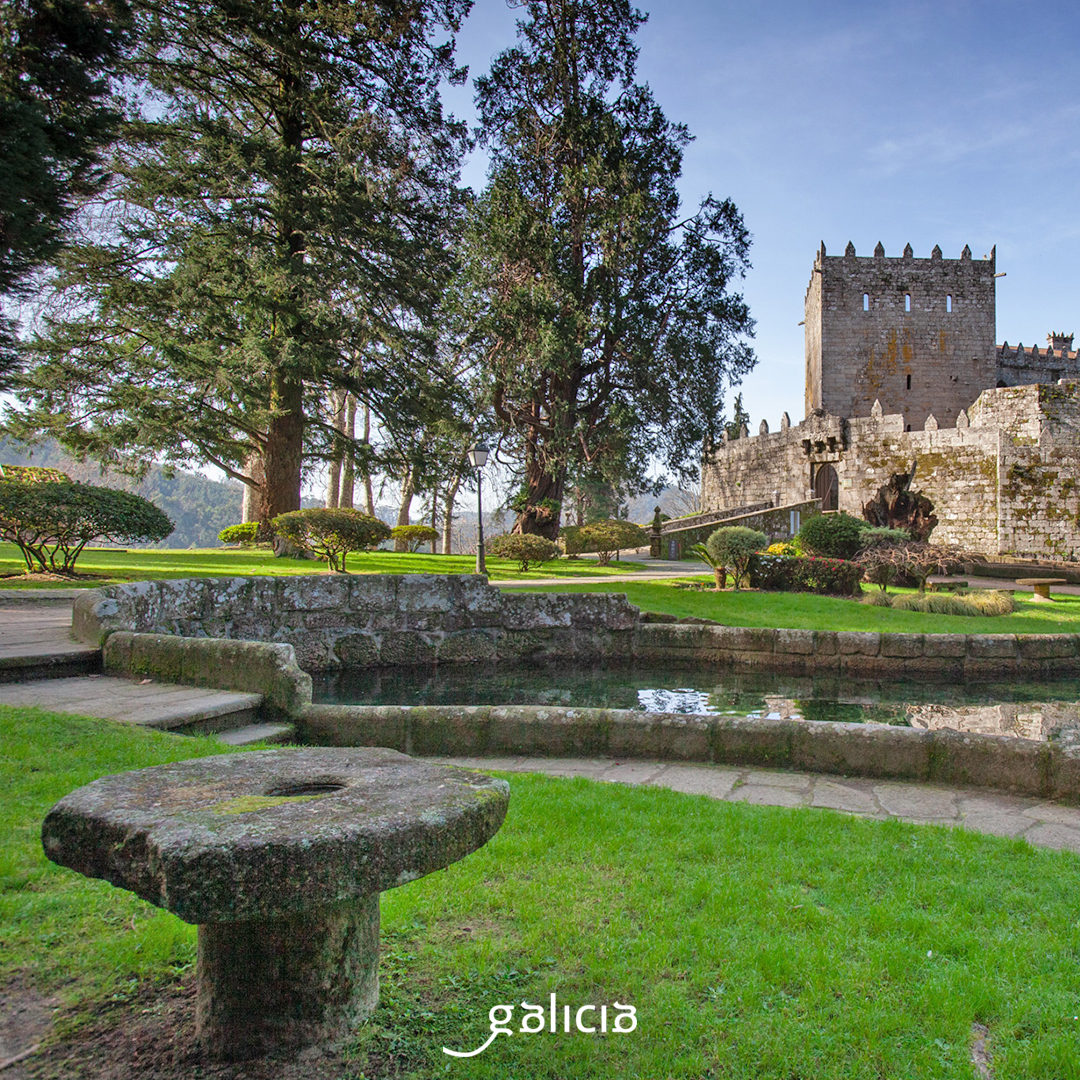
Castle of Soutomaior (Soutomaior, Pontevedra). The castle is located in the geographical center of the municipality, on a hill overlooking the Verdugo river valley. It began as a defensive tower around the 12th century and, in the 15th century, it took the form of a fortress, with Pedro Álvarez de Soutomaior (Pedro Madruga) as lord in its heyday. After successive owners and reforms in the building and in the lands, at the beginning of cultivation, it would pass into the hands of the Diputación de Pontevedra in 1982.
The botanical park grew over time to 29 ha, occupied by about 1,000 specimens of 127 species and 540 different botanical families. There are vineyards, fruit trees, woods, English garden, French garden, and a collection of more than 200 camellias of different types. In 2012 it was the first garden in Spain to be declared a Garden of International Excellence by the International Camellia Society. In fact, it is part of the Camellia Route. Likewise, since 2020, it has been certified by Observer Science Tourism as a destination for scientific tourism in the modality of historical and camellia gardens. Of course, it has also listed several unique trees.
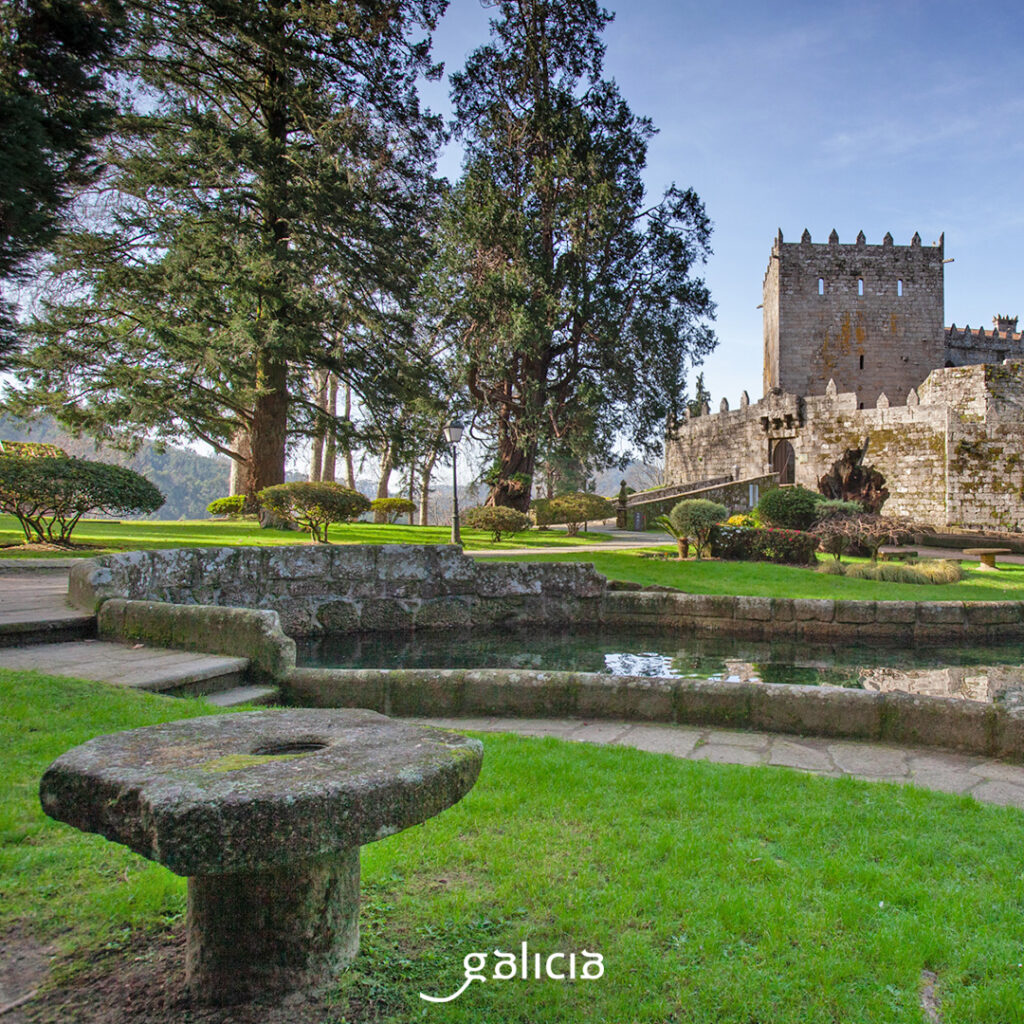
The gardens are open to the public from 10 am to 9 pm between May and September. Between October and April, from 10 am to 7 pm and closed on Mondays. Admission to the castle and gardens is 5 euros. The price is reduced according to age and groups and increased if it is with a guide.