
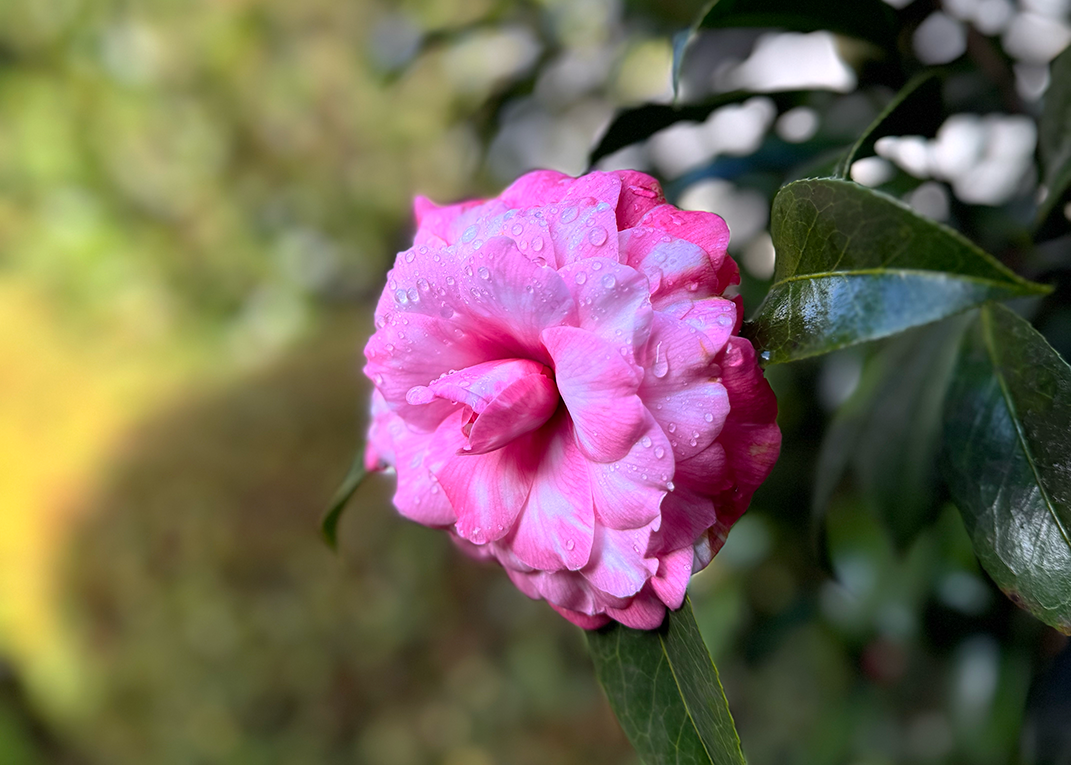
Galicia is an international benchmark for camellia cultivation and production. Its humid climate, mild temperatures, and fertile, acidic soils create the perfect conditions for the flowers to bloom.
Today, nearly 8,000 different varieties of camellia are preserved across historic manors and gardens. To discover some of the places where this flower reaches its full splendor, we offer three four-day themed routes that combine nature, heritage, wine tourism, and gastronomy.
CAMELLIA ROUTES
Camellias Sleeping in… Paradores
A route to discover historic gardens while staying in Paradores de Turismo, monumental buildings transformed into unique hotels.
- Day 1 – Santiago de Compostela
The journey begins in Santiago de Compostela, a UNESCO World Heritage City and the endpoint of the Camino de Santiago.
Spend the afternoon exploring the historic center and visiting the Santiago Cathedral, home to the famous Pórtico da Gloria.
For lodging, the ideal place is the Hostal dos Reis Católicos, located in Praza do Obradoiro. This former pilgrims’ hospital is one of Spain’s most iconic Paradores.
In the evening, enjoy the lively culinary scene in the old town and have tapas on popular streets such as Rúa do Franco or A Raíña.
- Day 2 – Santiago, Vedra, and A Estrada
Start the day with a walk along the Alameda de Santiago, one of the city’s most emblematic parks and a magnificent viewpoint of the cathedral.
The route continues to three of Galicia’s most spectacular manors:
-
- Pazo de San Lourenzo de Trasouto, surrounded by historic gardens and an impressive century-old boxwood hedge.
- Pazo de Santa Cruz de Ribadulla (Vedra), famous for its camellia-lined walks and the monumental Carreira das Oliveiras.
- Pazo de Oca (A Estrada), known as the “Galician Versailles” for the beauty of its gardens and ponds.
After the visits, you can return to Santiago and enjoy the nightlife.
- Day 3 – Vilagarcía de Arousa, Meis, and Cambados
The route heads to O Salnés in the Rías Baixas. First stop is Pazo de Rubiáns, in Vilagarcía de Arousa, where gardens, forest, and vineyards house an outstanding collection of camellias.
Take the opportunity to taste local cuisine with products from the estuary such as mussels, scallops, or oysters, paired with Albariño wine.
In the afternoon, visit Finca A Saleta in Meis, an English-style garden with numerous exotic species and camellias.
The day ends in Cambados, where you can stay at the Parador de Cambados (Pazo de Bazán).
- Day 4 – Cambados
The final day is dedicated to visiting Pazo de Fefiñáns, one of Cambados’ most emblematic historic sites.
Here you can tour the cellars, walk through Albariño vineyards, and stroll through gardens with native species. A perfect way to conclude the route by exploring the connection between historic gardens and wine-making tradition.
Camellias Sleeping in… Manors
This route invites you to discover some of Galicia’s most beautiful manors, staying in grand buildings surrounded by gardens and nature.
- Day 1 – Padrón
The route begins in Padrón, a historic town linked to the Jacobean tradition and Galician literature.
Visit the Botanical-Artistic Garden of Padrón, declared a Historic Garden, with numerous plant species among walks and ponds.
Nearby is Pazo de Lestrove, the former residence of Santiago archbishops, now a hotel.
For dinner, don’t miss trying the famous Padrón peppers.
- Day 2 – Santiago, Vedra, and A Estrada
After breakfast, head to Santiago de Compostela to stroll through the Alameda before continuing to three essential manors on the Camellia Route: Pazo de San Lourenzo de Trasouto, Pazo de Santa Cruz de Ribadulla, and Pazo de Oca, the “Galician Versailles.”
All of them stand out for their historic gardens and camellia collections.
- Day 3 – Vilagarcía de Arousa, Cambados, and Meis
The route continues to O Salnés. First stop: Pazo de Rubiáns, surrounded by gardens and vineyards. Next, visit Cambados, the Albariño capital, to enjoy its seafood cuisine.
In the afternoon, visit Finca A Saleta, in Meis, one of Galicia’s most interesting private botanical gardens.
- Day 4 – Pontevedra and Soutomaior
The final day starts with a visit to Pazo de Lourizán, surrounded by an extensive estate with tree species from around the world.
The route ends at Soutomaior Castle, whose gardens were the first in Spain recognized as an International Camellia Excellence Garden.
Camellias and… Wineries
This route combines the beauty of camellia gardens with the discovery of Rías Baixas’ wineries and vineyards, the cradle of Albariño wine.
- Day 1 – Cambados
The journey begins in Cambados, a grand town known as the Albariño capital.
Highlights include the ruins of Santa Mariña de Dozo and Pazo de Fefiñáns, where you can visit the cellar and taste local wines.
- Day 2 – Vilagarcía de Arousa and Ribadumia
The route continues to Pazo de Rubiáns, with gardens and vineyards cultivating numerous camellia varieties. Then head to Carril, famous for its clams, before visiting Pazo Quinteiro da Cruz, in Ribadumia, which houses over a thousand camellia varieties.
- Day 3 – Meis
The day is devoted to Finca A Saleta, one of Galicia’s most outstanding botanical gardens, with camellias, rhododendrons, azaleas, and other exotic species.
- Day 4 – A Toxa, Combarro, Pontevedra, and Soutomaior
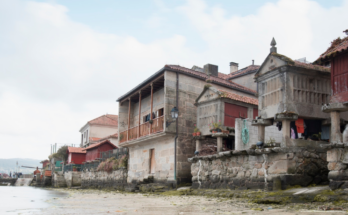
The final day begins on A Toxa Island, known for its chapel covered in shells. Next, visit Combarro, one of the most picturesque towns in the Rías Baixas, before continuing to Pontevedra. The route ends at Soutomaior Castle, surrounded by one of Galicia’s most important camellia gardens.
TOUTIST TRAIN OF THE CAMELIA IN BLOOM
The Tourist Trains of Galicia are here. Among their routes is the Camellia in Bloom Route!
The experience starts at Santiago de Compostela station, the departure point for this tourist train that travels through some of Galicia’s most emblematic camellia gardens. From the start, the journey combines heritage, nature, and the unique landscapes of the Rías Baixas.
The first stop is Pazo de Rubianes, in Vilagarcía de Arousa, one of Galicia’s main camellia landmarks. Its internationally recognized botanical gardens showcase thousands of specimens and numerous varieties of this flower, brought from the East in the 19th century.
After the guided visit, the journey continues to Vilagarcía station, then to Arcade. Here you will have free time to eat and enjoy local cuisine, especially famous for the oysters from Vigo estuary.
In the afternoon, the itinerary continues to one of Galicia’s most impressive historic gardens: Soutomaior Castle. Besides touring the interior, you can stroll through the gardens, where century-old camellias coexist with exotic species in a landscape of great value.
Next, the route heads to another must-see location: Pazo Quinteiro da Cruz, in Pontevedra province. Its gardens host over a thousand camellia varieties and are part of the European Historic Gardens Itinerary, making it one of Galicia’s most notable botanical spaces.
After this last visit, the group returns to Vilagarcía de Arousa, where the experience concludes before taking the train back to Santiago de Compostela, completing a day dedicated entirely to discovering the beauty of camellias in Galicia’s historic gardens.
There will be only two departures: March 7 and 21, 2026. Book your ticket now!
Don’t wait! Check the routes and reserve your Camellia experience to enjoy the most floral Galicia this spring.