
The Costa da Morte, that stretch of coastline marked by the dangers of the sea, shows at the same time one of the most vivid and impressive landscapes of Galicia. From the most extreme points, the views dwarf our world. Sunrises and sunsets are filled with meaning.
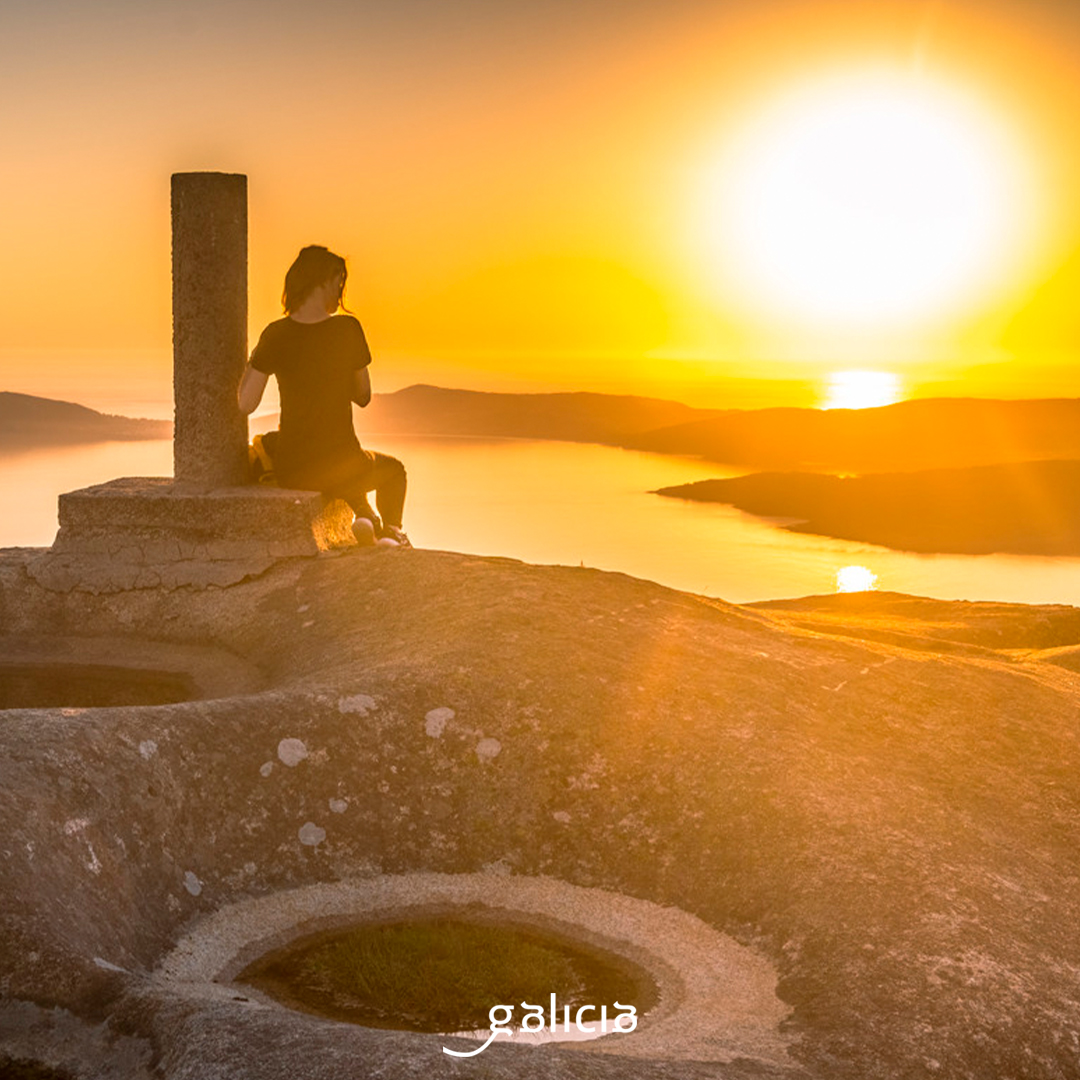
The sensation of contemplating how the day fades from the cliffs becomes even more valuable when we realize that we are witnessing the last sunset of continental Europe. Due to the situation of the earth’s rotation axis, this happens twice a year: between March 24 and April 23 and between August 18 and September 19.
The three places from which this last sunset is best observed are at Cape Touriñán, at the viewpoint of O Veladoiro, in Fisterra, and on Monte Pindo. Whether or not we are on these dates, it is always a good idea to end the day on the Costa da Morte.
Here we propose a three-day plan for three extraordinary sunsets:
1st day. Sunset in Fisterra. We start with a tour of the center of Fisterra. In the Ara Solis square, we already see the importance of the sun in the history of the city, of the Finis Terrae. Also the House of the Quadrant, apropos of the clock on the facade, takes us to the sun and time, or almost to the eternal.
After visiting the Castle of San Carlos, which houses the Fishing Museum, we approach the church of Santa Maria das Areas, at the foot of the mountain of the cape, and the hermitage of San Guillerme, from where on the equinoxes you can see how the sun is magically aligned with the peak of Monte Pindo.
Skirting the coast, after visiting the cape and the Fisterra lighthouse, facing the Atlantic, we can stop at Fóra beach. Further on, the cape of Nave awaits us and, at the top of the cliffs, the viewpoint of O Veladoiro which, further west than Fisterra, assures us a slightly later sunset.
2nd day. Sunset at Cape Touriñán. The second day we continued north to Camelle, in Camariñas, where we remembered the German hermit who almost lived as part of the beach in the Man Museum. On the way to Cape Vilán, we stopped at the port of Arou and, further on, at the Englishmen’s Cemetery, where the 172 sailors who died in the shipwreck of the Serpent in 1890 are buried.
At Cape Vilán, we visit the Interpretation Center of shipwrecks, lighthouses and maritime signals, essential to immerse ourselves in the life of the coast. And, since we are here, we go up to the viewpoint of A Virxe do Monte. We can take the opportunity to make a stop in Camariñas, and visit the Lace Museum and, in the afternoon, go to Muxía, with its traditional conger eel drying sheds. And, of course, we visit the sanctuary of A Virxe da Barca, where we follow the custom of commending ourselves to the stones. We see how the whole spiritual world, of whatever sign, surrenders to the power of nature.
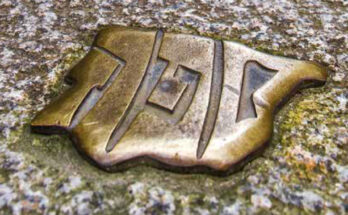
Inland, about 4 km away, we visited the monastery of San Xulián de Moraime, a great Romanesque work in which we even discovered an ancient astral map on a door. And finally, we head to Cape Touriñán, the westernmost point of Spain, to enjoy our second sunset.
3rd day. Sunset on Monte Pindo. Nothing better to start the third day than a walk along the beach of Langosteira, in San Martiño de Duio. Afterwards, we can continue to the lighthouse of Cee, about 10 km away, which has magnificent views of the Cape of Fisterra, the beach of Carnota and the Lobeiras Islands.
From here we go to Carnota. There, in the Open Archaeological Museum, we discovered many petroglyphs of astral theme. Being in this area, whether the weather is good or bad, it is a must to visit the beach of Carnota, a 7 km promenade of first class sea air.
The afternoon was dedicated to Ézaro, in Dumbría, where the fresh water meets the sea all at once from the fervenza do Ézaro (Ézaro waterfall). And we climb to the viewpoint, a tough test in cycling competitions, to get a bird’s eye view of the area.
Following the coastline we arrive at Monte Pindo, our Celtic Olympus. Above all, at the peak of A Moa, we became a mountain to contemplate our third wonderful sunset.