
Here come more legends! This time, they have to do with the tomb (which one is it going to be? The Apostle’s, of course); two bridges, O Demo and Pasatempo, and two mountains, Pico Sacro and Monte Pindo.
Tomb of the Apostle Santiago. For a place to become a centre of pilgrimage it needs a well-established history. The history of Compostela cannot be understood without that of the Apostle St. James and his tomb.
According to tradition, St. James the Greater was beheaded in Jerusalem by Herod Agrippa I around the year 45. As he had preached in Gallaecia, his disciples Theodore and Athanasius decided to bring his remains and bury them here. They traveled with them by boat (according to some versions, made of stone), from the port of Jaffa to the Arousa estuary and the Ulla, entering Iria Flavia, today Padrón. By the way, the name Padrón comes from Pedrón (great stone), a stone (ancient Roman altar) where the friends of Santiago moored the boat when they landed.
When they took the body out of the boat, they placed it on a rock that took the shape of a sepulcher, as if the body was modeling it. The story, with variations, says that, looking for a place to bury him, they loaded him onto a cart and, with the ‘help’ of Raíña Lupa (Queen Lupa), the local chief, they transported him with two oxen to the Libredón forest (today Compostela) and buried him.
Much later, in the 9th century, a hermit named Paio who lived nearby, guided by a very bright star in the firmament, came across the burial place of the Apostle, where Theodore and Athanasius also lay. After informing Teodomiro, then bishop of Iria Flavia, and the latter informed King Alfonso II El Casto, word began to spread and a church was built. During the reign of Alfonso III, a new church began to be built and, later, another one was built on top of it: the cathedral.
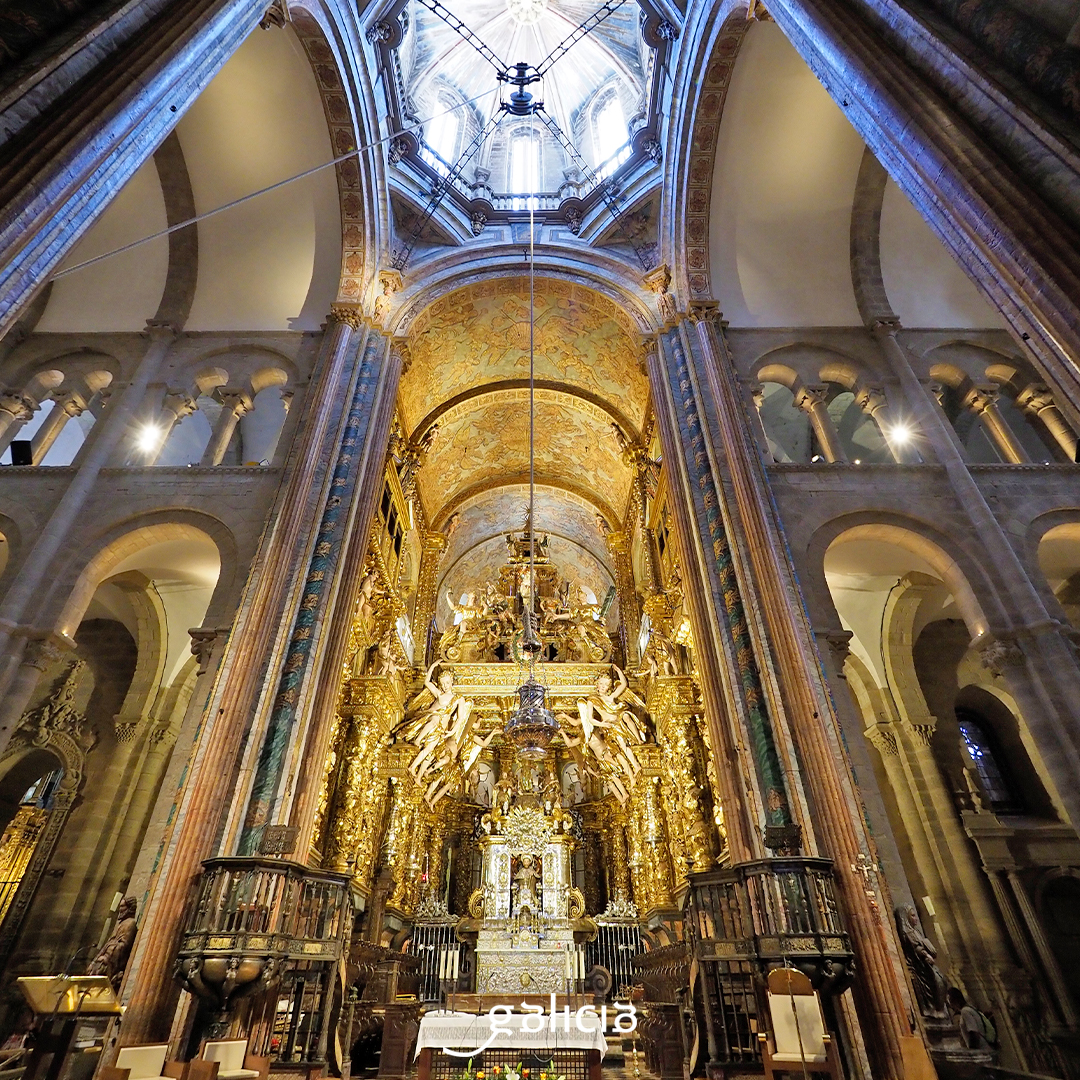
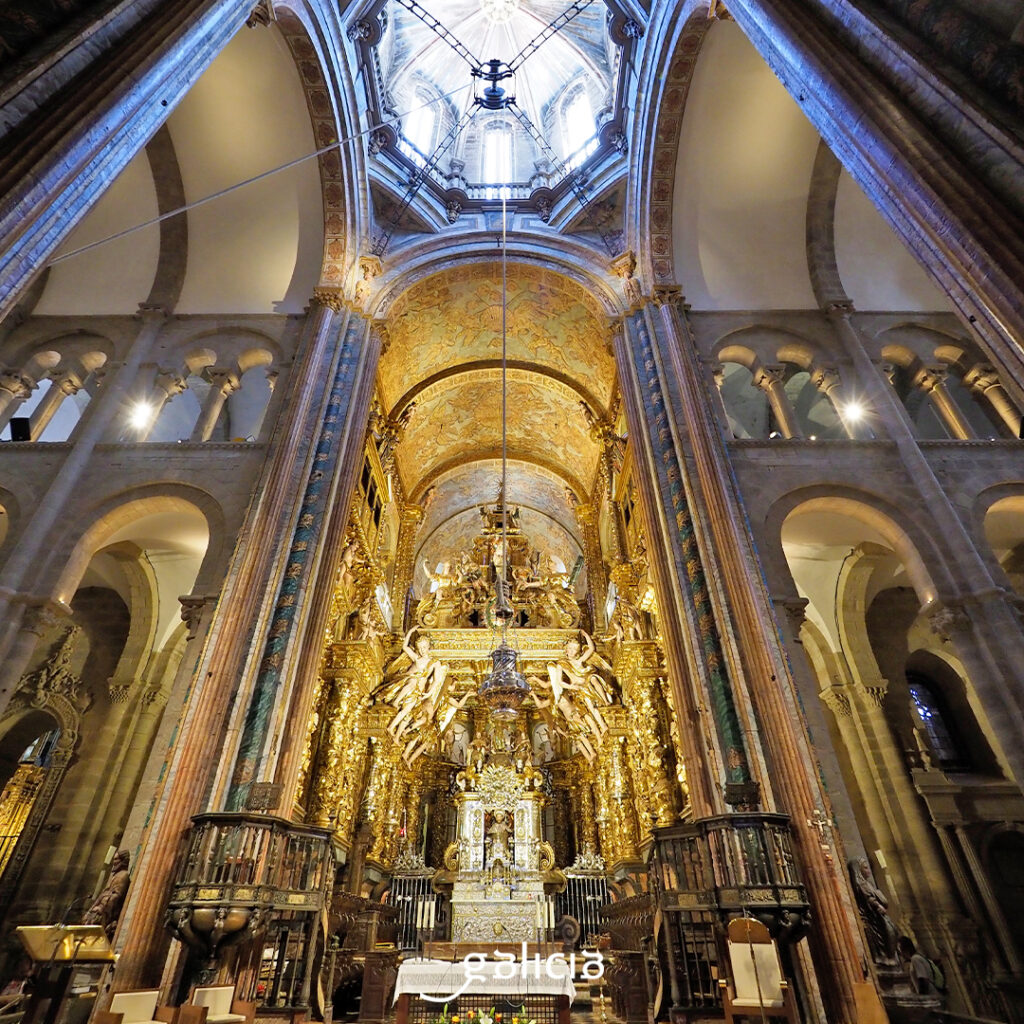
Today, the tomb with the relics of Santiago, Teodoro and Atanasio is under the main altar, in a silver urn in the crypt of the cathedral.
Ponte do Demo (Devil’s Bridge). In an isolated corner among the trees, in the middle of an enclosed meander of the river Deza, we find the Benedictine monastery of San Lourenzo de Carboeiro, from the 10th century. About a hundred meters from the building, there is a bridge of medieval origin over the river to access the monastery, which also connects the municipalities of Silleda and Vila de Cruces. It is known as Ponte do Demo (Devil’s Bridge), so close to the monastery and with such a name? How so? Apparently, the original bridge was quite delicate and could not withstand the floods of the Deza, so the monks had to continually rebuild it. They had no choice but to commission the Demon, who had a reputation as a good builder, to build a strong bridge. But when dealing with the Devil, you always have to give something in return. In this case, he would build the bridge in a weekend, but all the souls that crossed it before it was finished would go to him.
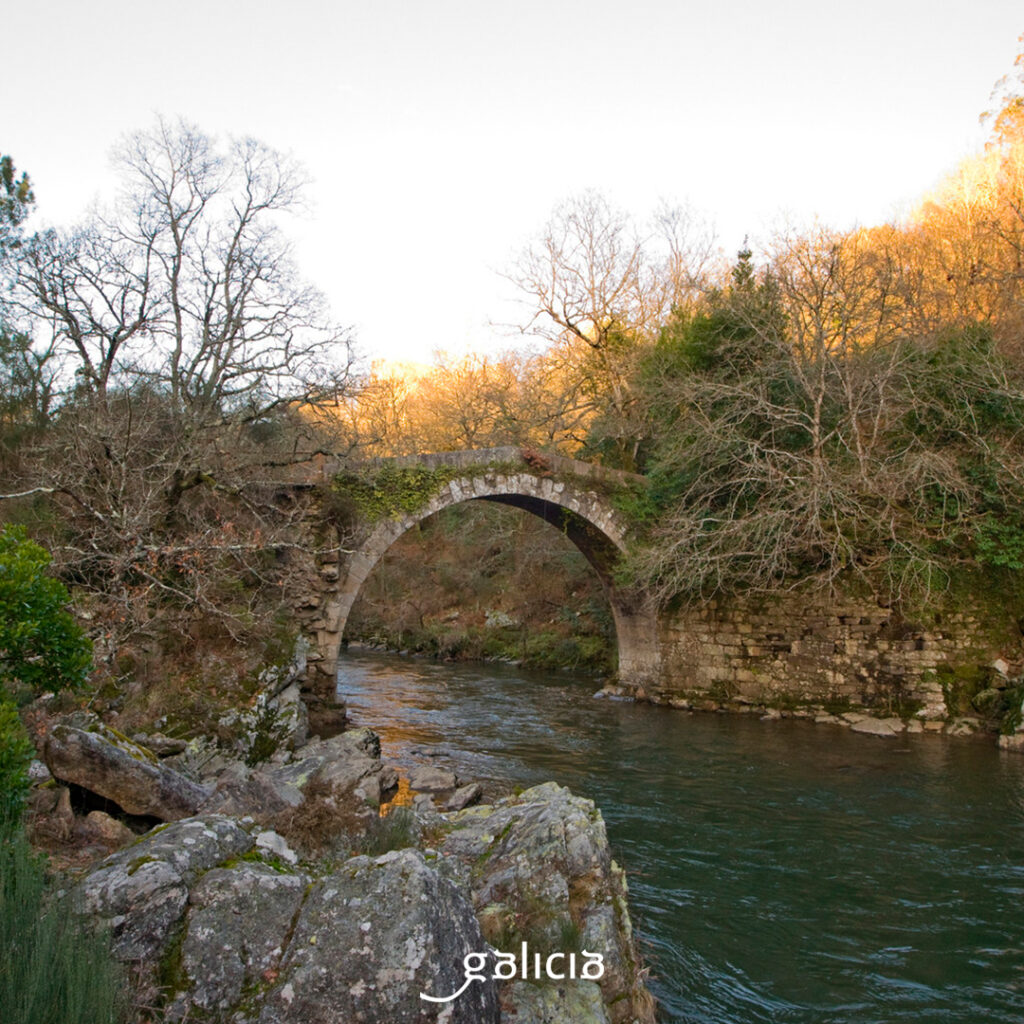
The monks, very clever, delayed the departure of the parishioners that Sunday, so that not a single soul was left in the devil’s power. Filled with rage, the devil wanted to destroy the bridge, but he had done so well that he did not succeed. He let it pass because the monks had in the monastery the Psalter of Saint Cyprian, a book always feared by the demons.
When, centuries later, he found out that the Psalter had been taken to Toledo, the demon saw the way clear for his revenge: he returned to Carboeiro with such a storm that the bridge was completely destroyed, leaving the building isolated for a long time.
Pasatempo Bridge in Mondoñedo. This medieval single-arch bridge, restored in the 18th century, crosses the Valiñadares river through the Os Muíños district of Mondoñedo. It is a key bridge in the city, over which the royal road used to pass, and which is linked to a legend that has even left its name; it is not even known what it was called before.
The events took place on 3 October 1483. Marshal Pardo de Cela, a myth in the history of Galicia, had been accused of treason by the Crown of Castile. After three years of fighting in A Frouseira, he had been captured by his own servants, arrested in the house of Fonsa Yáñez in O Castro de Ouro, in Alfoz, and condemned to death as ‘cruel and powerful’.
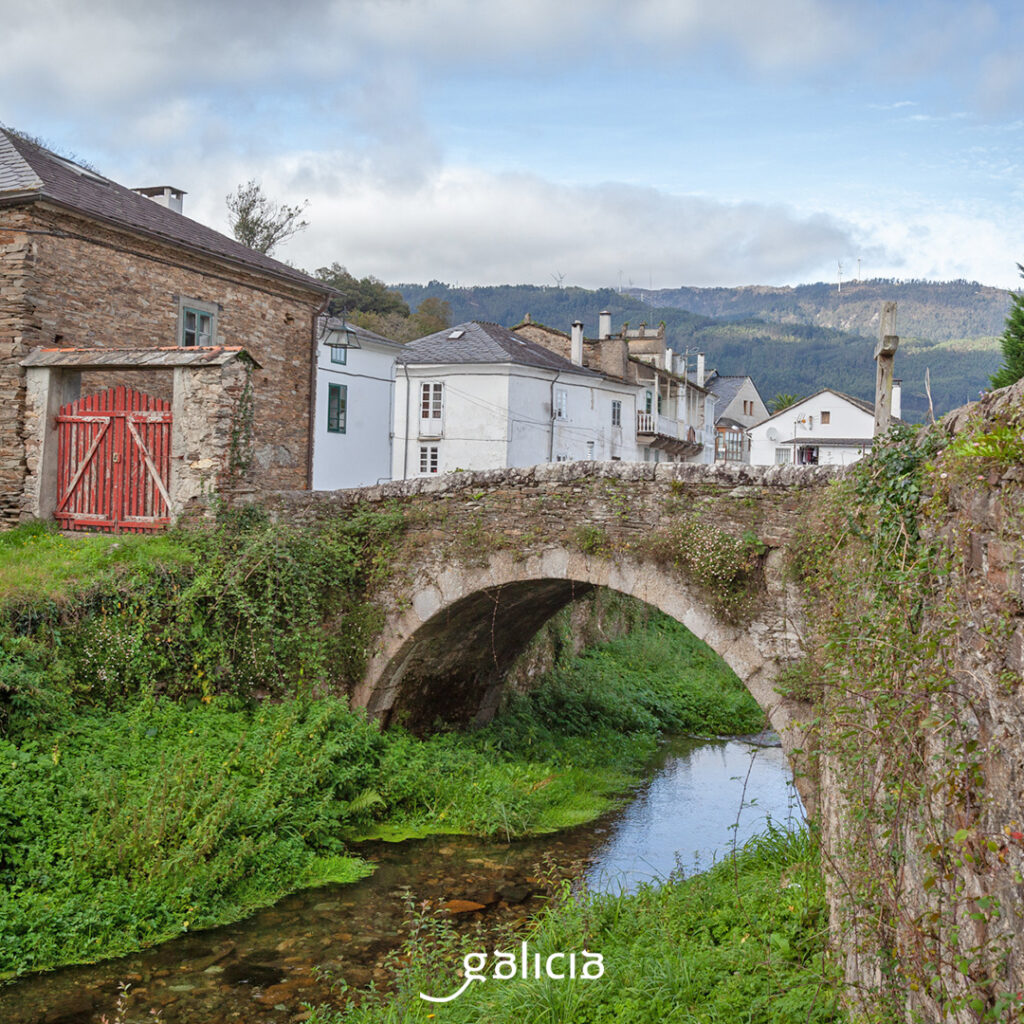
On the day of the execution, in the cathedral square, Isabel de Castro, the marshal’s wife, intended to appear there with a pardon she had obtained from Isabella the Catholic herself to save her husband from death. But the clerics of the cathedral, who were in the thick of it, held her up on the bridge so that the pardon would not arrive in time.
And it did not. The marshal was beheaded. Legend has it that, as he rolled down the scaffold, he was heard to say: ‘credo, credo, credo’ (I believe, I believe, I believe).
Pico Sacro. With its almost 600 m, this mountain in the municipality of Boqueixón has always been a reference point for travellers and for the whole Ulla region. The legend has a lot to do with the traslatio. When Teodoro and Atanasio arrived here with the remains of the Apostle, they went to Raíña Lupa for help. The latter sent them to the mountain, where she hoped that the dragon living there would kill them. When they met the dragon, the disciples of Saint James protected themselves by making the sign of the cross and the beast was appeased. The same thing happened to two brave oxen, which accompanied them pulling the cart to Compostela. Seeing the power of the cross, the queen converted to the Christian faith and helped them.
Near the summit, on the north face of the mountain, there is a blocked cave. Legend has it that a snake lives there and that, in reality, it is not a cave but a tunnel that leads to the Ulla. Nearby is the ‘rúa da Lupa’ (street of the Lupa), an indentation that is identified with the entrance to the queen’s palace, where her treasure is said to be buried.
Undoubtedly, this mountain means and has meant a lot over the centuries. As well as legendary sites, there are vestiges of cave engravings, burial sites and a medieval fortress. There is also the hermitage of San Sebastián, from the 10th century.
Mount Pindo. This mountain rises 627 m on the Costa da Morte, in the municipality of Carnota. Together with the beach of Carnota, at its foot, it forms the Carnota-Monte Pindo protected natural area. Its morphology, with abundant groups of anthropomorphic rocks, has always given rise to a lot of stories. To begin with, there are those who speak of the Celtic Olympus of Galicia, where the sun was worshiped, and of rocks that were once Celtic warriors and characters. Rocks with names, such as the Druid, which almost works like an oracle, because if we stand in front of it and ask a question, the solution suddenly appears in our minds.
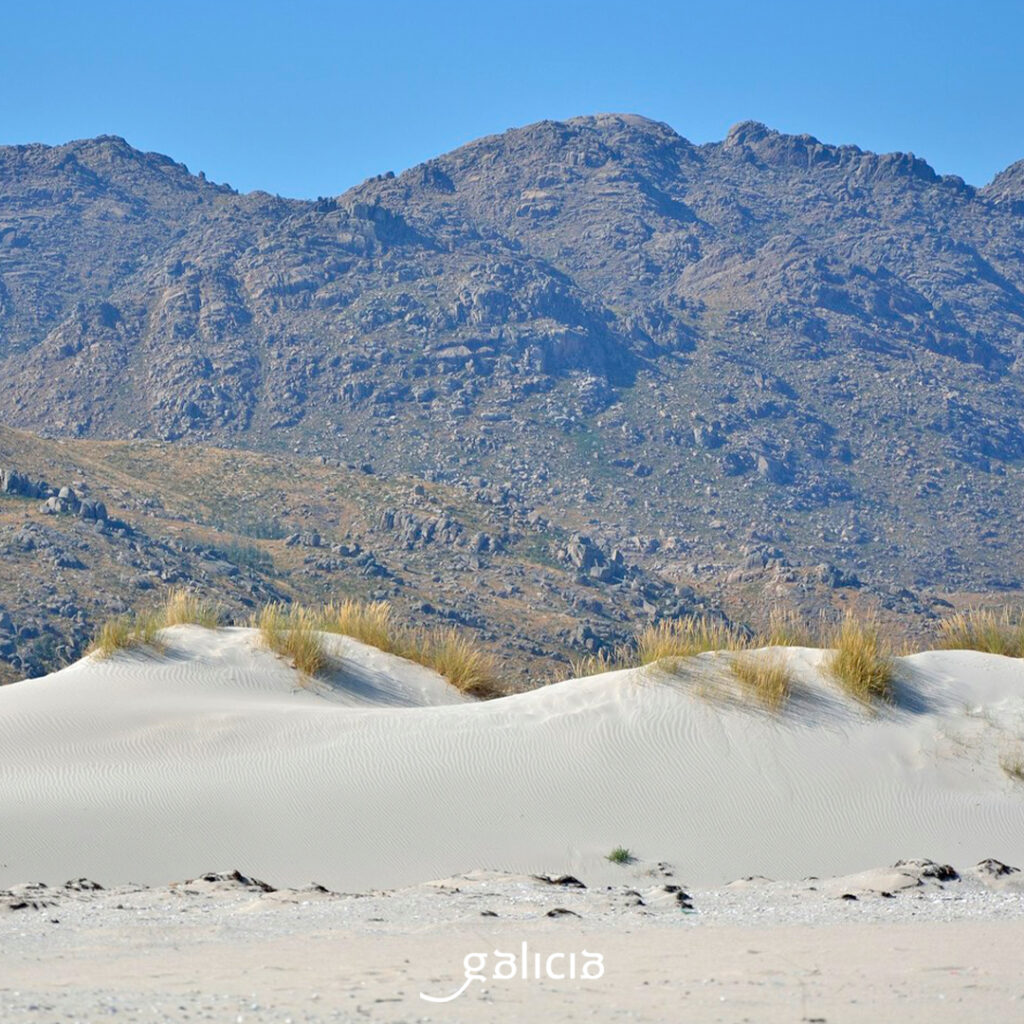
It is also said that other rocks that look like giants are the warriors of Raíña Lupa, and that there are stones that favour fertility, and that the Santa Compaña walks around here, and that it is a meeting place for meigas and mouras…
On the mountain we find the remains of the fortress of San Xurxo, which could also be the castle of Lupa, with buried treasure included. At the highest point, in A Moa, there are several hollows in which water accumulates, which is said to be sacred. There is also a wonderful viewpoint from which you can see Fisterra, Corcubión, Carnota, Cee and Caldebarcos.