
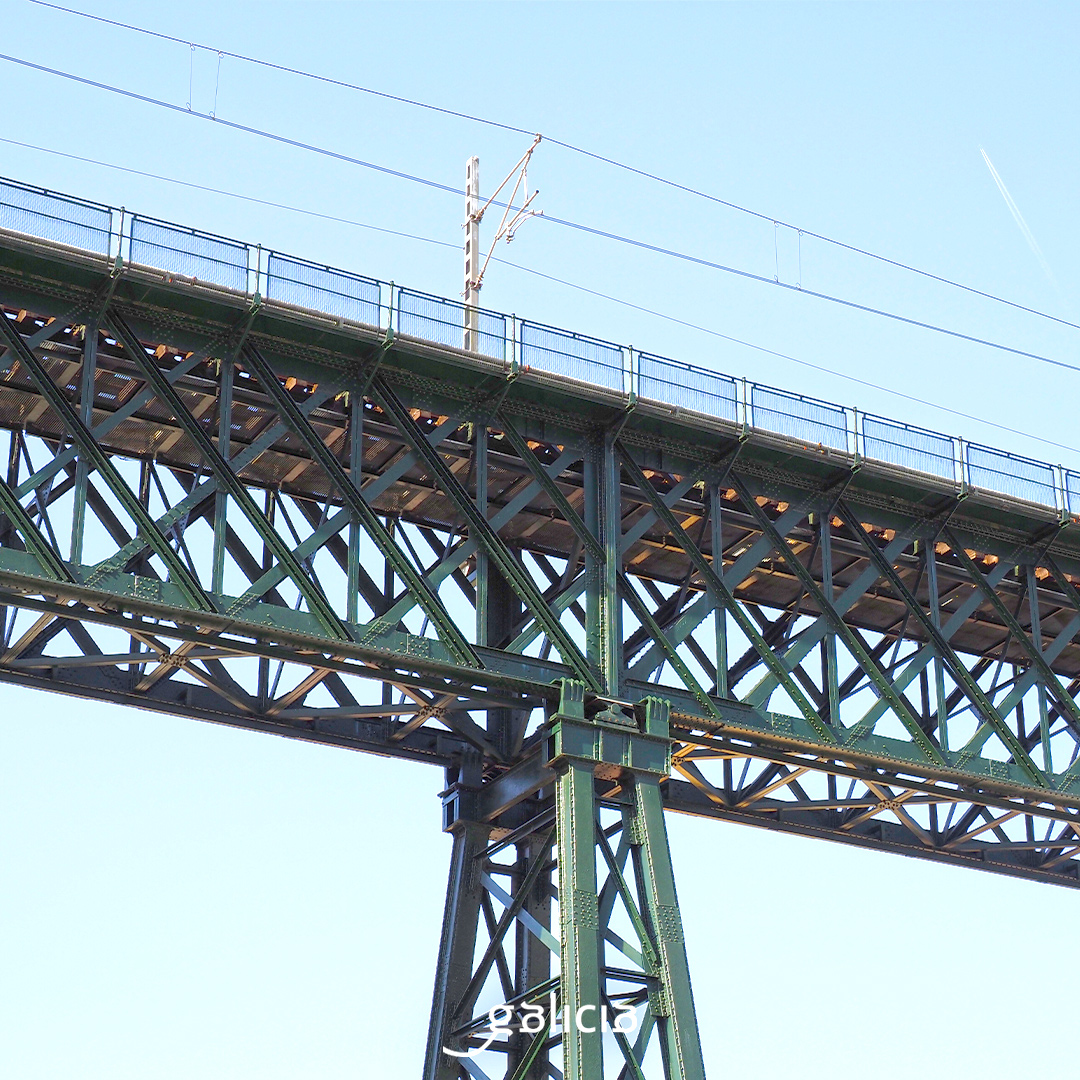
At the end of the 19th century, with the expansion of the railroad, which demanded kilometers of tracks crossing the landscape, and the development of the iron and steel industry, which made it possible to build larger, stronger and faster structures, iron bridges began to be built everywhere. Modern life arrived in Galicia where, with so many rivers, these bridges were a good solution to shorten distances and times. The most significant ones were built between 1883 and 1920.
International Bridge of Tui-Valença. This was the first bridge crossing the Miño between the province of Pontevedra and Portugal. It was designed by Pelayo Mancebo y Agreda and inaugurated in 1886. It measures 399 m and consists of an iron lattice structure, like a tunnel or box, which accommodates a footbridge for road traffic, others for pedestrians on both sides and an upper one for the railway line. Today it is crossed by four trains a day, vehicles and pedestrians, including many pilgrims, as the Portuguese Way passes through here. In 1993 the new international bridge was built, which is the most frequented.
Years ago, before the European Union, when crossing the bridge, the change of country was more noticeable, since at the border the customs officers were waiting to examine the vehicles and check the identity of the travelers. Sometimes the process was slow and there were queues.
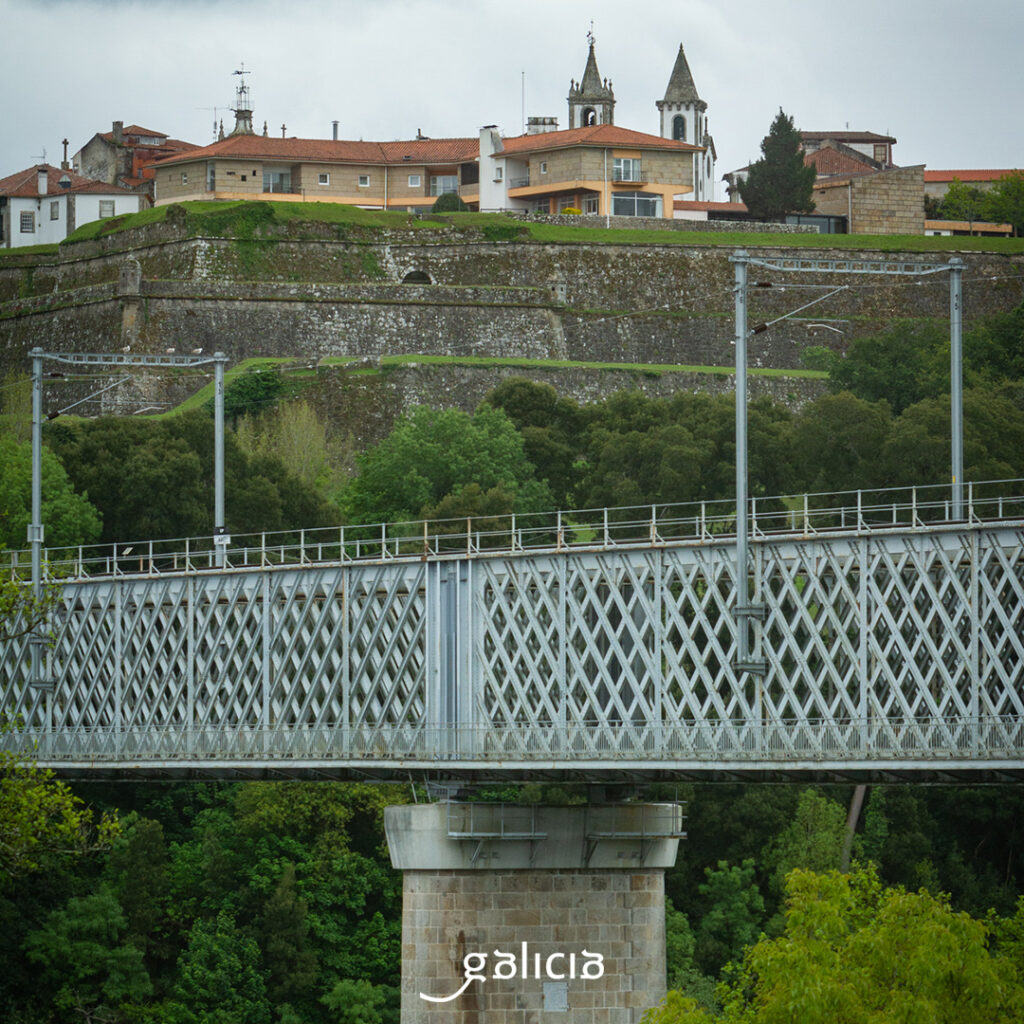
The old iron bridge is a symbol of brotherhood between Tui and Valença. There are occasions, such as the celebration of IKFEM, music festival that was born with the eurocity, in which the bridge closes to traffic and becomes a stage for the event.
Redondela. The so-called “vila das pontes” (town of the bridges) is effectively crossed by two viaducts that cross the Alvedosa river: the Pontevedra and Madrid viaducts. The first to be inaugurated, in 1876, was the Madrid viaduct, so called because the Vigo-Ourense-Madrid railway line passed over it. It is made of laminated iron structure, which gave it a characteristic red color, and lateral parts and pillars of stone. It is 32 m high, above the roofs, and 411 m long. It ceased to be used in 1971. In 2012 it was restored and painted green.
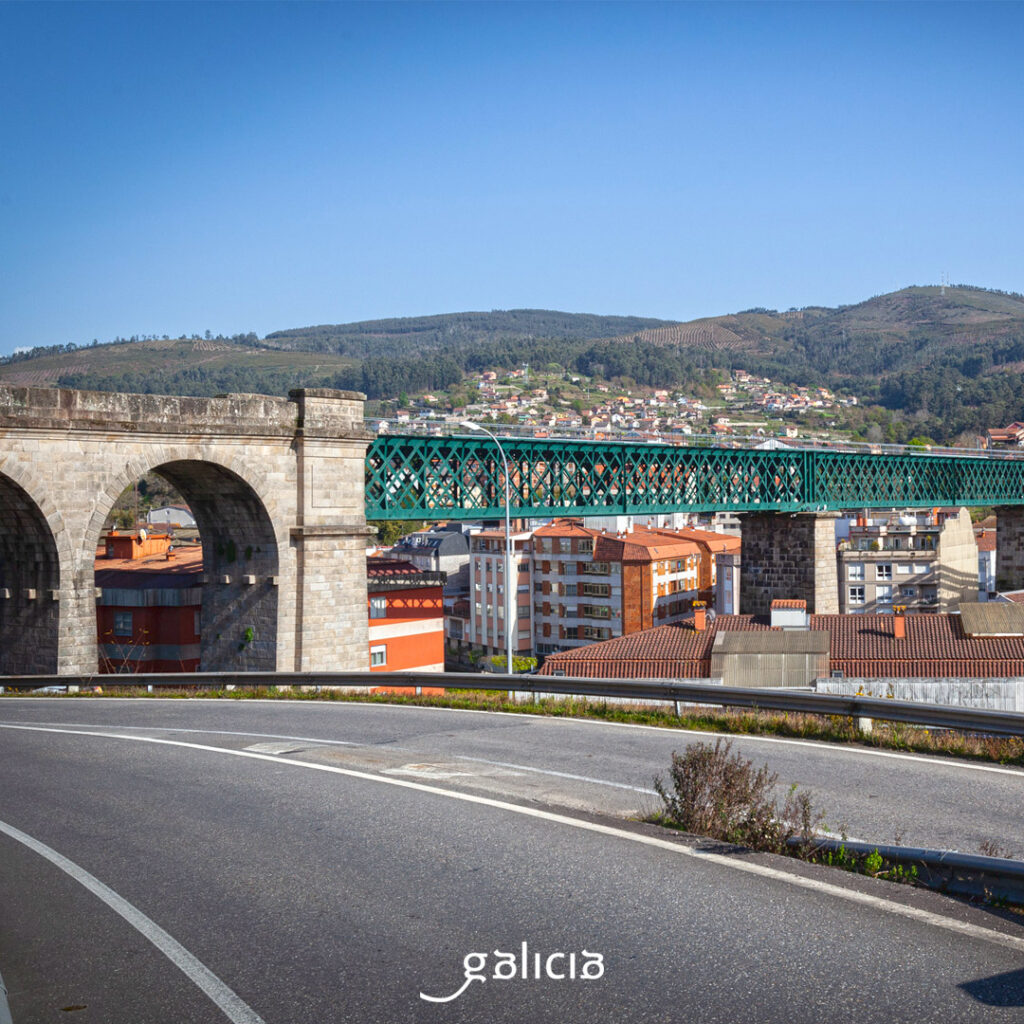
The Pontevedra viaduct, in the Esfarrapada neighborhood, owes its name to the Vigo-Pontevedra line. It was inaugurated in 1884, and has a lighter structure than the one in Madrid. It is also smaller, 250 m. It is still in operation today.
Cortegada-Filgueira Bridge. This bridge joins the municipalities of Cortegada (Ourense) and Crecente (Pontevedra) and crosses the Miño. It was built to continue the old regional road C-531, which linked Vilagarcía de Arousa and Xinzo de Limia. It was inaugurated in 1920 and, following the fashion of the time, has an iron structure, in lattice box, and granite support.
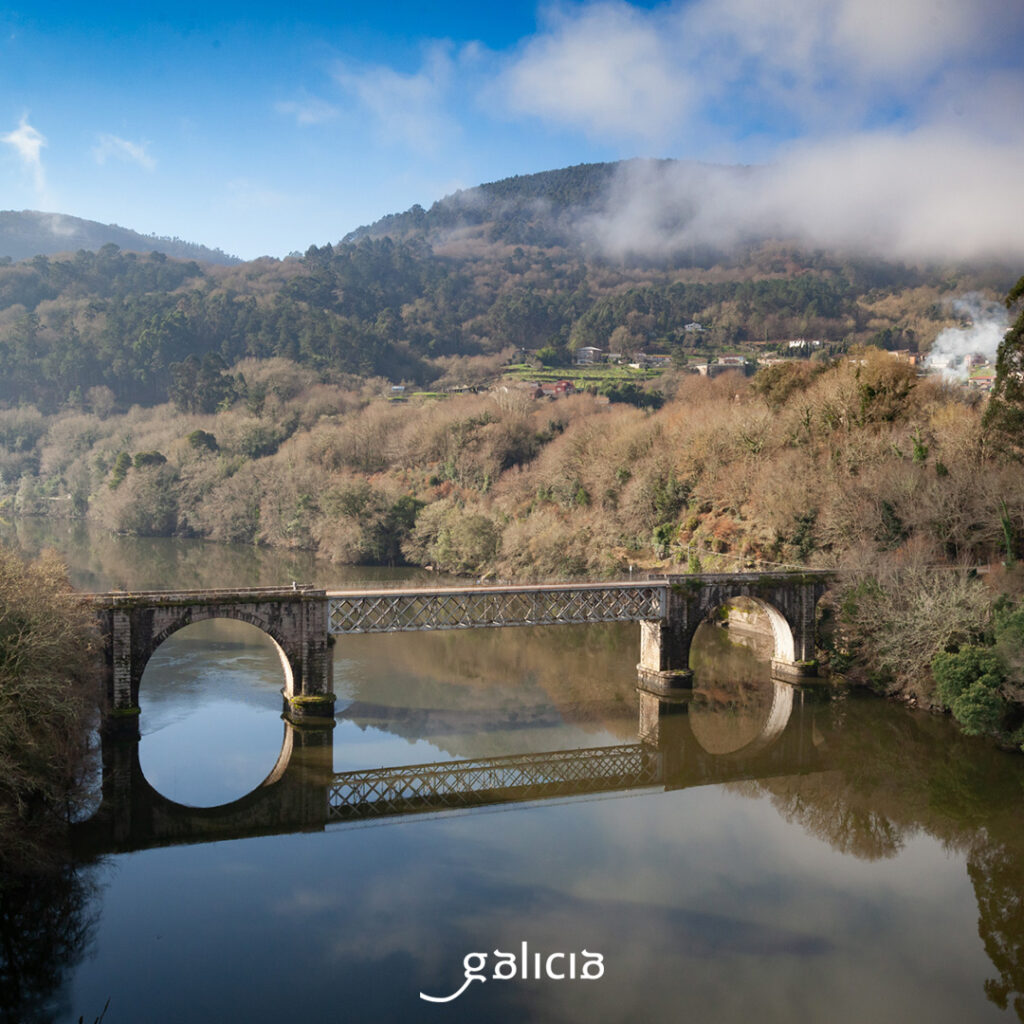
In 2008 a new, larger steel and concrete bridge was opened: the New Bridge.
Ribas de Sil. The iron bridge of San Clodio over the river Sil, which joins San Clodio and Quiroga, was completed in 1883. Its architect was the same as that of the Tui bridge, Pelayo Mancebo. It is 126 m long and 6.40 m wide, and has two stone arches and two pillars supporting two metal decks 78 m and 18 m long. Today the LU-P-5301 road passes through here, and it is still in full activity.
Os Peares. In this enclave of rivers and reservoirs in the municipality of A Peroxa, in the Ribeira Sacra of Ourense, bridges abound, in fact, in addition to this iron bridge there are four, and very close. In 1885 the iron bridge over the mouth of the rivers Búbal and Sil in the Miño was inaugurated, to give way to the railway that linked Monforte de Lemos and Vigo. It is made of an iron structure with latticework and measures 107 m. In addition to the train passing through it, it has a small pedestrian crossing.
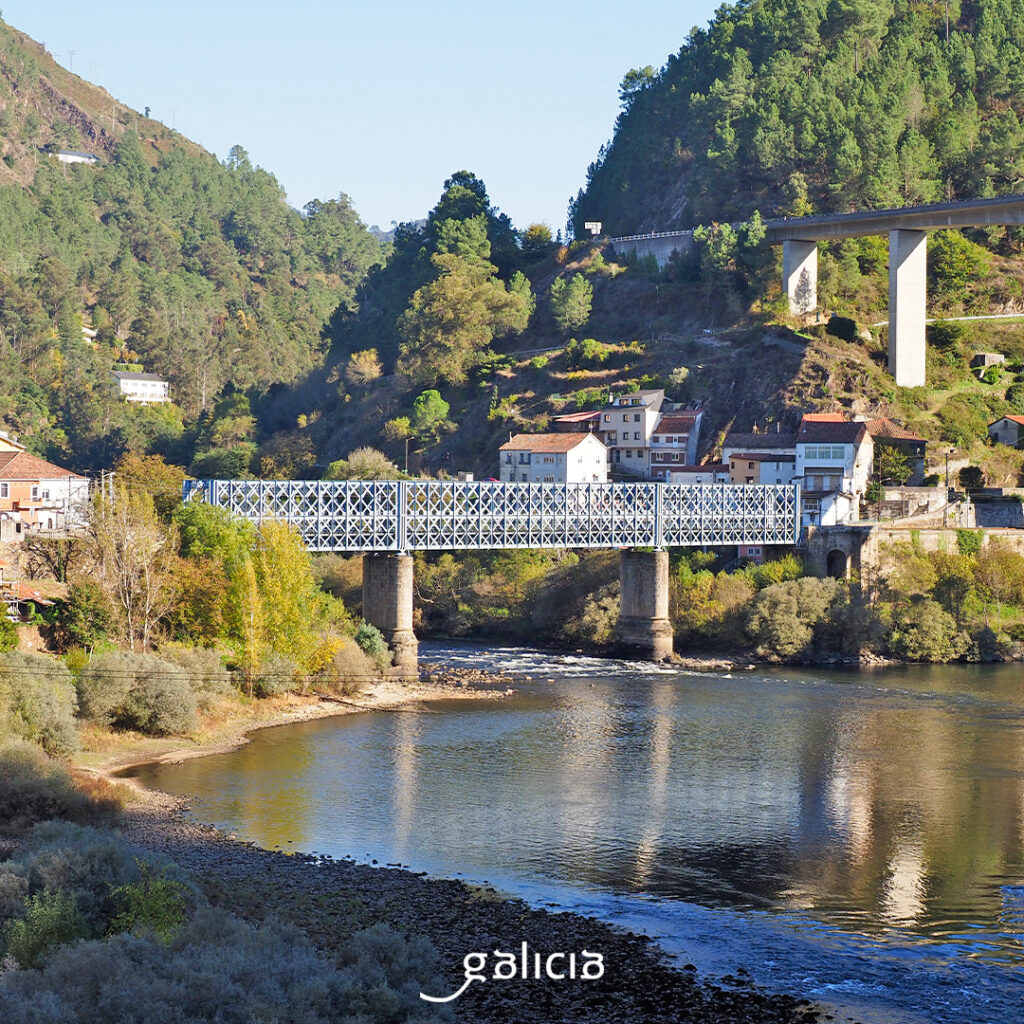
In 2004 it was painted blue (it used to be black).
O Barqueiro Bridge. It is seen that with this toponymy, if the boat was necessary to cross the river Sor, the bridge would be well received. It crosses the river at its mouth, as it passes through O Porto do Barqueiro, a fishing and tourist town in the municipality of Mañón, in A Coruña, connecting the provinces of A Coruña and Lugo. Its structure is made up of three large green metal arches.
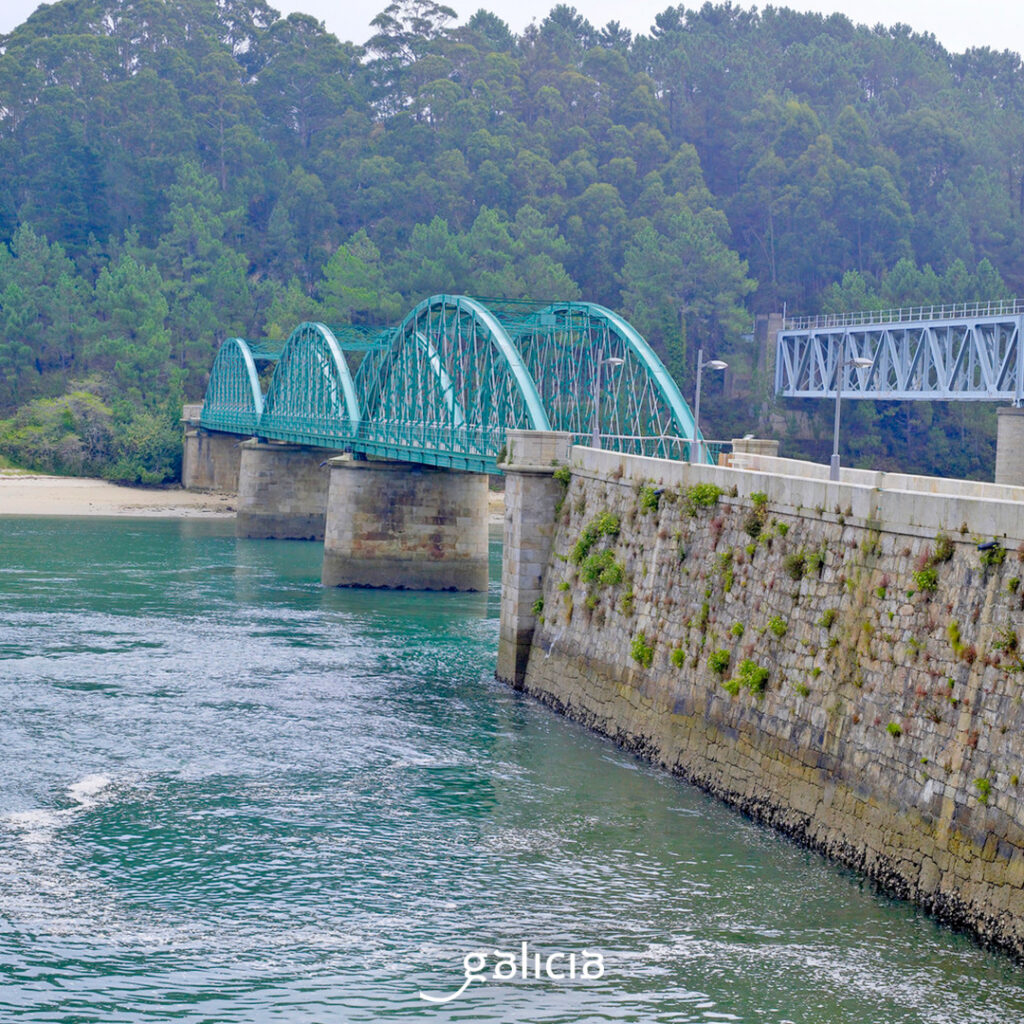
It was inaugurated in 1901. Later two other bridges were built, one for vehicles and the other for railroads, which eventually served their purpose. Around 1980 it was closed to vehicle use and, in 2006, it was rehabilitated for hikers and cyclists. Today it is also known as “A vella ponte” (the old bridge).
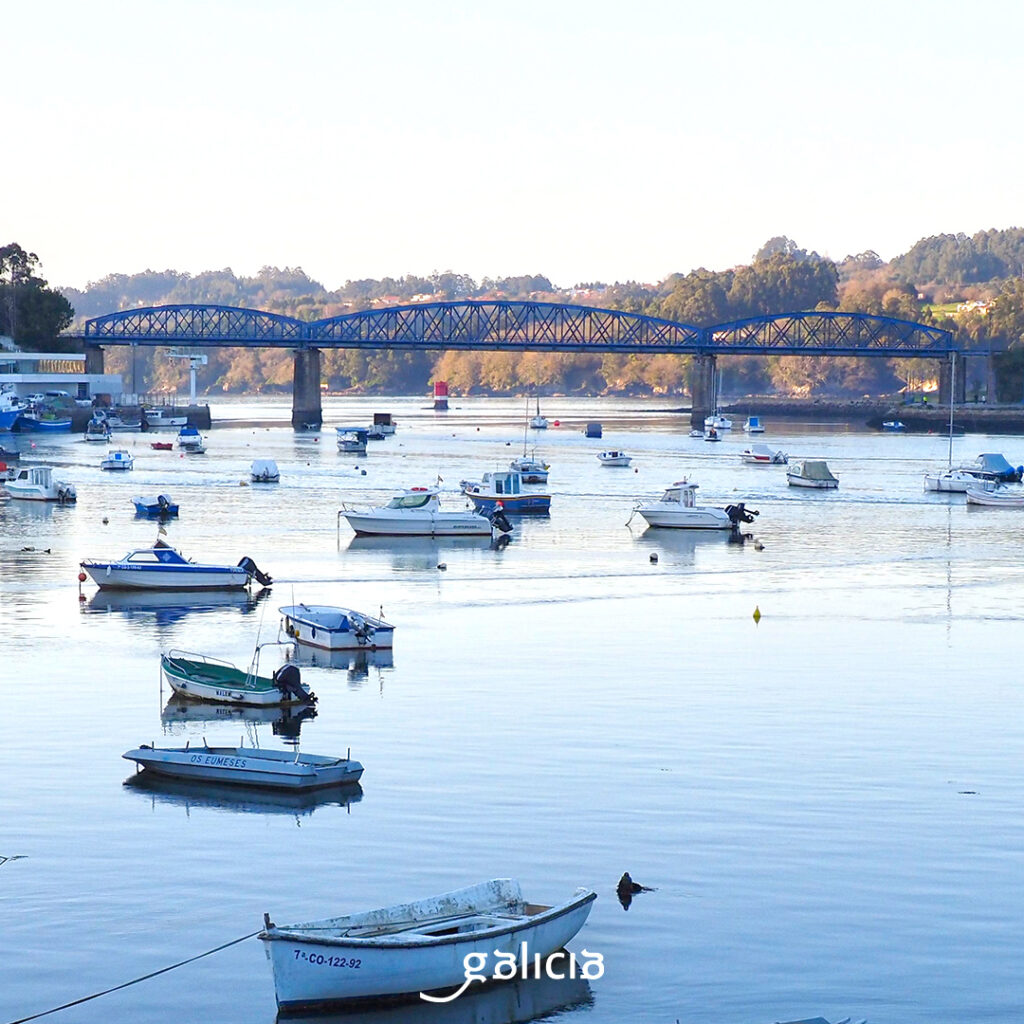
Pontedeume. The iron bridge over the Eume River, already at the entrance to the Ares estuary, is 150.97 m long and is made of two central pillars of stonework, masonry and concrete and lattice arches. It communicates the municipalities of Cabanas and Pontedeume since 1913. The Betanzos-Ferrol railway line passes over it, and it also has space for pedestrians. Together with the stone bridge and the new bridge, further into the Eume estuary, it is part of the most typical postcard of Pontedeume.