
The landscape of the Galician coast is well known: jagged, with an abundance of inlets and ledges, pronounced cliffs, high and low estuaries, beaches, islands…. But what about the interior? From Galicia’s oldest mountains to the banks of heroic vineyards, here are destinations for 5 inland plans.
1.Touring the mountains of Lugo (O Courel, Os Ancares). For mountains, the mountains of Lugo. To the southeast of the province stretches the Serra do Courel. These mountains are quite old: more than 300 million years old! Among them rise important heights of more than 1,600 m, for example, the mountain of Montouto or Formigueiros. Here you can find the natural monument of the geological folding of Campodola-Leixazós, ancient fossils, vestiges of gold mines… There is even a route of Paleozoic villages. That is why O Courel was named a UNESCO World Geopark. But it is not all mountains, there are also steep valleys and many rivers, the Lor being the main one. Between mountains and valleys a wonderful landscape is formed, endowed with the best land to shelter very varied forests, such as the devesa da Rogueira, and fauna according to them (wolves, foxes, wild boars, badgers, martens…). To start our adventure in the mountains it may be a good idea to visit the nature classroom of Moreda do Courel.
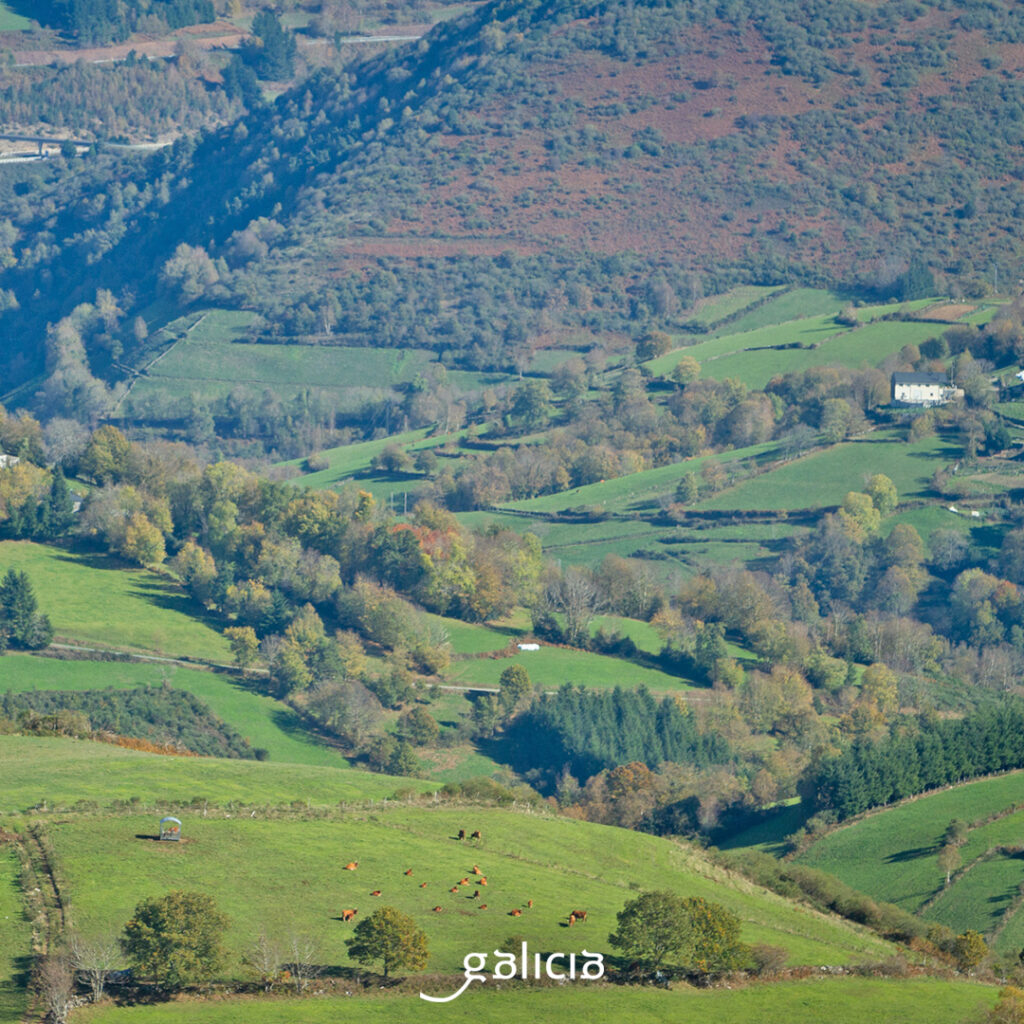
The Serra do Courel is closely linked to another; in fact, the two together are part of the Ancares-Courel 2000 nature network. We refer to the Serra dos Ancares, southeast of the province, north of O Courel and bordering Asturias and León. It covers the municipalities of Cervantes, Navia de Suarna and part of Becerreá. Sierra of deep valleys and high peaks that almost reach 2,000 m, as O Mostallón or Tres Bispos. Its natural wealth earned it the title of Biosphere Reserve (200&). Among the vegetation, lush forests of oak, birch, holly, maple, rowan, yew and, in the highest areas, uces and piornos (hence Piornedo).
With a lot of luck we can see some brown bear or capercaillie. As for the historical heritage: Doiras castle, Roman bridge over the Cervantes River, Navia de Suarna castle… The popular culture and ethnography are also very important, since typical constructions from many centuries ago are preserved. For example, the ethnographic complex of Piornedo, a classroom of nature.
2.Discover the surroundings of Santiago. Within a radius of about 20 km from Santiago, there are four satellite municipalities of the capital but with their own personality, and many treasures to discover, such as Teo, Negreira, A Estrada and Sigüeiro.
15 km from Compostela, Teo surprises us with its historical (church of Santa Maria de Teo, Luou, Lampei, cross of Tribaldes, cross of Francos …), prehistoric (archaeological area of Mount Piquiño), natural (Fraga de Sestelo, carballeira de Francos …) …. Through here passes the Ulla, which we can enjoy in the recreational area of O Xirimbao, with its suspension bridge. Crossing this, as well as crossing the medieval bridge of Pontevea we get to A Estrada, another interesting destination, 26 km from the capital. The Ulla is famous in the area for its salmon, which is fished in the Ximonde and O Xirimbao preserves. There is also a tradition of water sports, such as kayaking, rafting or paddle surfing. A good plan in A Estrada is to do the Romanesque route, with two routes to know almost twenty medieval temples, or any of the 10 marked hiking trails. One of the jewels of the municipality is the Pazo de Oca. Of course, the so-called “furniture capital” is very well furnished.
Sigüeiro, 16 km from Santiago, is the last stop on the English Way before reaching Compostela. It is the capital of the municipality of Oroso. One of its charms is the medieval bridge over the river Tambre and, while we are on the river, the recreational area Illa do Refuxio, a small island next to a dam where there is a small river beach. Around here is the Sigüeiro fishing reserve, which is famous for its trout. In the area there are many remains of mámoas and castros, and a rich vegetation of native species and, by the way, an important golf course.
To the west of Santiago, Negreira, 22 km away, is also on the banks of the Tambre. And it is also an area of mámoas and castros. We find some important pazos, such as Cotón, where the Feira do románico (Romanesque Fair) is held at the end of August. In the eastern part of the municipality we find the picturesque village of A Ponte Maceira, between Negreira and Ames. From the Cotón manor house to the fishing refuge runs the river walk of A Barcala, well-stocked with walkways, bridges, jumps…
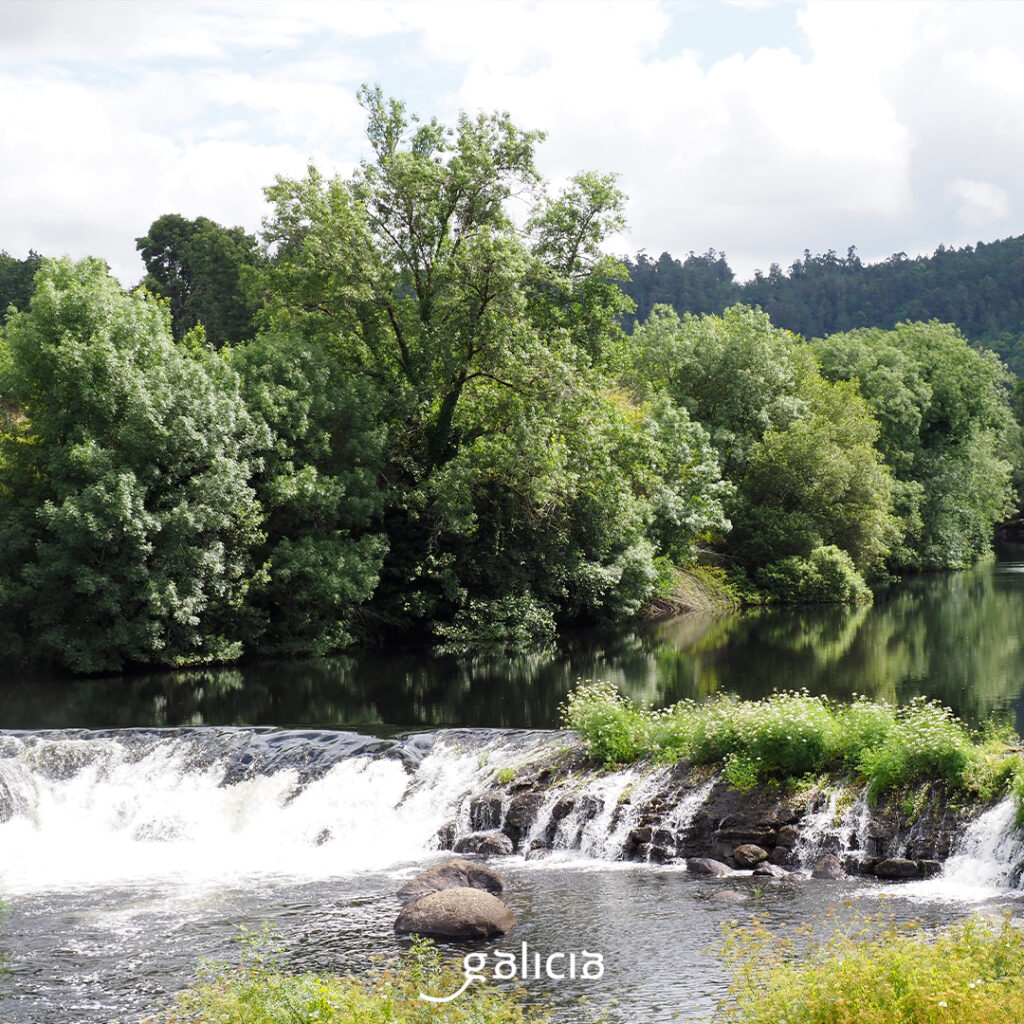
3.Adventure tourism in A Fonsagrada. The primitive path enters A Fonsagrada at a good height, through the Acevo pass, and passes through enclaves such as A Proba de Burón, Montouto or Paradavella. In this mountainous area, adventure is served. We have at our disposal routes to do on foot, by bike, and even on horseback, from very simple, being spectacular, such as Seimeira de Vilagocende, to the hardest, such as A Pena Guímara.
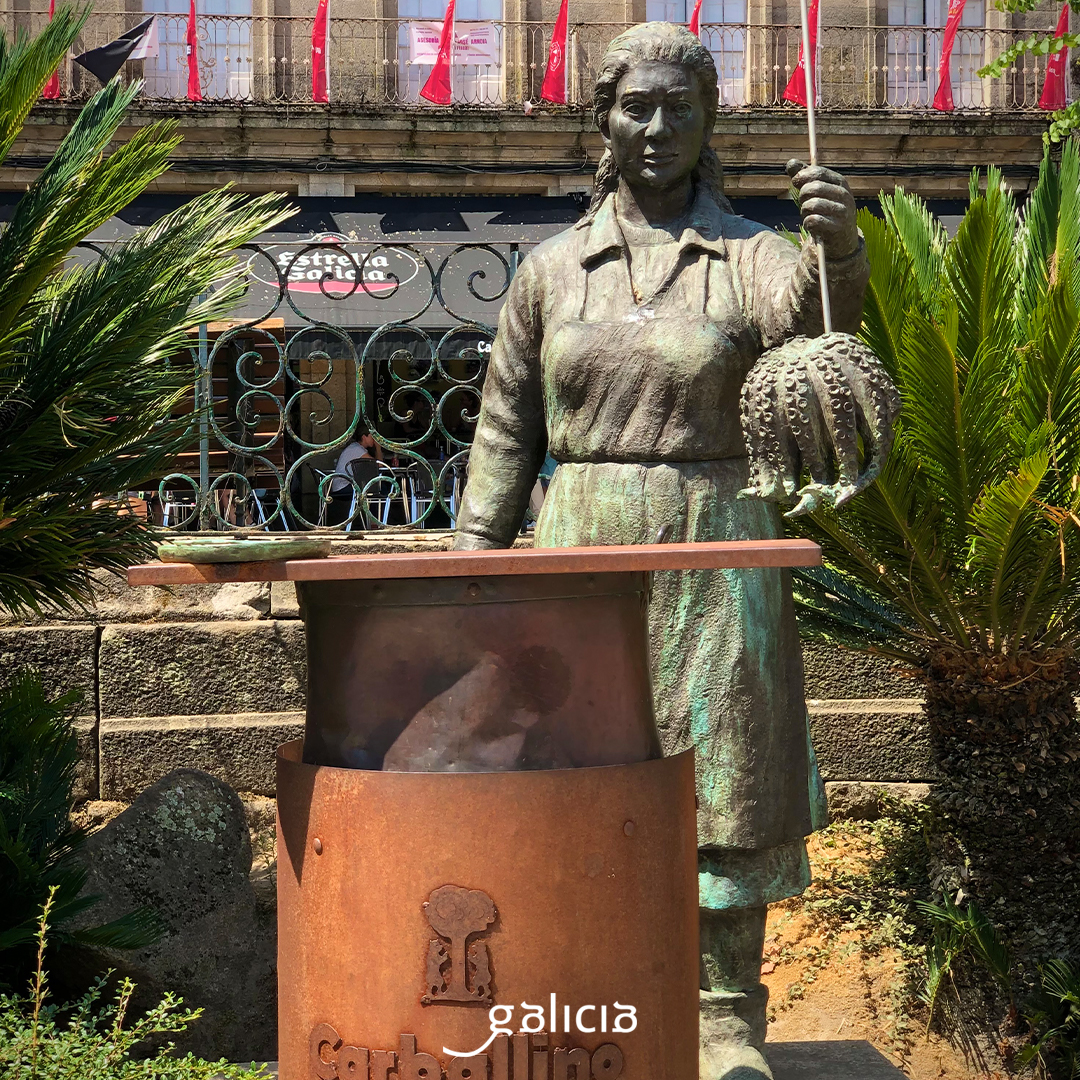
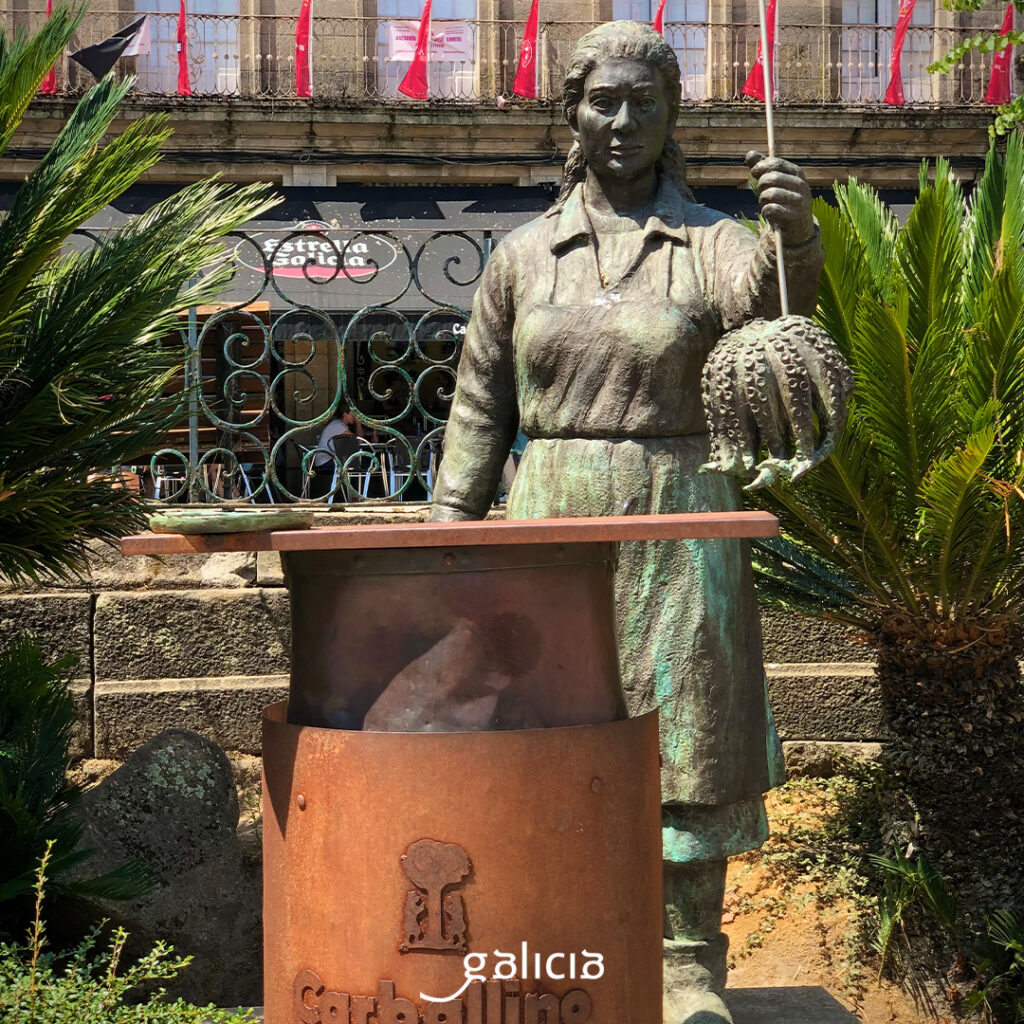
4.Tasting octopus in O Carballiño. Life has its curiosities, such as the fact that one of the places where octopus is most famous is in the interior, in O Carballiño and, more specifically, in Arcos. It seems that the pulpeiras of this parish, who went around the feiras cooking their delicacy in copper pots, spread their knowledge to Lugo and O Carballiño, known for the pulpo á feira. At this year’s O Carballiño octopus festival, the largest octopus á feira tapa in the world was cooked, at least up to that date, August 6. So, besides enjoying the city, the main square, the church of San Cibrán, templo da Veracruz, the thermal baths, the carballos… it is a must to taste the octopus, enjoy!
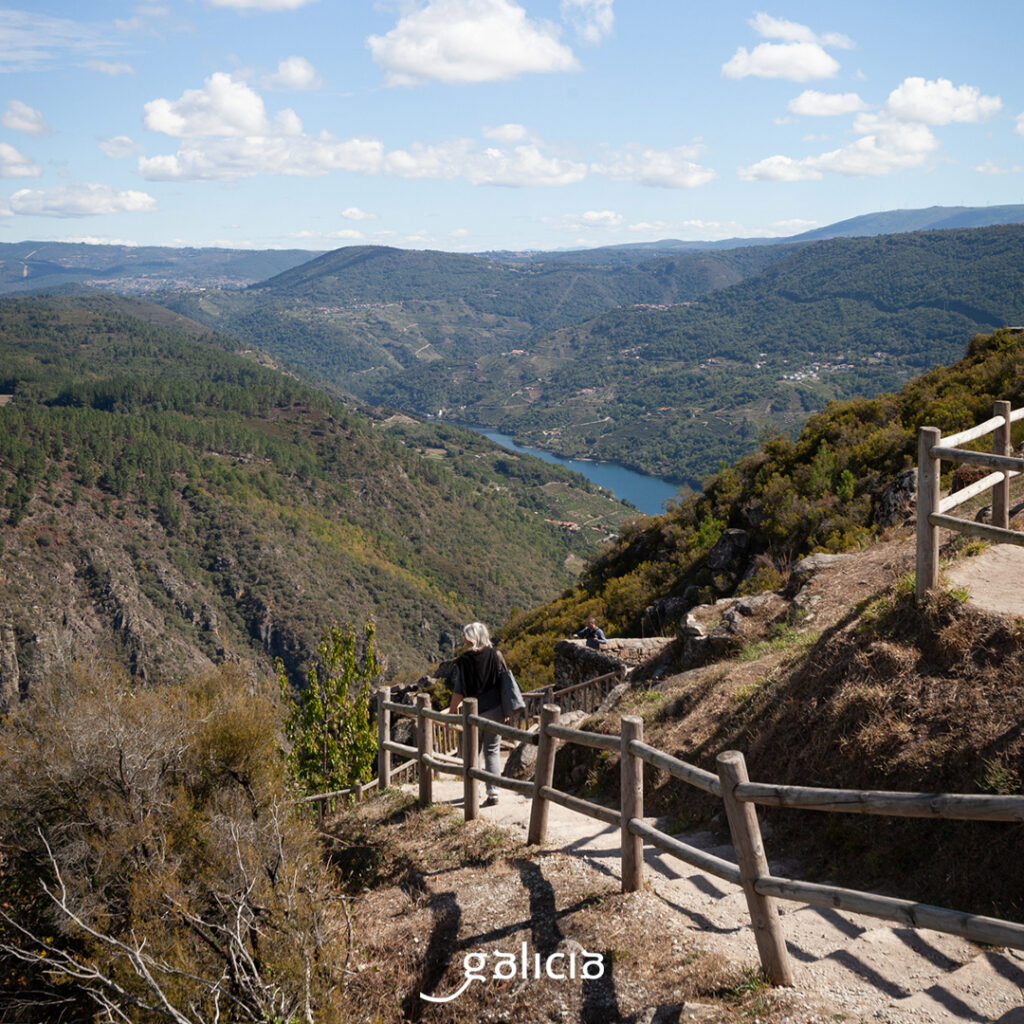
5.Ribeira Sacra. This inland plan has so many wharfs that it almost looks like the coast. Location: canyon and banks of the Sil, banks of the Miño, Cabe and Bibei, south of the province of Lugo and north of Ourense. Water, art and wine. A Ribeira Sacra seems a world apart, where nature reveals its power. The power of the rivers that furrow the rocks, the climate that favors the cultivation of vines, the vegetation… The human hand that makes dams, that takes advantage of resources, that builds monasteries, and the hand of nature that gives back more. And we, insignificant, open our senses wide so that nothing escapes us.