
They say that Galicia in autumn smells of chestnuts, a fruit that is an essential part of our gastronomy and which, centuries later, continues to play a leading role in traditions, festivals, and tables during this season.
A millenary fruit
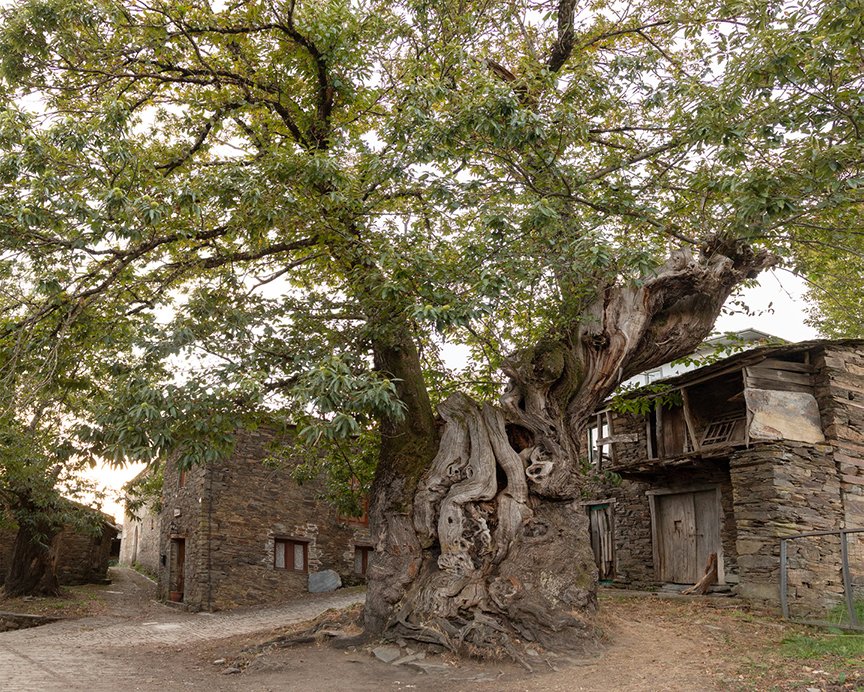
The chestnut tree, known in Galician as castiñeiro, is one of the longest-living trees in Europe. In Galicia, many centenary specimens seem like guardians of time, such as the “Castiñeiro Centenario” in the small village of Ramil, Triacastela – Lugo.
Its presence has shaped the Galician rural and mountainous landscape for generations. Although it is believed that the Romans promoted its cultivation in Galicia, recent studies indicate that the chestnut spread across the northwest of the Iberian Peninsula more than 20,000 years ago.
Since then, its fruits have been essential for food, especially in times of scarcity. So much so that when the potato arrived from America, in Galicia it was called the “chestnut of the land”, reflecting the importance of the native fruit.
Magosto: From the countryside to tradition
For centuries, the chestnut has not only fed people and livestock but has also inspired proverbs, legends, and popular celebrations. One of the most emblematic events is the magosto, a festival where villagers gather to roast and share chestnuts, celebrating the richness of autumn and Galician culture.
Internationally recognised quality
Galician chestnuts are renowned for their organoleptic qualities: their taste, aroma, and colour are unmistakable. For this reason, it is the only chestnut in Spain recognised with Protected Geographical Indication (PGI) Castaña de Galicia, a label that guarantees cultivation and processing in Galicia under strict quality standards.
The main cultivation areas include:
- A Coruña: Terra de Melide, Arzúa, and Boimorto.
- Lugo: practically the entire province, except the municipalities of A Mariña.
- Ourense: the entire province.
- Pontevedra: the regions of Deza, Tabeiros-Terra de Montes, and municipalities such as Cotobade, A Lama, Campo Lameiro, and Cuntis.
The chestnut tree requires abundant and well-distributed rainfall, mild temperatures, and warm summers that encourage fruit ripening—conditions that Galicia meets ideally.
From tradition to the table
Today, chestnuts are enjoyed roasted, boiled, in stews, or with milk, and are valued both in traditional cuisine and in modern gastronomy.
In November, festivals such as the “Festa da Castaña” in Folgoso do Courel or the “Festa do Magosto” in Ourense, both declared of tourist interest, allow visitors to enjoy chestnuts and other seasonal products.
If you haven’t yet tried PGI Castaña de Galicia, this is the perfect opportunity to visit Galicia and discover its taste, aroma, and tradition.