
Galicia is home to one of the most important collections of hillforts in Europe. Built during the Iron Age and later inhabited throughout the Roman period, these fortified settlements were home to the communities that shaped the Castrexa culture, a civilization that left a lasting mark on Galicia’s landscape and identity.
Today, many of these archaeological sites can be visited thanks to extensive conservation and restoration work, allowing visitors to discover what life was like more than two thousand years ago. Here’s a route through five of Galicia’s must-visit Ancient Fortifications.
Castro de Santa Trega
Located in A Guarda, this iconic archaeological site offers one of the most spectacular panoramic views in Galicia. From its summit, you can admire the fishing port of A Guarda, the mouth of the Miño River, the vast Atlantic Ocean, and the Portuguese coastline—a breathtaking scene that has earned it the nickname of the finest hillfort viewpoint spanning two countries.
As you stroll through its ancient streets and explore its circular stone dwellings, it’s easy to imagine what life was like for the people who lived here over two thousand years ago. The location was carefully chosen: from this strategic vantage point, inhabitants controlled access by sea and the mouth of the Miño while enjoying an ideal defensive position.
To complete your visit, wander through the historic center of A Guarda and stop at one of its restaurants to enjoy fresh fish and seafood with the Atlantic Ocean as your backdrop.
Castro de Baroña
Located in the parish of Baroña, in the municipality of Porto do Son, Baroña Hillfort is one of Galicia’s most important Iron Age archaeological sites.
Built on a dramatic rocky peninsula and inhabited between the 1st century BC and the 1st century AD, it offers a truly unique setting. As you walk along its ancient defensive walls and settlement remains, the sound of the waves and the stunning sea views make it easy to travel back more than two thousand years.
Its location was no coincidence. The narrow isthmus connecting the peninsula to the mainland made the settlement easy to defend, while a robust fortification system—parts of which are still visible today—protected its inhabitants.
Round off your visit by exploring the coastline of Porto do Son, relaxing on its beaches, and enjoying the area’s outstanding seafood cuisine.
Castro de Viladonga
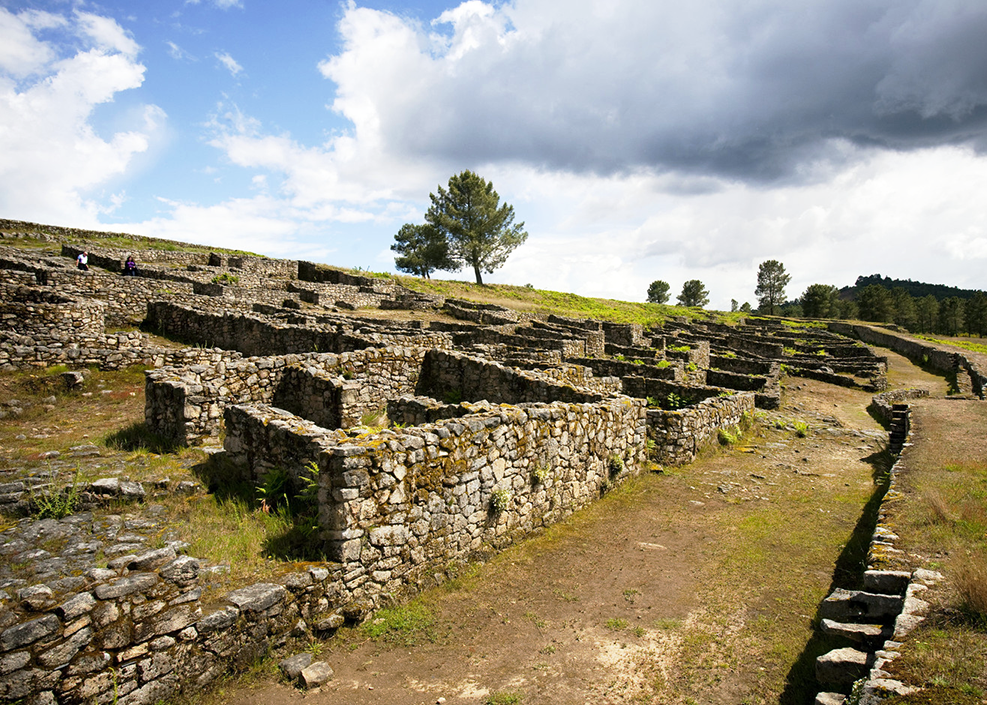
Located in the municipality of Castro de Rei, in the heart of the Terra Chá region (Lugo), Viladonga Hillfort is one of the best-preserved and most complete archaeological sites in Galicia.
Occupied between the 2nd century BC and the 5th century AD, this settlement offers a unique opportunity to discover how Castrexa culture evolved from the Iron Age into the Roman period.
Its exceptional state of preservation, together with the Museum of Viladonga Hillfort, which displays numerous artifacts uncovered during archaeological excavations, makes this an ideal place to learn about the daily lives of its ancient inhabitants and gain a deeper understanding of Galicia’s Castrexa heritage.
To complete your day, explore the landscapes of Terra Chá, a region of wide-open plains, wetlands, and natural spaces that offers the perfect combination of heritage, nature, and tranquility.
Castro de San Cibrao de Las
Located between the municipalities of San Amaro and Punxín, in the province of Ourense, San Cibrao de Las Hillfort—also known as Lansbrica—is one of the largest and most impressive Castrexa settlements in northwestern Spain.
Built atop a broad hill between the Miño and Barbantiño rivers, its nearly ten hectares offer privileged views over the surrounding countryside.
Walking through its streets feels like exploring a genuine fortified town. Its imposing defensive walls, monumental gateways, and well-defined neighborhoods allow visitors to imagine daily life in this important settlement more than two thousand years ago.
The experience is enhanced by a visit to the Castrexa Culture Archaeological Park, where a modern interpretation center explains the site’s history and the customs of the people who once lived there.
Castro de Troña
Located in the parish of Pías, within the municipality of Ponteareas, Troña Hillfort is one of Galicia’s most significant and thoroughly researched archaeological sites. Built on Mount Doce Nome de Xesús, this ancient settlement overlooks the Tea River valley from a strategic position that explains why it was chosen by its inhabitants over two thousand years ago.
The site features a complete defensive system of walls, ditches, and embankments, together with the remains of dwellings, cisterns, and ancient water channels. The visit is enriched by spectacular views across the valley and by remarkable features such as the famous Serpe de Troña, a petroglyph surrounded by legends that adds an air of mystery to the experience.
Complete your visit with a stroll through Ponteareas, where you can discover the heritage, gastronomy, and landscapes of the O Condado region.
More Than Castrexa Culture
Visiting a hillfort is about much more than exploring an archaeological site. It’s an opportunity to discover some of Galicia’s most authentic landscapes, admire the territory from the same vantage points as its ancient inhabitants, and connect with a history that remains deeply embedded in Galician identity.
Many of these sites are located near beaches, protected natural areas, hiking trails, and charming towns, making them the perfect destination for a memorable getaway.