
Christmas in Galicia is not just about lights, markets, and gifts. It is also a time of ancestral traditions, stories, and customs that have been passed down through generations. Here are some of the most notable… although there are surely many more to discover!
Nativity scenes: births that come to life
One of the most emblematic Christmas traditions in Galicia is the nativity scene. These displays can be found in homes, churches, and public spaces, and sometimes are brought to life in living nativity scenes, where children, young people, and adults play the characters of the birth of Jesus.
Among the most prominent, declared a Galicia Tourist Interest Festival, are:
- Valga (Pontevedra): its Belén Artesanal en Movemento features over 4,000 figures, including contemporary characters. Each scene comes alive thanks to a complex network of mechanisms that attracts tens of thousands of visitors every year. This year it celebrates its 30th anniversary, establishing itself as a benchmark of Galician Christmas.
- Begonte (Lugo): the Belén Electrónico, operating since 1972, combines classic Christmas scenes with representations of the rural world of Terra Chá, showcasing the richness of local culture. This year new figures have been added, including a Ferris wheel, the Víctor Corral House-Museum in Baamonde, and the automata ensemble “The Nativity within the Nativity”, in tribute to its creator José Rodríguez Varela and the priests José and Jesús Domínguez Guizán.
Galicia also offers many more nativity scenes worth visiting, such as: Belén da Grande Obra de Atocha, Belén de Betanzos, Belén da Orde Terceira, Belén de Arturo Baltar, Belén Xigante de Viveiro, the nativity scenes of Tui, Belén of Santiago Cathedral, Belén de San Vicente de Cespón in Boiro, Belén Artesanal en Movemento in Gondomar, and the parish Belén of San Marcos in Corcubión.
Each one brings its unique touch, combining tradition, creativity, and the magic of Galician Christmas.
The tizón de nadal: the magical log
In some areas of Pontevedra and Lugo, Christmas Eve is lit with the Tizón de Nadal, a large log partially burned in the fireplace or “lareira”. This tradition, of Celtic origin, symbolizes renewal and the start of a new cycle, connected to ancient winter solstice rituals.
The log that remained after the fire was kept as protection for the home, and its ashes were used as fertilizer or in home remedies. From this ancestral custom also come the marzipan or chocolate Christmas logs, sweets that evoke the magic of the fire and the richness of Galician traditions.
The Apalpador: The Coalman Who Cares for Children
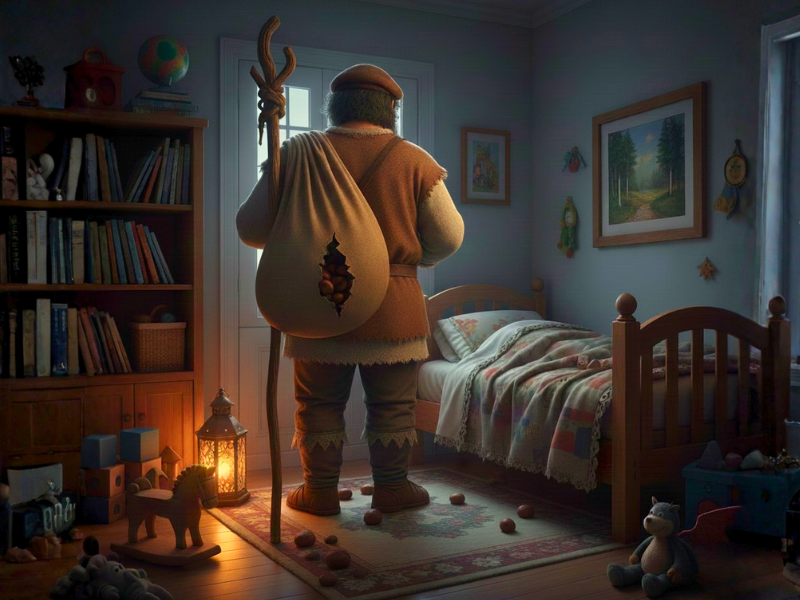
Another deeply rooted Christmas tradition in Galicia is that of the Apalpador, a kind-hearted elderly coalman who, on Christmas Eve or New Year’s Eve, comes down from the mountains to visit children while they sleep.
With his most famous gesture, he feels the children’s bellies to check if they have eaten well during the year. If they have been well-fed, the Apalpador leaves them a handful of chestnuts; if not, he gives them a little coal as a reminder.
Originating in the areas of Os Ancares and O Courel, this tradition has been revived in recent years and resembles other northern Spanish Christmas figures, such as the Basque Olentzero or the Catalan Tió, earning him the affection of all as the beloved Galician Santa Claus.
Panxoliñas: carols that fill the streets
The panxoliñas, traditional and typical Galician Christmas carols, fill streets, squares, and homes with music during the festive season. Singing or listening to these melodies is a way to keep Galician musical traditions alive and to connect with the culture and festive spirit of the region.
They tell the story of Jesus’ birth and celebrate the arrival of Christmas. Their lyrics often speak of family, joy, and the magic of the season, and they are frequently accompanied by bagpipes, tambourines, or other traditional instruments, creating a unique and magical atmosphere.
Are you ready to feel the magic of the season and enjoy these Galician traditions? We’re waiting for you!