
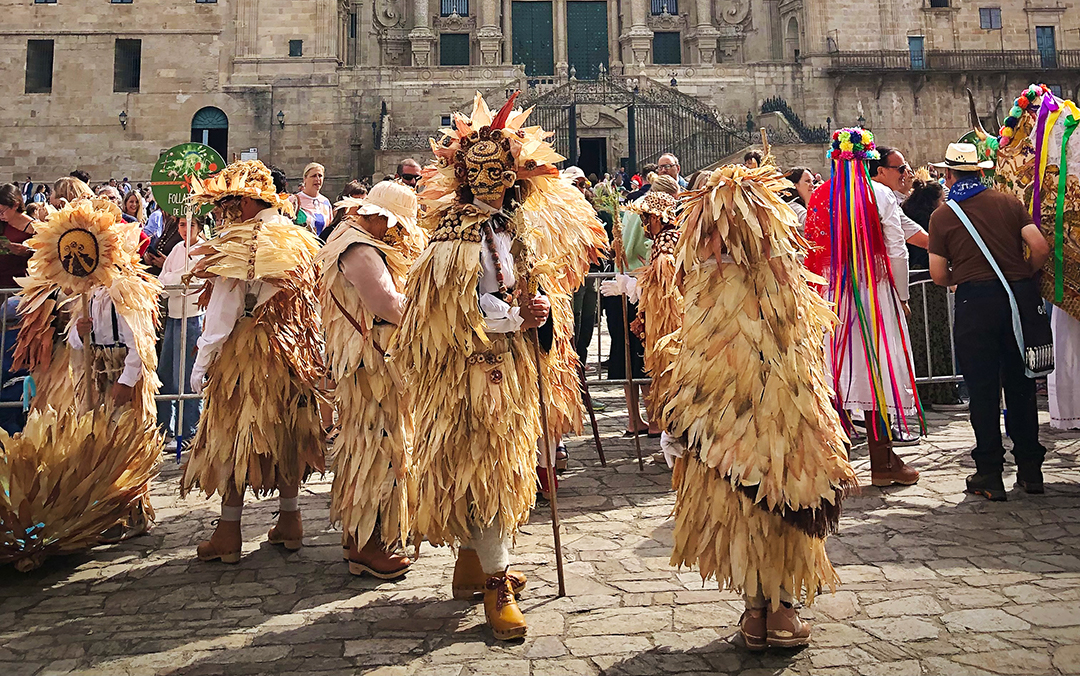
Last weekend, Santiago de Compostela became the capital of the Galician Carnival with a very special parade featuring more than 400 participants and 17 traditional carnivals (entroidos) from across Galicia. It was a unique opportunity to experience the diversity of this celebration and the region’s rich ethnographic heritage.
Five Carnivals Declared Festivals of Tourist Interest
The event brought together some of the most emblematic figures from the carnivals officially recognized as Festivals of Tourist Interest, true cultural treasures that attract visitors from all over the world:
- Entroido de Xinzo de Limia: famous for its duration, one of the longest in Europe.
- Entroido de Verín: featuring the iconic cigarróns, characters with wooden masks and spectacular costumes.
- Entroido Viana do Bolo: marked by the sound of fulións with bass drums and drums.
- Entroido de Cobres (Vilaboa): elegant, with the colorful madamas and galáns.
- Os Xenerais da Ulla: unique for their stops and atranques, satirical dialogues on horseback.
Twelve More Traditional Carnivals
Alongside them, the parade featured twelve other traditional carnivals, each showcasing the richness and variety of this festival throughout Galicia:
- As Bonitas de Sande (Cartelle): with spectacular ribbon and flower headdresses.
- Os Vellaróns de Riós: masked characters with cowbells announcing the festival.
- Entroido de Samede (Paderne): masks adorned with feathered hats, colorful ribbons, and Manila shawls.
- Os Felos e Madamas de Esgos: colorful costumes with carefully crafted cardboard masks.
- Os Galos da Mezquita (A Merca): masks with eye masks, bright-colored outfits, cane, and rooster-shaped hats.
- Os Follateiros de Lobios: known for costumes made from corn leaves.
- As Madamitas e Madamitos de Entrimo: wearing elegant and refined attire.
- Touro e Xigante de Celavente (O Bolo): the Xigante wears a white suit, red scarf with small flowers, a hat with pompoms, and colorful ribbons. The Touro is a structure covered with a quilt and crochet fabric adorned with ribbons, with two horns in front for charging.
- Fulión de Buxán (O Bolo): powerful percussion with drums and hoes striking the ground.
- Entroido de Salceda de Caselas: groups composed of six dancers, two ladies, and gentlemen who organize the celebration.
- Entroido de Mugares (Toén): traditional masks adding mystery to the festival.
- Os Cabreiros de Muíños: characters covered in animal skins and cowbells, evoking rural life.
A Cultural Heritage Full of Music and Color
The Entroido is a true reflection of Galicia’s ethnographic wealth. This parade allowed visitors and participants to enjoy some of the most unique carnival characters and to celebrate the traditions that each local community keeps alive.
More and more Galician carnivals are recognized as Festivals of Tourist Interest, both at regional, national, and international levels. Furthermore, the declaration of the Entroido as an Asset of Cultural Interest confirms its significance within Galicia’s heritage.
Will you come and experience it yourself? Galicia is waiting for you with its most colorful traditions, full of music, masks, and unique characters that make the Entroido an unforgettable celebration.