
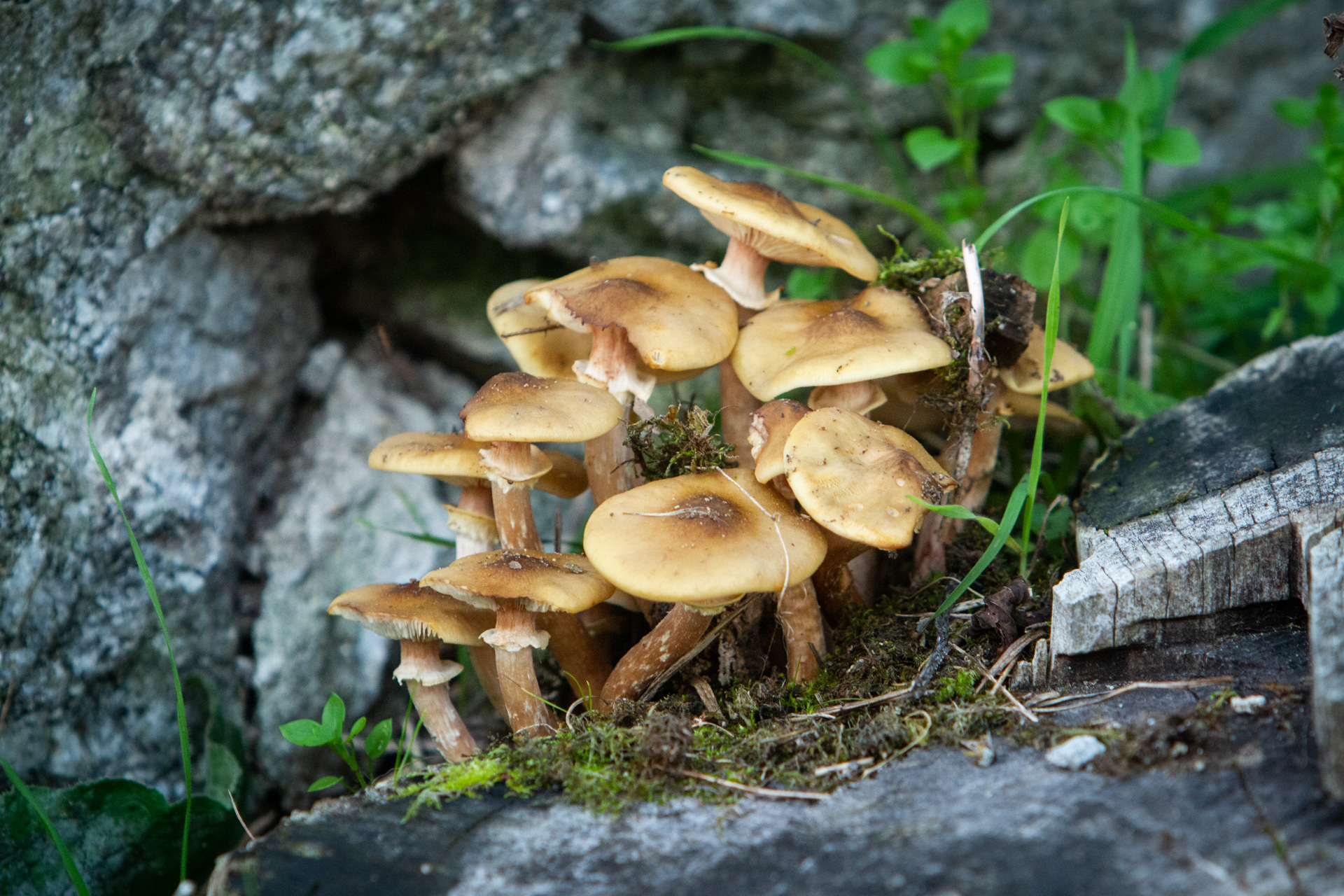
Galicia, with its humid climate and lush forests, is an ideal destination for mushroom enthusiasts. Every autumn, the Galician hills fill with foragers who, basket in hand, venture into the woods in search of edible fungi. However, it is essential to know the local species and follow responsible practices to ensure a safe and environmentally respectful experience.
The Most Common Mushroom Varieties in Galicia
Among the most appreciated edible varieties are:
- Níscalo (Lactarius deliciosus): Highly valued for its flavor, often found in pine forests.
- Boletus edulis: One of the most prized mushrooms, with white flesh and an intense flavor, closely associated with chestnut and oak groves.
- Chanterelle (Cantharellus cibarius): Unmistakable for its orange color and fruity aroma.
- Amanita caesarea (Caesar’s mushroom): Also called the “queen of mushrooms”; less abundant in Galicia, but found mainly in Ourense and the warmer areas of Lugo.
- Horn of plenty (Craterellus cornucopioides): Dark, with a strong, fruity taste.
- Morel (Morchella spp.): Less common, but highly appreciated in cuisine; in Valdeorras it is known as pantorra.
- King oyster mushroom (Pleurotus eryngii): Less common in Galicia than in other regions, but present in some areas, valued for its firmness and resistance.
Galicia also harbors toxic and deadly species, such as Amanita phalloides, Cortinarius orellanus, and Galerina marginata. Remember: Avoid picking mushrooms with white gills, movable rings, or a volva.
Best Places for Mushroom Tourism in Galicia
The diversity of Galician landscapes—pine forests, oak woods, chestnut groves, and mixed woodlands—make the region a paradise for mushroom lovers.
A Coruña
- Serra da Capelada: Traditional gathering area, with abundant níscalos and boletus under oak groves.
- Monte Xalo (Culleredo), Teixeiro, and Curtis: Pine forests rich in níscalos and boletus.
- As Pontes and Val de Loureda: Mixed forests with a great variety of mushrooms.
Lugo
- O Courel (Folgoso, Seoane, Devesa da Rogueira): A mycological sanctuary, with níscalos, lepiotas, and amanitas.
- Os Ancares: Home to diverse boletus, including Boletus fuscoruber.
- Ribeira Sacra: Rich in boletus, russulas, chanterelles, and cerrotas.
- O Incio: Known for chanterelles, reticulated boletus, and setas de cura.
- Serra do Xistral: Notable for its abundance of Boletus edulis, parasols, russulas, and chanterelles.
Ourense
- Pena Folenche (A Pobra de Trives): Chestnut groves and meadows with mushrooms such as field mushrooms, senderuelas, and parasols.
- Serra do Suído: Shared with Pontevedra, with boletus, níscalos, and hedgehog mushrooms.
- Ourense Ribeira Sacra: A mycological mosaic with boletus and chanterelles, along with less common species such as Hydnum repandum.
Pontevedra
- O Vixiador (Candeán) and Marcosende: Hills near Vigo with a strong mushroom-picking tradition.
- Lago Castiñeiras: Forest surroundings with great fungal diversity.
- Monte Castrove (Meis and Poio): Rich in boletus and chanterelles.
- Illa de Arousa and O Grove: Coastal pine forests with níscalos and boletus.
- Lalín, Silleda, and Forcarei: Chestnut and oak groves home to níscalos, boletus, and the locally named zarrota(usually Tricholoma species).
Tips for Safe Foraging
Mushroom picking in Galicia is much more than a gastronomic activity: it’s a leisure experience in contact with nature, steeped in culture, tradition, and flavor. Still, always remember:
- Identify each species properly before eating it.
- Use wicker baskets, never plastic bags.
- Cut mushrooms carefully so as not to damage the mycelium.
- Respect the natural environment.
- Check local foraging regulations.
This autumn, bring your basket to Galicia and live your own adventure among mushrooms and forests.