
Entroido, or Galician carnival, is one of the most emblematic celebrations in Galicia, characterised by its cultural richness, ancestral traditions and a deep connection with local identity. Several of these carnivals have been recognised as Festivals of Tourist Interest, standing out for their uniqueness and attraction.
Xinzo de Limia
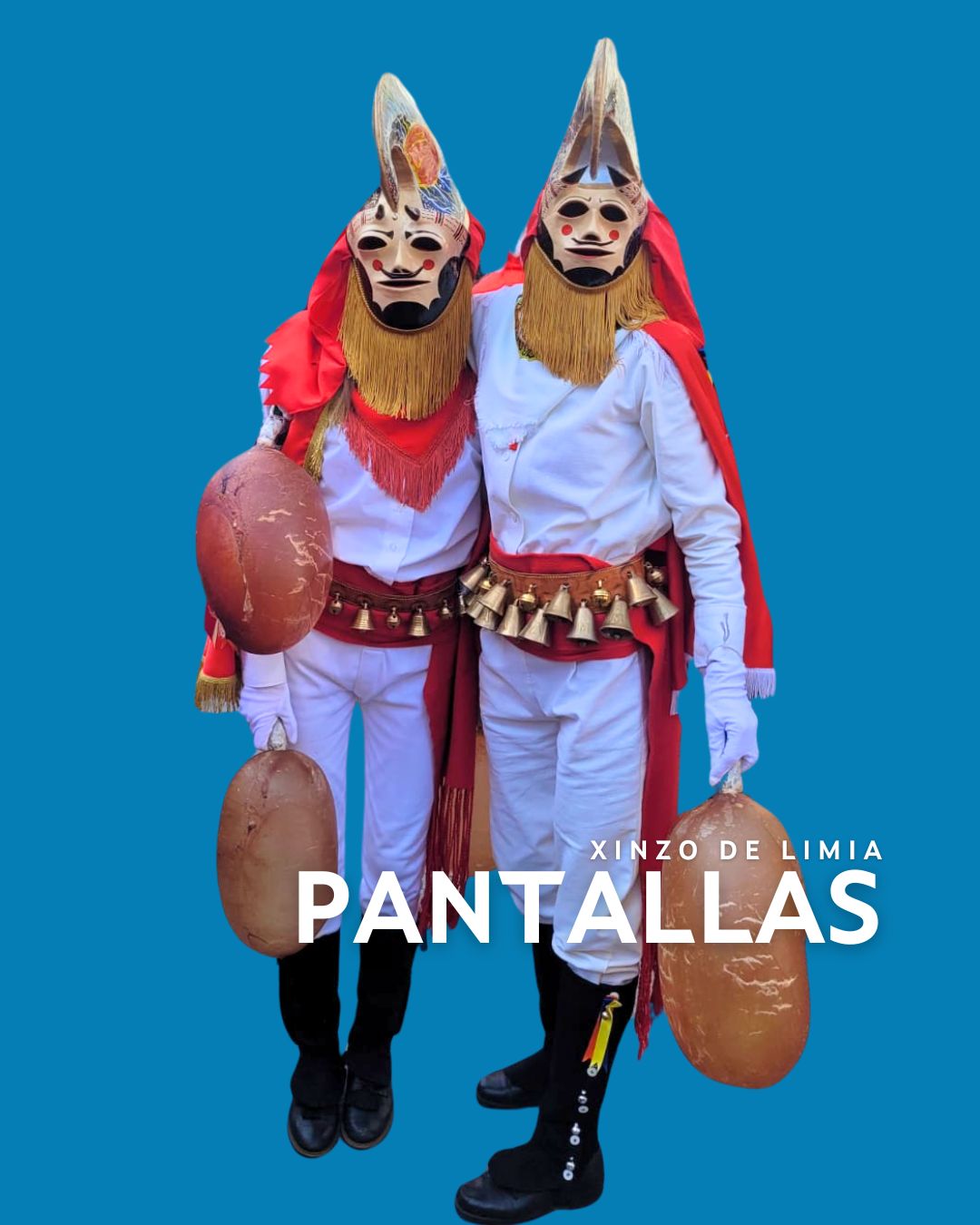
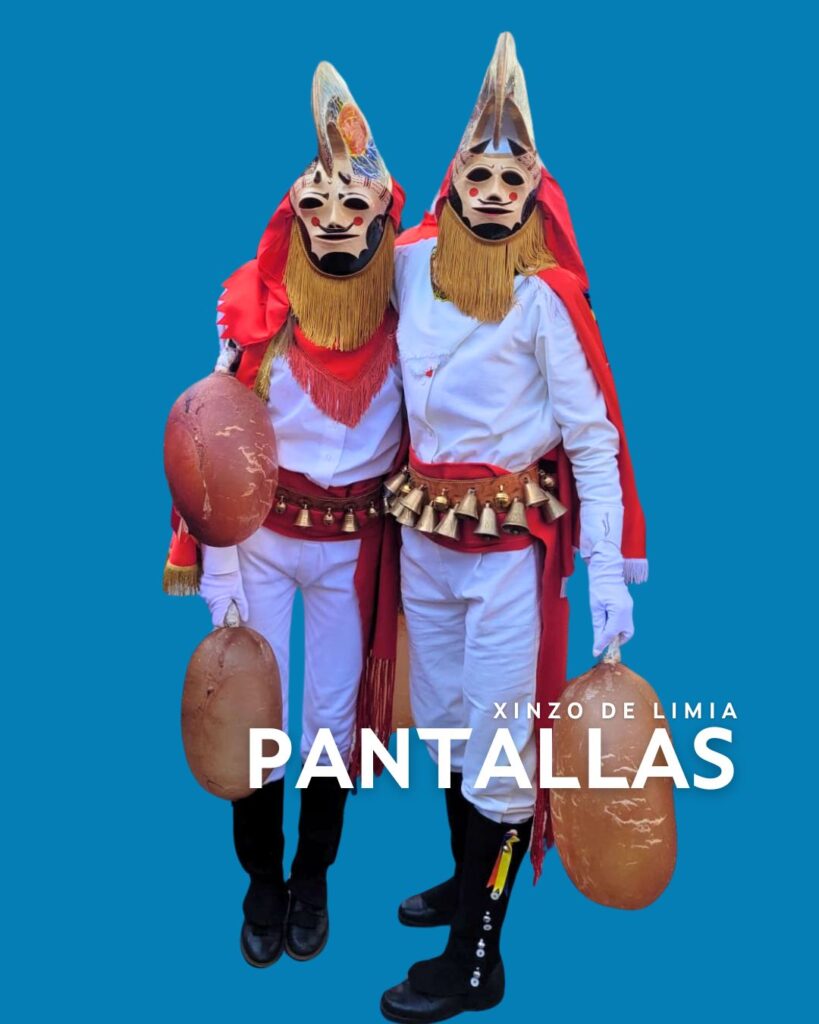
Considered the longest carnival in Europe, the Entroido of Xinzo de Limia lasts five weeks of intense celebration. Declared a Festival of International Tourist Interest, its central figure is the ‘Pantallas’. These emblematic figures, who symbolise authority and order during the festivity, wear a white shirt and breeches, a red or black cape, and carry a characteristic mask with a coloured crest. Their presence is unmistakable, as they ring cowbells and bang inflated bladders, adding a vibrant rhythm to the streets. Piñata Sunday marks the close of the carnival with a spectacular parade of comparsas and floats.
Verín
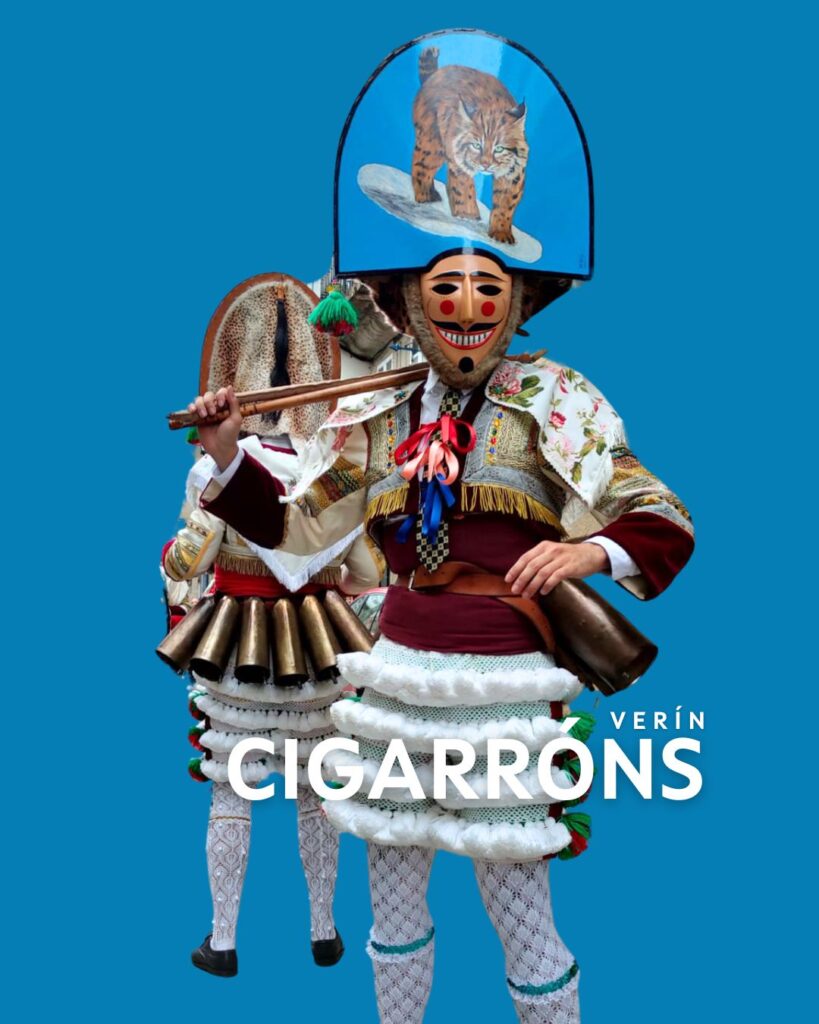
In Verín, the Entroido extends over two weeks full of activities, each with its own significance, such as the Jueves de Compadres, the Domingo Corredoiro and the Jueves de Comadres. The undisputed protagonist is the ‘Cigarrón’, whose figure is historically associated with the old tax collectors. His attire is impressive: a mask crowned with a hand-decorated mitre, a jacket, a white shirt, a red tie, tasselled breeches and a belt with six large cowbells that resound to the rhythm of his movements. Armed with a whip, the Cigarróns impose order and add dynamism to the festivity. The Jueves de Comadres is one of the most outstanding evenings, where the women take centre stage on a night full of joy and camaraderie.
Laza
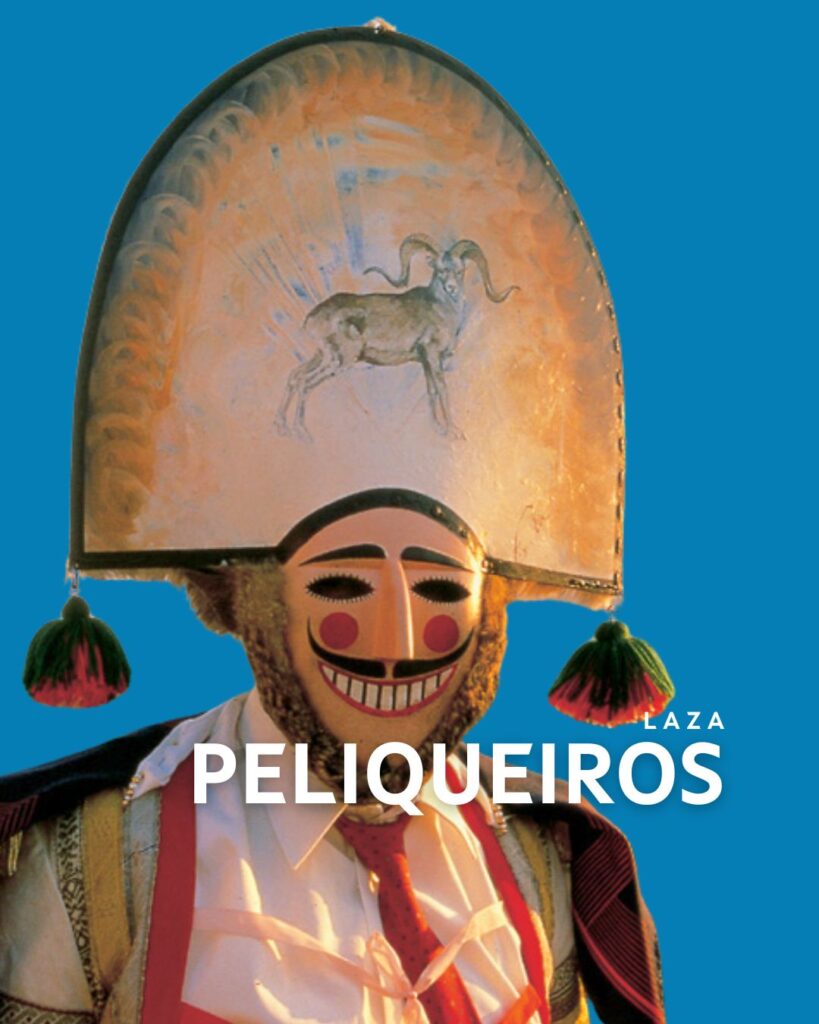
Recognised as one of the oldest in the world, the Entroido of Laza keeps alive ancestral traditions that invite the active participation of everyone. The ‘Peliqueiro’ is the central figure, characterised by a mask crowned with a mitre decorated with colourful motifs, white shirt, red sash, jacket, white stockings and a whip known as ‘zamarra’. During the Luns Borralleiro, emblematic events take place such as the Farrapada, a pitched battle with dirty rags, and the Baixada da Morena, where a figure in the shape of a cow’s head walks through the streets, accompanied by donkeys, ants and gorse, in a display of the symbolic richness of this celebration.
Maceda
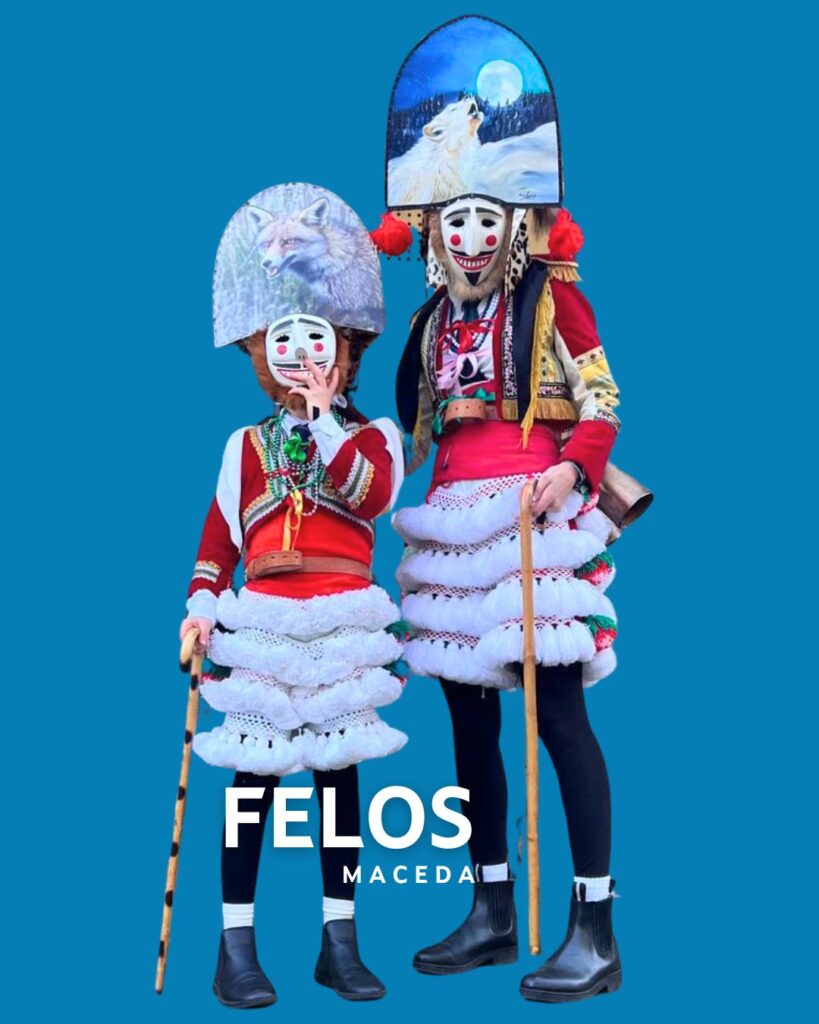
At the foot of the Sierra de San Mamede, the Entroido has as its protagonist the ‘Felo’, a figure that bears similarities with the Peliqueiros and Cigarróns, but with its own characteristics. The Felo wears a mask decorated with motifs of animals from the mountains, a jacket, a white shirt, a red tie, tasseled breeches, black stockings and a belt with cowbells. During the festivity, the Felos go around the villages, bringing the joy of carnival to every corner and chasing away evil spirits with the sound of their cowbells. On the Saturday before Entroido Sunday, they accompany the ‘Marela’ on her descent, a tradition that marks the beginning of the celebrations in the centre of Maceda.
Vilariño de Conso
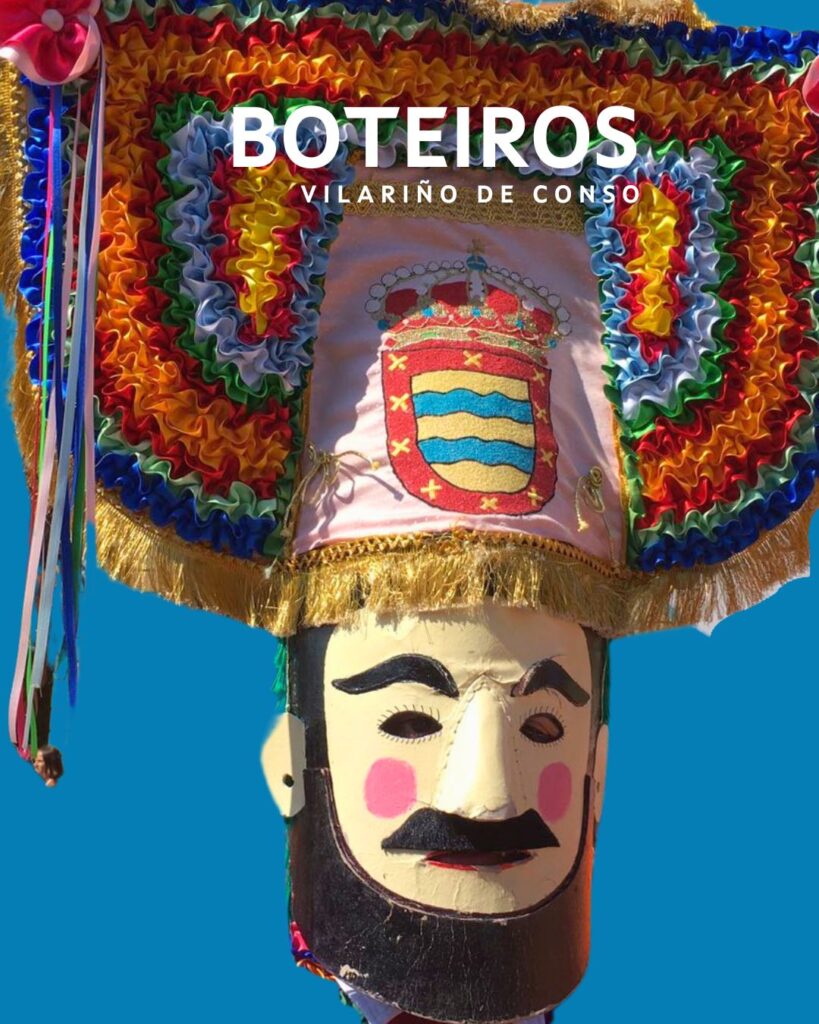
In Vilariño de Conso, the Entroido is characterised by the presence of the ‘Boteiros’ and the ‘Fulións’. The Boteiros, with their cardboard masks and colourful headdresses, lead the parades and give way to the Fulións, groups that, with their drums and agricultural instruments, fill the streets with music and rhythm. The big day is Saturday, with the parade of the Fulións and the Fiesta del Cabrito, a celebration that combines tradition, music and gastronomy in a festive and participative atmosphere.
Cobres
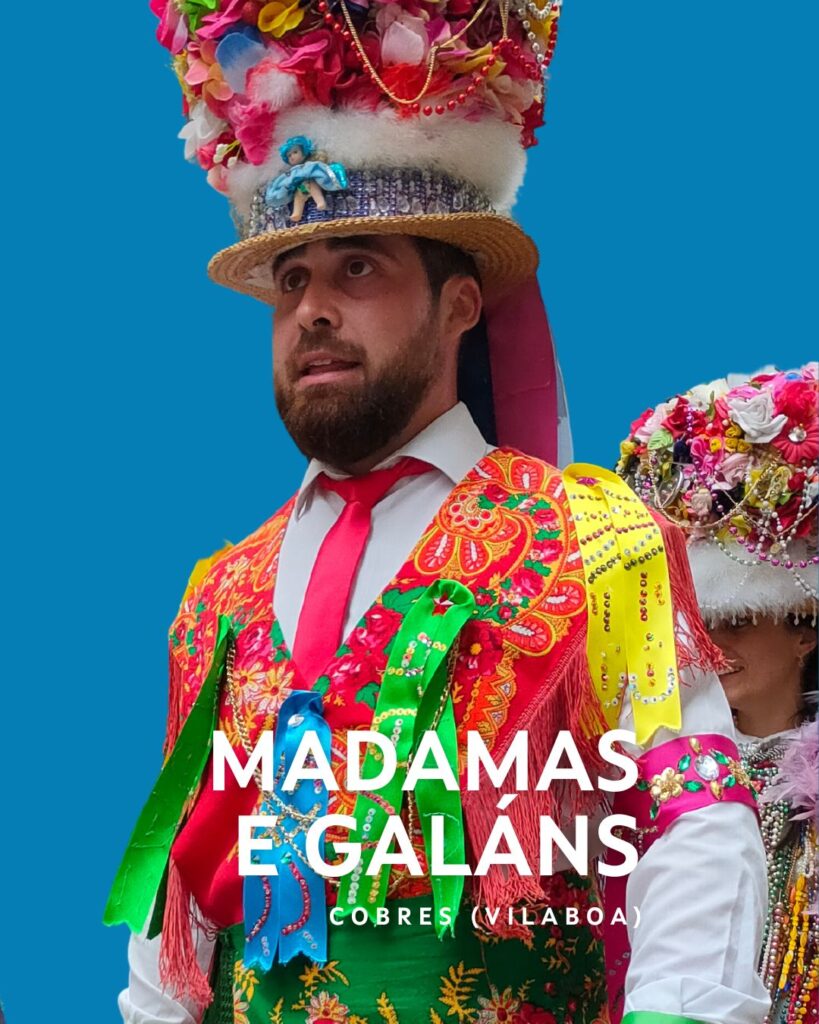
In the parishes of Santo Adrián and Santa Cristina de Cobres, in Vilaboa, the Entroido stands out for its characters: the ‘Madam’ and the ‘Galáns’. These characters, who go bare-faced, wear costumes adorned with necklaces and hats full of flowers, feathers and other colourful decorations. The Madamas and Galáns perform traditional dances and take part in games, keeping alive the ancestral customs of the region. Shrove Tuesday is the big day, with dances in the morning and games in the afternoon, in a celebration that stands out for its folklore and community participation.
Viana do Bolo
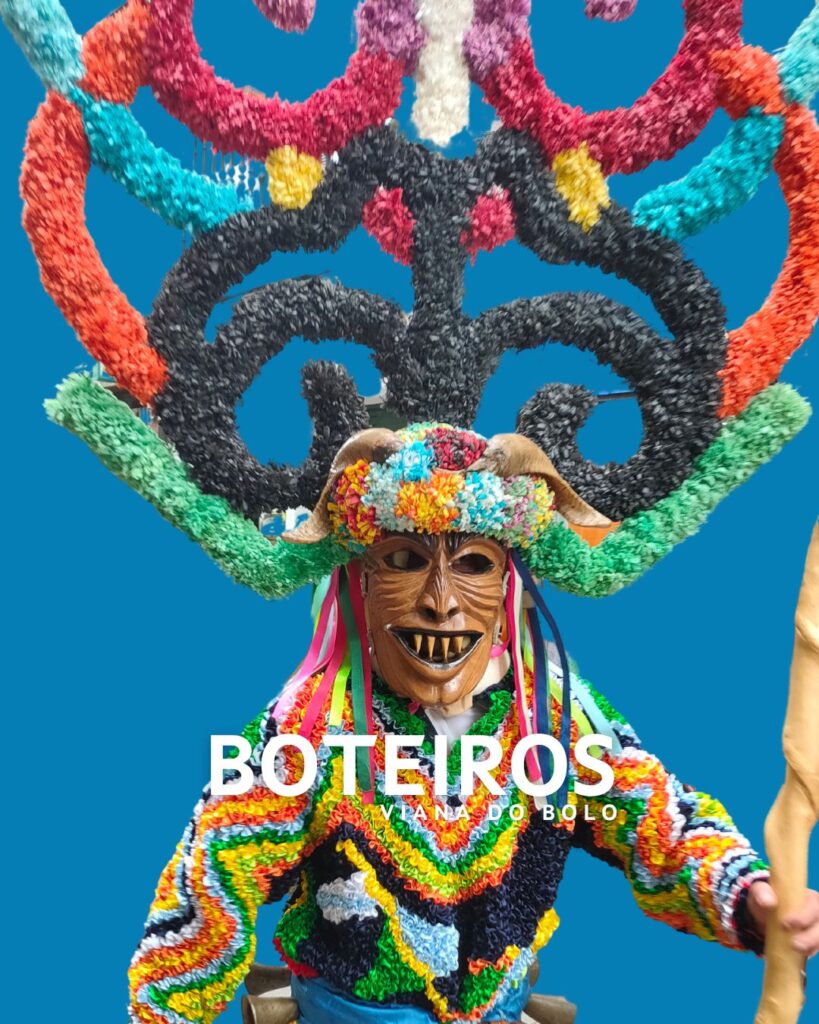
In Viana do Bolo, the Entroido is a deep-rooted celebration that combines tradition, music and gastronomy. The central character is the ‘Boteiro’, who leads the ‘Folións’, groups of 30 to 40 people who go through the streets playing drums and agricultural instruments to scare away evil spirits. The Boteiro is distinguished by his mask and a tall headdress of wire and cardboard decorated with coloured paper, as well as a costume made of multicoloured silk ribbons. He carries a ‘moca’, a decorated stick that he uses to jump and make way for the folion. The festivity also stands out for the ‘Festa da Androlla’, a gastronomic celebration in which this typical sausage of the region is tasted.
Manzaneda
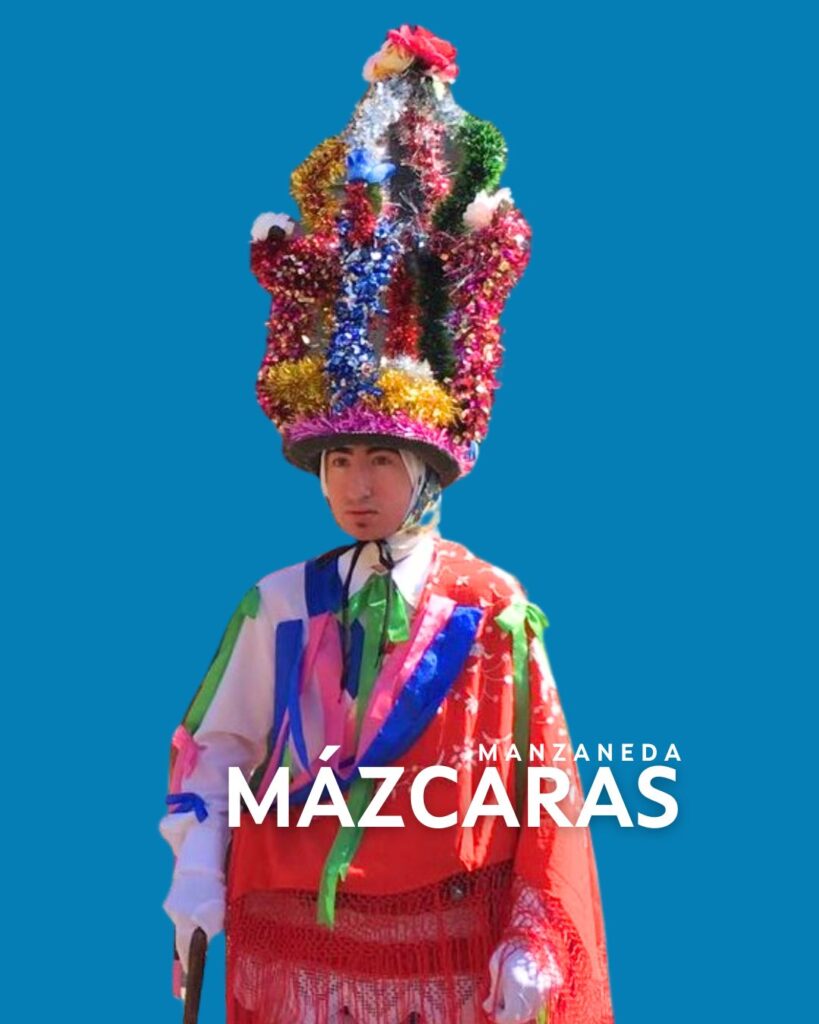
In the town of Manzaneda, the emblematic figure of the Entroido is the ‘Mázcara’. Despite his name, this character usually has his face uncovered, wearing a hat with an elaborate and colourful headdress on his head. His attire includes a white shirt and white leggings with lace, a mantilla, black boots, a walking stick and coloured ribbons, as well as a belt laden with cowbells that mark the rhythm of the celebration. The Mázcara is always accompanied by the ‘Folión’ or ‘Fulión’, a troupe that enlivens the festival with drums, bagpipes and agricultural tools, touring the villages and performing satirical performances known as ‘foliadas’.
Xenerais da Ulla
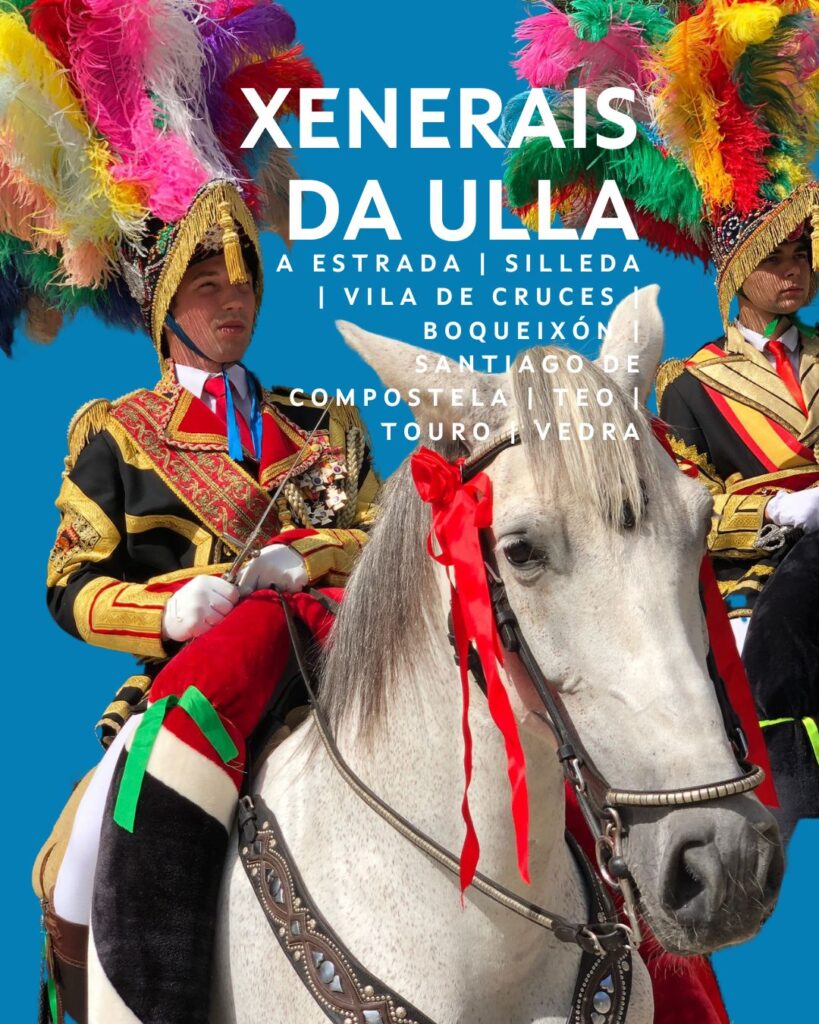
The Entroido dos Xenerais da Ulla is celebrated in several towns in the regions of Santiago, A Estrada and Vedra, among others. This festivity is characterised by the figure of the ‘Xenerais’ (Generals) and their companions, who, dressed in colourful military uniforms from the Napoleonic period, travel around the parishes on horseback. One of the highlights is the ‘atranque’, a dialectic confrontation in which two Xenerais engage in a verbal battle full of satire and humour, addressing current affairs and local issues. This unique tradition reflects the history and culture of the region, offering a singular experience within the panorama of the Galician Entroidos.
Marín
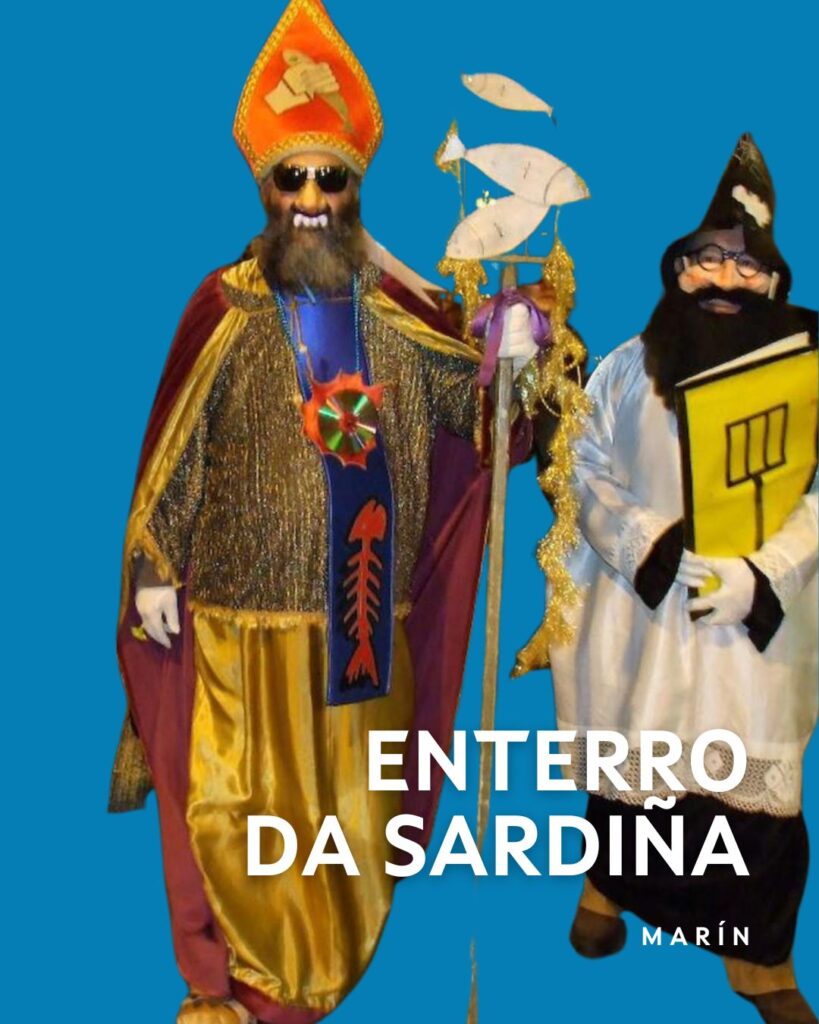
The Entroido of Marín is a celebration that stands out for its cultural and traditional character, highlighting ancestral customs such as the wake and the figures of the ‘choronas’. One of the most significant events is the ‘Burro da Sardiña’, declared a Festivity of Tourist Interest in Galicia. This tradition is celebrated on Ash Wednesday, beginning with the wake of the sardine in the Palco de la Música from 17:00 to 20:00. Afterwards, the burial takes place, where the funeral procession, accompanied by the ‘choronas’ and numerous participants, takes the sardine to the sea to bid it farewell. This event symbolises the end of the carnival and the farewell of festive joy until next year.
Foz
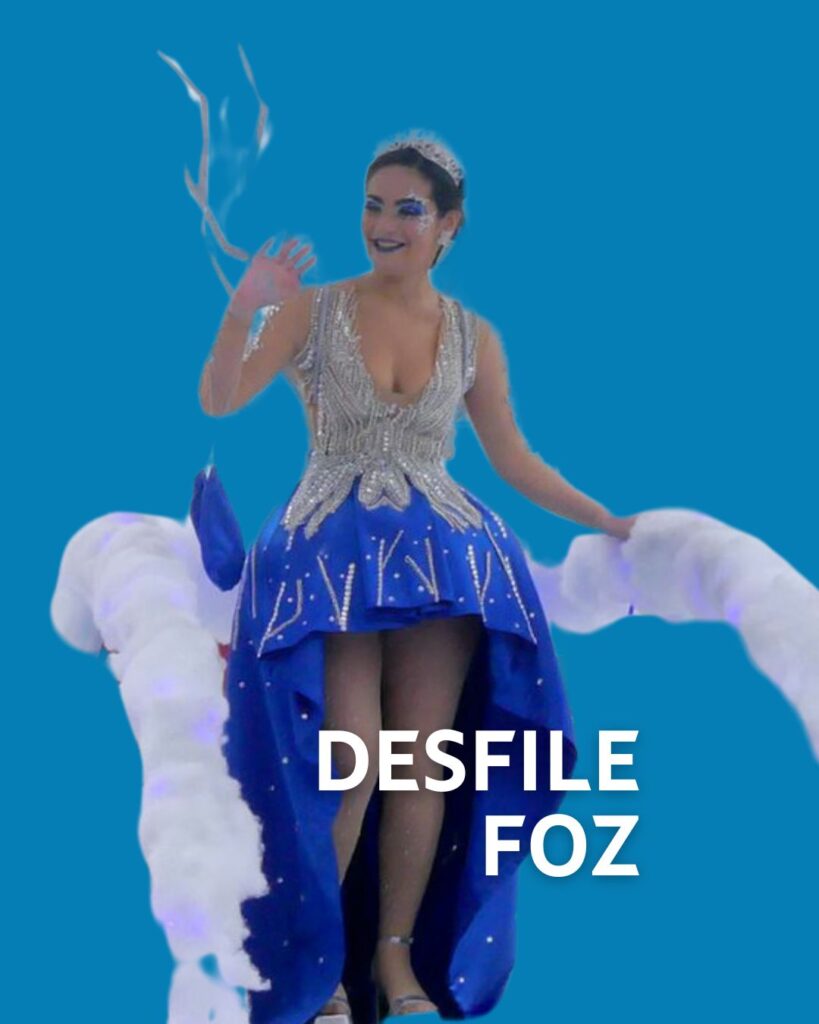
The Entroido de Foz is renowned for its spectacular parade of troupes, being one of the most outstanding events in the region. Declared a Festival of Tourist Interest in Galicia, the parade brings together numerous charangas, comparsas and groups from different parts of the region and Asturias. The main event takes place on Saturday, starting at 10:00 a.m. with the ‘Chupinazo’ and the performance of charangas through the streets of the town. From 16:30 hours onwards, the Gran Desfile de Entroido takes place, followed by a big dance and musical performances that go on until the early hours of the morning. The participation of around 2,000 people and the large number of spectators make this parade an unmissable event for carnival lovers.
These carnivals, recognised as Festivals of Tourist Interest, enrich the cultural heritage of Galicia, offering locals and visitors the opportunity to immerse themselves in ancient traditions full of colour, music and joy. They offer a deep insight into the cultural richness and diversity of traditions that make up the Galician Entroido.