

There are places that seem to have special conditions for literary production. Could it be the water? Could it be the land? Is it the weather?… How can Rafael Dieste, Castelao and Manuel Antonio coincide in Rianxo, for example? And living on the same street! The fact is that the cradles of our writers offer interesting literary walks, ideal for an excursion in May, the month of Galician Letters.
Rianxo (A Coruña). The first one that comes to mind may be Castelao, but from Rianxo there were also Paio Gómez Chariño, a poet and nobleman from the 13th century, Rafael Dieste, a great narrator and playwright, and Manuel Antonio, the avant-garde poet of the sea. The Roteiro Castelao is designed to take a very complete tour of the city and immerse ourselves in the most literary areas. It covers no less than 33 points of interest, a good walk, which also includes the Dieste house and the Pérez house (today the Manuel Antonio House-Museum). It is curious that the three of them lived on the same street: the rúa de Abaixo.

Villalba (Lugo). The capital of A Terra Chá has a stupendous literary and river promenade, on the banks of the Madalena River, called Paseo dos soños (Dream Walk). The 3 km route has up to fifteen hectometres, for now, dedicated to the writers and artists of the area. The itinerary begins in Muíño do Rañego and ends in A Ponte dos Freires. In addition to the hectometre sculptures, we find wooden bridges, small dams, mills, and even an island and a river beach, in the A Madalena recreational area. A perfect setting to meet local artists and enjoy nature. The hectometres are dedicated to: Paco Martín, Miguel Anxo Fernán Vello, Manuel María, Agustín Pérez Paz, Darío Xohán Cabana, Xabier P. Docampo, Xosé Manuel Carballo, Margarita Ledo, Helena Villar – Xesús Rábade, Xosé Chao Rego, Ramón Chao, Xulio Xiz, Mini and Mero, Alfonso Blanco Torrado and Sonia Villapol.

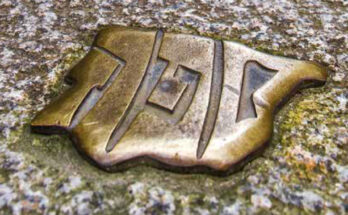
Ourense. The city of Ourense becomes Auria in the famous novel A Esmorga, by Eduardo Blanco Amor. If we want to follow in the footsteps of Cibrán, O Bocas and O Milhomes, all we have to do is take the A Esmorga Route, with stops at places for those who pass in their eventful night. In each of them, a ceramic plate by Manolo Figueiras, with a small illustrated quote, refers us to the novel. Our first stop is the Taberna de la Tía Esquilacha, at the entrance to the city, which is followed by: As Burgas; Fonte de San Cosme; Canella da Pena Vixía; Corrixidor Square; Fonte do Rei; Lamas Carvajal and, the last stop, the Alameda, where a sculpture of Blanco Amor, by Xosé Cid, awaits us, and a monolith dedicated to the reader, placed at the XXV Ourense Book Fair.

A Pobra do Caramiñal (A Coruña). Just opposite, across the estuary, in Vilanova de Arousa, Valle-Inclán was born. But in A Pobra he spent some very productive years, between 1916 and 1925. Here, the author is very present, especially in the museum and on the Valle-Inclán Route. Before starting the walk it is advisable to visit the museum, in the Torre de Bermúdez. In it there is a whole repertoire of articles, first and second editions of his works, photos, documentation, furniture from his homes and even pieces of clothing used in his works. And already getting into the route, these are the eleven places through which it passes: Colo de Arca (home of its hidalgo ancestors); old Ferro hostel; Casal da Mercé (here he wrote Divinas palabras, Cara de plata and Los cuernos de don Friolera); Villa Eugenia (urban house where he wrote La rosa de papel, Tirano Banderas and Luces de Bohemia); church of Santa María in Antiga do Caramiñal; Tato pharmacy (center of the fashion gathering); Casa Grande de Aguiar and Pazo do Conto; church of Santiago do Dean; Xunqueiras Tower; O Areal – House of García Martí and the Mirador de Valle-Inclán, in A Curota, with fantastic views and a bust of the writer by Prieto Coussent.

Padrón (A Coruña). The most famous of Padrón, removing the peppers, is Rosalía de Castro. But let us not forget that Macías O Namorado, a troubadour from the 14th century, Xoán Rodríguez de Cámara, the last poet of the Galician school, from the 14th-15th century, and, more closely, Camilo José Cela, the Nobel Prize winner, also lived in Padrón. The Literary Padrón Route introduces us to the city and its relationship with literature in a circular route of 3.5 km. It starts at the monument to Camilo José Cela, on Paseo do Espolón and passes through the following points: monument to Rosalía; Plaza de Baltar (friend of the writer); Xoán Rodríguez de Cámara street; Camilo José Cela Foundation; church of Santa María A Maior de Iria Flavia (where Cela’s tomb is); House-museum of Rosalía; Padrón artistic botanical garden; Plaza de Macías and, finally, Plaza de Camilo José Cela.

Celanova (Ourense). The Celanova thing is a case. How come so many poets have gathered here? In fact, it is also known as “Vila dos poetas”. There are two accompanied routes organized by the Curros Enríquez Foundation: Stone and Poetry (passing through the Monastery of San Salvador, the Chapel of San Miguel, the Torre das Campás and the Casa dos Poetas) and Celanova, a walk through the history of Galicia, adding two more stops in Vilanova dos Infantes and Castromao. The most famous authors of the place are: Curros Enríquez, Celso Emilio Ferreiro, Castor Elices and Xosé Luis Méndez Ferrín. The Museum and birthplace of Curros hosts exhibitions and activities, as well as the Casa dos Poetas and the Foundation.